
Reviewed · BUENOS AIRES
Buenos Aires for curious people
Buenos Aires tells stories on your feet. This walk connects San Telmo streets with major sights like Plaza de Mayo and the Casa Rosada, plus a stop at Memory Walk. I love the small group size (max 8), and I love that the route is built from meaningful places, not just photo stops.
One heads-up: this is history with real emotion. You’ll cover Argentina’s dark past at Memory Walk, and the experience can feel more like an engaging class than a simple sightseeing loop.
In This Review
- Key Highlights You’ll Feel While Walking
- Why This Buenos Aires Route Works for Curious Minds
- Price and Timing: Good Value for a Short Stay
- Start Point in Old Buenos Aires: Bar Britanico and Parque Lezama
- Club Sueco Restaurante: The Swedish Church Story (1944)
- Memory Walk: When the City Stops Being Comfortable
- Parroquia de San Pedro Gonzalez Telmo and Plaza Dorrego
- Mercado San Telmo: Italian-Immigrant Everyday Buenos Aires
- Puente de la Mujer: Calatrava’s Modern Answer to the Classic Streets
- Casa Rosada: Finishing at the President’s Office and Plaza de Mayo
- How the Guides Make It Feel Like More Than Sightseeing
- Who This Tour Suits Best (And Who Might Want Something Else)
- Should You Book Buenos Aires for Curious People?
- FAQ
- How long is the Buenos Aires walking tour?
- How much does the tour cost?
- Is there a maximum group size?
- Where does the tour start and end?
- Are tickets included for the stops?
- What neighborhoods and sites will you see?
- Is the tour suitable for most people?
- What happens if the weather is bad?
- Can I cancel for a full refund?
Key Highlights You’ll Feel While Walking
- Max 8 people for easier questions and a calmer pace than big bus tours
- Free admission stops for most sites, so your $33 goes further
- A street-level path through San Telmo, including Plaza Dorrego and Mercado San Telmo
- Memory Walk brings context to the 1976–1979 clandestine detention center era
- Modern landmark contrast at Puente de la Mujer by Santiago Calatrava
- Finish at Casa Rosada area, close to Plaza de Mayo
Not sure which barrio to start in? A few more Buenos Aires tours worth a look.
- Buenos Aires Hop-On Hop-Off Bus, Free Walking Tours & Discounts★ 4.5 · 2,218 reviews
- Buenos Aires: Piazzolla Tango Show with Optional Dinner★ 4.4 · 2,122 reviews
- Buenos Aires: City Highlights Guided Tour with Transfer★ 4.7 · 1,946 reviews
Why This Buenos Aires Route Works for Curious Minds
If you want Buenos Aires to click, this kind of walk helps. You don’t just see icons—you understand how the city’s power, neighborhood life, and political trauma overlap in the same few hours.
I like the balance in the design. You start in the older core, shift through San Telmo’s everyday textures, and then end at the most symbolic government space in the country. It’s a practical way to get oriented fast, especially if you have limited time and want more than the usual “stand here, take a picture” routine.
Also, this tour is built for people who like to ask why. The best-reviewed guides behind this experience—often described as passionate and strong communicators—frame each stop with context, not just dates. In feedback, guides like Nico and Ignacio come up often, and the common thread is clear storytelling and room for questions.
Price and Timing: Good Value for a Short Stay
$33 for a 2 to 3 hour small-group walk is the kind of price that makes sense in a city where tours can balloon quickly. Most stops listed are admission ticket free, which matters. It reduces the “nickel-and-dime” feeling and lets you spend your money on food and a few optional add-ons instead.
You’re also getting a tight itinerary window. Two to three hours is long enough to cross neighborhoods and cover both older colonial-era settings and later political symbolism, but short enough to stay flexible. If you’re planning the rest of your day around meals, you’ll usually be able to do it.
One practical note: this experience needs good weather. If it gets canceled due to weather, you’ll be offered a different date or a full refund.
Start Point in Old Buenos Aires: Bar Britanico and Parque Lezama
You begin at Bar Britanico, at Brasil 399. It’s a solid starting location because it puts you in the historic conversation right away. From there, the route heads to Parque Lezama, the starting point where the first fort was established in 1536.
This is a smart early move. Parque Lezama isn’t just a pretty stop; it’s a reminder that Buenos Aires grew from military footing into a city with layers of identity. The guide-led storytelling at this stage helps you connect later architecture and political places back to the city’s origins.
You’ll spend about 30 minutes here. That’s enough time to get oriented, absorb the “why this spot matters” context, and then roll into the next neighborhood layer without dragging.
Club Sueco Restaurante: The Swedish Church Story (1944)
Next you go to Club Sueco Restaurante, tied to a Swedish church (1944). This is exactly the kind of stop that makes a tour for curious people work: it breaks the pattern.
Instead of walking only through the obvious Spanish-colonial storyline, you’re reminded that Buenos Aires also attracted European communities with their own institutions. A Swedish church isn’t what you expect in a rapid overview of the city, so it adds surprise without random filler.
This portion is about 10 minutes. It’s brief, but it plants an idea: Buenos Aires isn’t one single cultural theme—it’s many waves of people leaving permanent marks.
Memory Walk: When the City Stops Being Comfortable
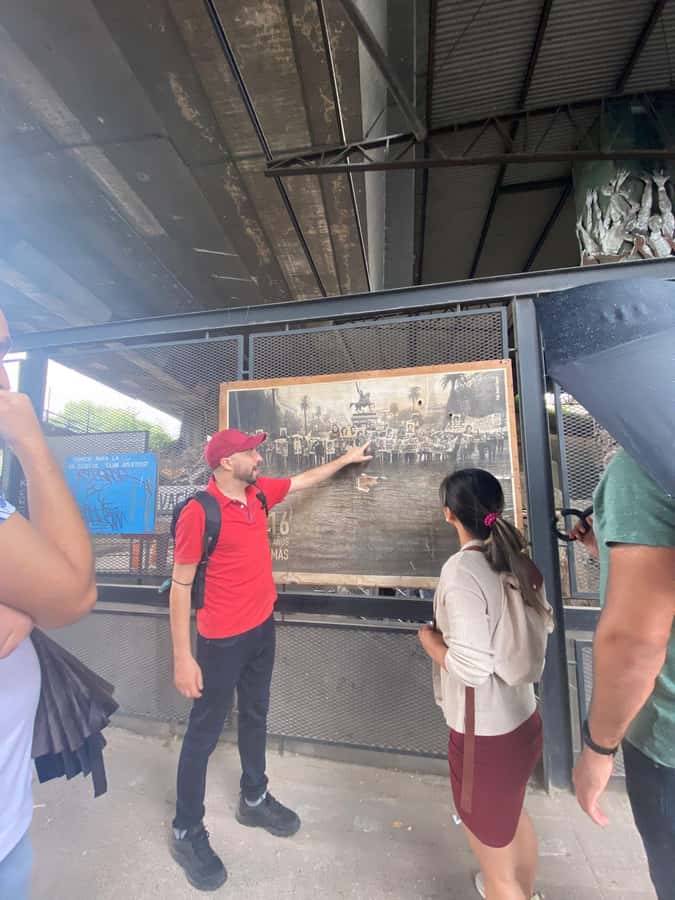
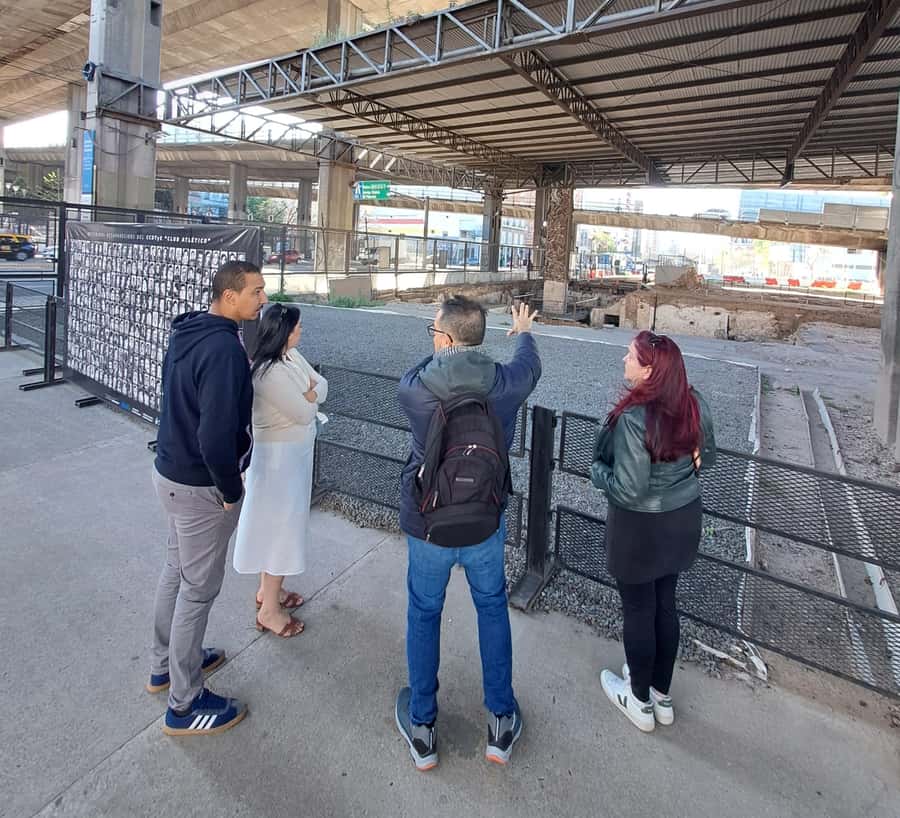
Then comes Memory Walk, linked to a former clandestine center for detention, torture, and extermination (1976–1979). The stop is listed at 20 minutes, and it’s the most emotionally heavy moment on the route.
This is the point where your visit changes tone. The value here isn’t spectacle; it’s context. You’ll understand how Argentina’s dictatorship era still shapes the way places are remembered and explained today.
In the feedback, people often mention that this tour can feel like an academic lesson, at times distressing. That’s not a bug. It’s the trade-off for choosing a tour that takes history seriously instead of avoiding the hard parts.
If you prefer a lighter itinerary, you might want to balance this stop with a more relaxed plan after the tour. But if you want to understand Buenos Aires beyond the postcard layer, this stop is one of the strongest reasons to book.
Parroquia de San Pedro Gonzalez Telmo and Plaza Dorrego
After the heavy history stop, you re-enter older-town rhythm at Parroquia de San Pedro Gonzalez Telmo, a colonial Catholic church, around 15 minutes. Churches like this often look simple from a distance, but up close they help you read the neighborhood’s “old order” logic—who built it, who organized community life, and how religion worked as social structure.
Then you reach Plaza Dorrego, the old town’s main square, with about 15 minutes there. This is where the city feels like a lived space rather than a museum.
Plaza Dorrego is also a key transition point because it leads you toward market life. It’s the sort of square where locals pass through on errands, meet up, and watch daily routines unfold. Even if you’re not shopping, you’ll feel the neighborhood’s tempo.
Mercado San Telmo: Italian-Immigrant Everyday Buenos Aires
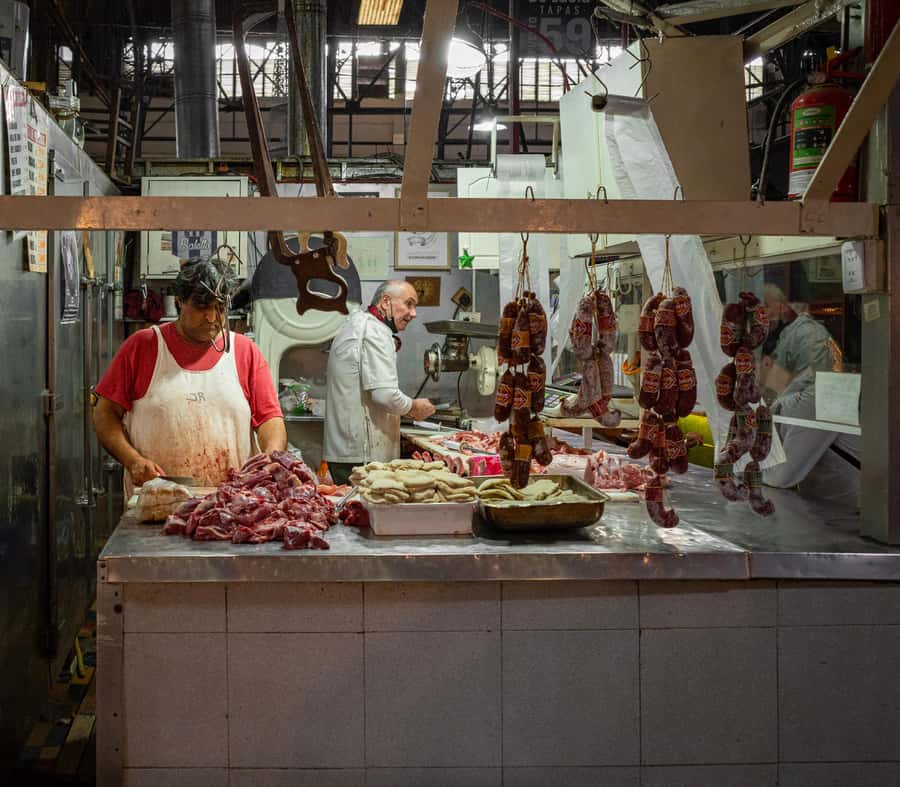
Next is Mercado San Telmo for about 30 minutes. The market is described as having been built up by Italian immigrants, and that detail helps you read the place with more accuracy.
Markets tell you how cities feed themselves, but they also show you identity. Italian immigrant influence in Buenos Aires isn’t rare, yet in a market setting it becomes practical: food, stall culture, and everyday trading habits.
This stop is also a good place to take a breath in the walking flow. A market gives you choices—eat something, browse, or simply watch. It’s one of the most “you are here” moments on the route, because you’re seeing how people move through the day.
Puente de la Mujer: Calatrava’s Modern Answer to the Classic Streets
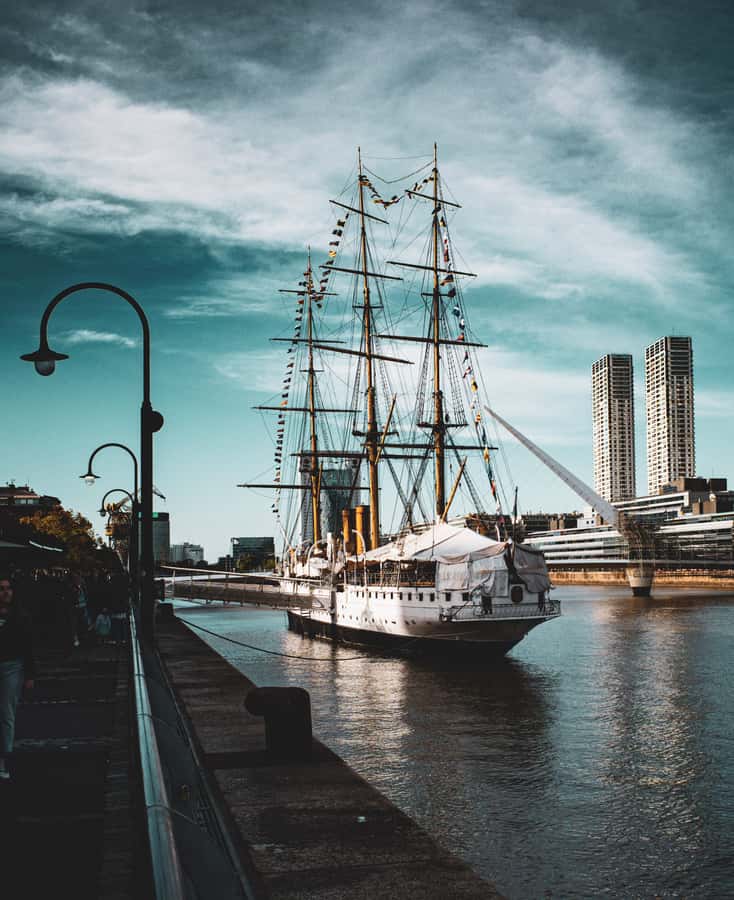
After San Telmo’s older layer, you head toward Puente de la Mujer (Woman’s Bridge) for about 15 minutes. The bridge is designed by Spanish architect and structural engineer Santiago Calatrava, and that name matters.
Why? Because it’s a clear contrast. After stepping through centuries of older Buenos Aires, you see a later style of urban design—sleeker and more modern, with a different way of symbolizing progress and movement.
This stop is quick, but it’s useful. It reminds you that Buenos Aires keeps changing. The city doesn’t freeze in one era just because old buildings exist.
Casa Rosada: Finishing at the President’s Office and Plaza de Mayo
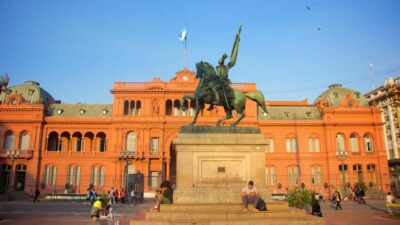
The route ends at the Casa Rosada area, specifically at Balcarce 78, with about 25 minutes spent there. Admission for this stop is not included, so if you want to go inside, you’ll need to plan for that separately.
Casa Rosada matters because it’s Buenos Aires’ political gravity point. Even if you don’t enter, standing near it helps you connect everything earlier in the walk: neighborhoods that grew around early power, streets that carry immigrant identity, and memory spaces that confront dictatorship trauma.
You also end close to Plaza de Mayo, which is often the emotional center of government imagery in the city. If you want an easy next step after the tour, this is a good place to do it.
How the Guides Make It Feel Like More Than Sightseeing
The biggest reason this experience gets such high ratings is the way guides communicate. In the feedback, people repeatedly highlight that the guide is sharp, engaging, and able to answer questions. Some reviews mention guides explaining architecture and politics with a level of clarity that feels like an in-person lecture—but still friendly and conversational.
You might also get small pacing supports. For example, one review notes the guide built in a break for snacks and/or bathroom time, which is a smart, practical detail on a 2 to 3 hour walk.
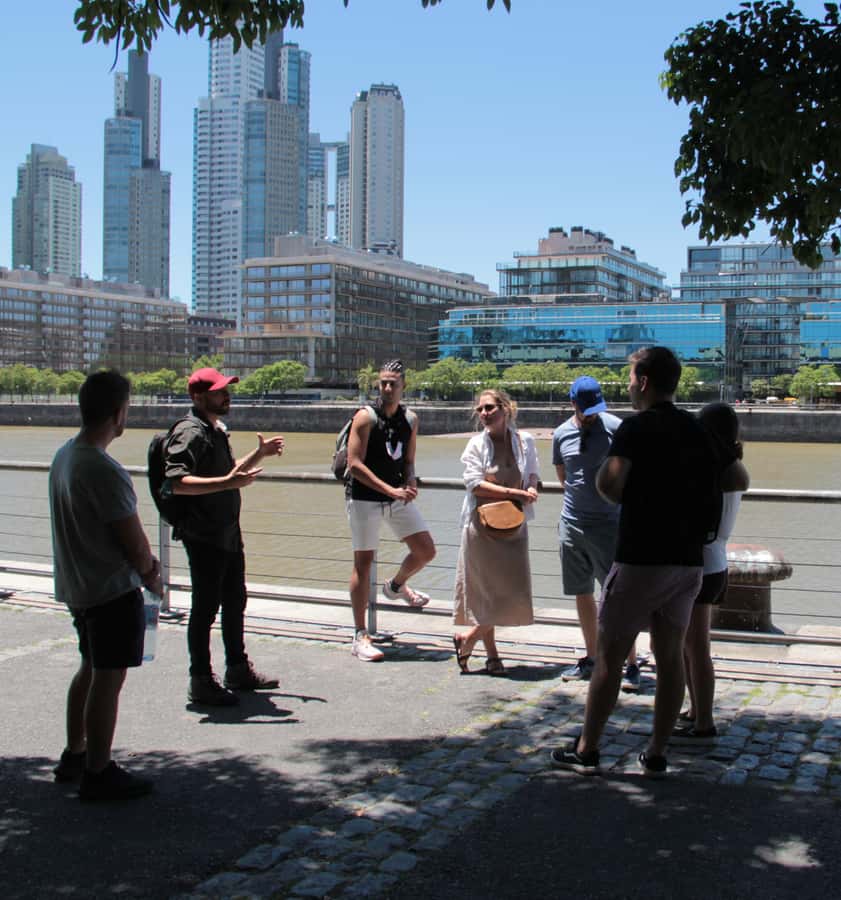
If you’re the type who asks lots of questions, this small-group format helps. With up to 8 people, the tour doesn’t disappear into a crowd’s rhythm. The guide can actually respond without you feeling like you’re talking to a megaphone.
Who This Tour Suits Best (And Who Might Want Something Else)
This tour fits you if you want to:
- understand Buenos Aires beyond basic sights
- walk through San Telmo and also reach Plaza de Mayo without rushing
- learn why certain places matter, including difficult history
- ask questions and get direct answers
It might be less ideal if you want:
- a pure photo-op checklist with minimal context
- an itinerary that avoids heavy topics
- a very structured script that never changes based on questions
Also, because it is a walking tour, you’ll want to be comfortable moving through neighborhood streets for a couple of hours.
Should You Book Buenos Aires for Curious People?
If your goal is to get a grounded sense of Buenos Aires in a short window, I’d book it. The route hits the main historic pillars you want—old beginnings, San Telmo street life, and ending at the Casa Rosada area—while also giving you at least one stop that most generic walks skip or sugarcoat.
The best part for value is the mostly free admission structure and the small group cap. At $33, you’re paying mainly for guide time and the ability to understand what you’re seeing while you walk.
My only caution is emotional: Memory Walk is part of the experience, and it deals with detention, torture, and extermination tied to 1976–1979. If that topic will weigh you down, plan your day thoughtfully after the tour.
FAQ
How long is the Buenos Aires walking tour?
It lasts about 2 to 3 hours.
How much does the tour cost?
The price is $33.00 per person.
Is there a maximum group size?
Yes. The tour has a maximum of 8 travelers.
Where does the tour start and end?
It starts at Bar Britanico, Brasil 399, and ends at Casa Rosada, Balcarce 78.
Are tickets included for the stops?
Most listed stops have admission ticket free, but Casa Rosada is not included.
What neighborhoods and sites will you see?
You’ll go through older parts of Buenos Aires including San Telmo, with stops such as Parque Lezama, Plaza Dorrego, Mercado San Telmo, Puente de la Mujer, and the Casa Rosada area.
Is the tour suitable for most people?
Most travelers can participate.
What happens if the weather is bad?
This experience requires good weather. If it’s canceled due to poor weather, you’ll be offered a different date or a full refund.
Can I cancel for a full refund?
Yes. You can cancel up to 24 hours in advance for a full refund. If you cancel less than 24 hours before the start time, the amount you paid will not be refunded.
Just added to our Buenos Aires notebook
- Guided tour Boca Juniors Museum & Stadium + Caminito
★ 3.3 · 3 reviews - Bike Tour: Buenos Aires to the North
★ 4.0 · 3 reviews - From Colonialism to Eclecticism, Buenos Aires arquitectonica
★ 5.0 · 3 reviews - Enjoy a Rural Experience in a Vineyard near Buenos Aires
★ 4.7 · 3 reviews - Café de los Angelitos – Traditional Night in Buenos Aires
★ 4.8 · 3 reviews - Buenos Aires: Rojo Tango Show with Optional Dinner
★ 3.4 · 3 reviews