
Reviewed · LANDMARKS & CITY ARCHITECTURE
From Colonialism to Eclecticism, Buenos Aires arquitectonica
Buildings tell the city’s real story. This 3-hour walk turns Buenos Aires architecture into a street-by-street guide, with context from Plaza de Mayo all the way to Teatro Colón. I love how Juan Ignacio and Loli make the details click fast, and I also love the included mate tasting plus traditional snack. The only drawback is that it’s a true walking tour, so plan for steady steps.
You’ll move through very different styles without changing cities. Expect the classic government-core look around Plaza de Mayo, then a sharper contrast north toward Reconquista Street and the Banco Hipotecario with its striking brutalist facade. You get time for photo stops and a bit of flexibility, since the guide can steer the tour toward your interests.
This is also a small-group experience, limited to 4 people, so questions actually get answered. The route runs along major landmarks you’ve heard of (like Corrientes Avenue) and also touches spots that feel more local and less “checklist.”
In This Review
- Key highlights I’d plan around
- Buenos Aires arquitectonica in 3 hours: how the route feels on your feet
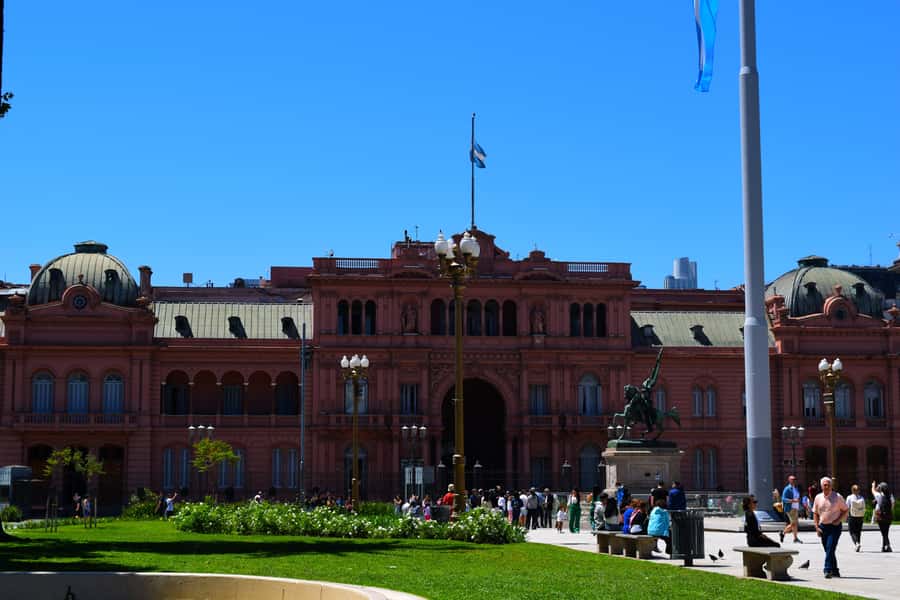
- Plaza de Mayo: Cabildo, Metropolitan Cathedral, Casa Rosada, and the “center of everything”
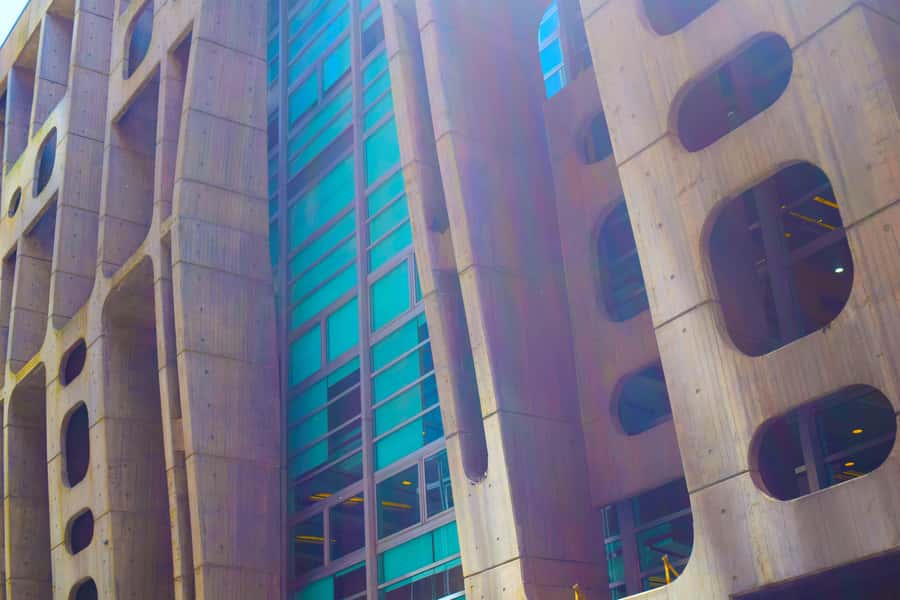
- Up Reconquista Street: Banco Hipotecario and the shock of brutalist form
- Centro Cultural Kirchner and the old Post and Telegraph Palace facade
- Corrientes Avenue: Gran Rex and Opera as living cultural landmarks
- Obelisco and Plaza de la República: political symbolism plus city geometry
- Plaza Lavalle: Courts Palace, Julio Argentino Roca School, and the tour’s final stretch
- Mate tasting with your guide: what you’ll get and why it fits this tour
- Teatro Colón finish: what to do with the optional guided interior
- Price and value: why $25 feels fair for this format
- Who this Buenos Aires architecture walk suits best
- Should you book From Colonialism to Eclecticism, Buenos Aires arquitectonica?
- FAQ
- How long is the tour?
- Where does it start?
- Where does the tour end?
- How big is the group?
- What languages are offered?
- What’s included in the price?
- Is the Teatro Colón interior visit included?
- What should I bring?
- Can I customize the tour?
- What’s the cancellation policy?
Key highlights I’d plan around
- Plaza de Mayo to Teatro Colón: one logical route that maps politics, commerce, and culture.
- Banco Hipotecario Brutalism stop: a real style contrast from the historic center.
- Corrientes Avenue icons: you’ll pass the Gran Rex and the Opera while learning what they mean now.
- Mate tasting included: you don’t just hear about it, you get a proper taste and explanation.
- Small group of up to 4: better pace, more Q&A, and room to customize.
More Belle Epoque palaces and grand landmarks of Buenos Aires.
- Classic City Tour of Buenos Aires: Neighborhoods and Emblems★ 3.8 · 282 reviews
- Buenos Aires: Palacio Barolo Entry Ticket and Guided Tour★ 4.3 · 193 reviews
- Buenos Aires: Palacio Barolo Guided Night Tour with Wine★ 4.4 · 54 reviews
Buenos Aires arquitectonica in 3 hours: how the route feels on your feet
This tour is built like a guided “reading” of the city. Instead of museum rooms, you get architectural landmarks you can see from the street, plus enough walking variety that the time doesn’t feel repetitive. The pacing works best if you like noticing details: facades, street corners, and the way Buenos Aires mixes old official buildings with later 20th-century shapes.
You also start in the political heart of the city and end at one of the most famous performance spaces in Argentina. That matters because the architecture you see isn’t just decorative. It’s tied to power, business, public life, and cultural identity.
A practical note: since it’s only 3 hours, you won’t have time to linger for long inside buildings. Most stops are focused on exterior facades, quick explanations, and photo moments, with one notable exception: Teatro Colón, where there’s an option to stay for an interior guided visit (entrance not included).
Plaza de Mayo: Cabildo, Metropolitan Cathedral, Casa Rosada, and the “center of everything”
You begin right at the Plaza de Mayo area near Bolívar and Avenida de Mayo. It’s a great start because you immediately feel how central this zone is to Buenos Aires. From here, the guide sets the tone: architecture as a timeline, and streets as an archive.
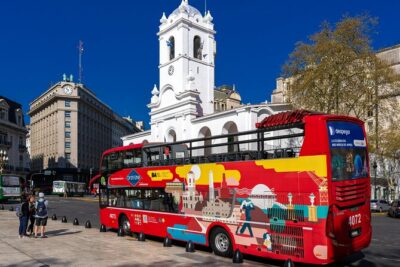
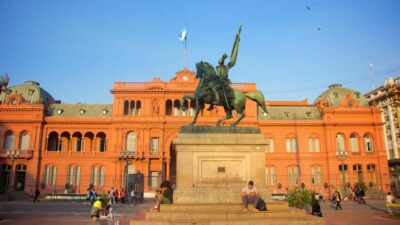
You’ll see the Cabildo of the city and the Metropolitan Cathedral, both anchors of the older Buenos Aires image. The tour then moves to Casa Rosada, where the building’s role in national life becomes part of the architectural story, not just the backdrop. Next up is Banco Nación, a key civic-and-economic presence along the same “power corridor.”
What I like about this first stretch is how it trains your eyes. You start noticing what different buildings are trying to project: authority, permanence, stability, prosperity. Even if you don’t consider yourself an architecture person, the guide’s job is to translate stone-and-columns into meaning you can actually use while you walk.
If you’re sensitive to sun or heat, dress accordingly. This area is open and you’ll be outside for most of the time, so hat and sunscreen aren’t optional in practice.
Up Reconquista Street: Banco Hipotecario and the shock of brutalist form
After the formal center, the route shifts north via Reconquista Street, where the city’s texture starts to feel more commercial and layered. This is where the tour earns its “from Colonialism to Eclecticism” promise, because the architecture isn’t just old and classic. You also get modern statements.
The standout here is the headquarters of Banco Hipotecario and its Brutalist facade. Brutalism can feel like a cultural “left turn” if you’re used to smoother, traditional European-looking styles. The payoff is that you learn to see the logic behind it: scale, massing, and the sense of building-as-infrastructure.
This is also a great moment for your camera. The facades are visual even at street level, and it’s the kind of stop where the guide can point out specific features so your photos don’t turn into random street shots.
One more reason this section works: it breaks up the tour’s rhythm. After the historic-government buildings near Plaza de Mayo, this stop gives your brain a new reference point for what you’re seeing across the rest of the walk.
Centro Cultural Kirchner and the old Post and Telegraph Palace facade
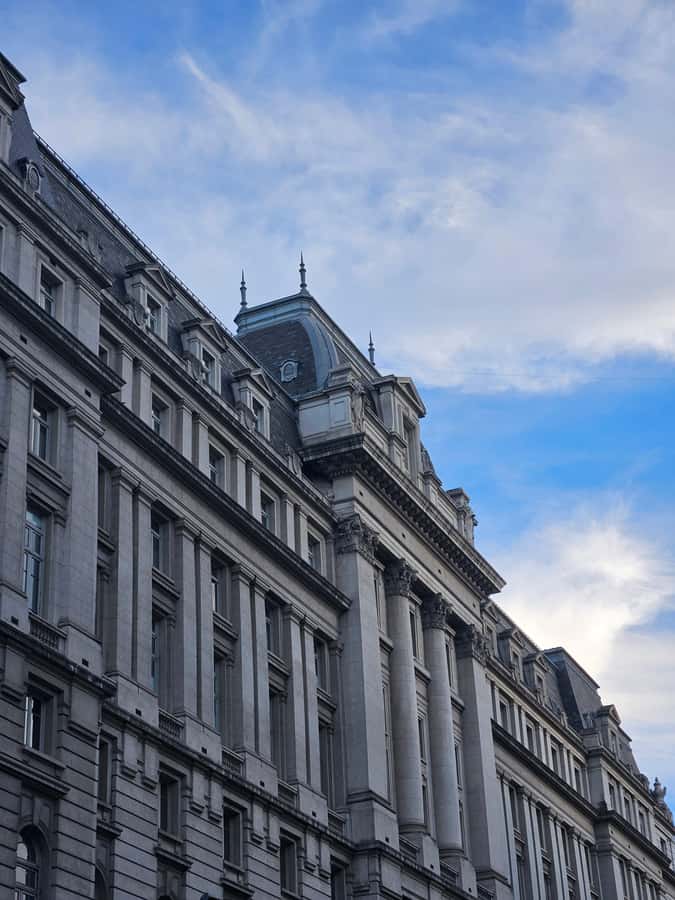
From the Banco Hipotecario area, you continue toward Centro Cultural Kirchner (CCK). The tour includes a look at its facade, plus context for the building’s earlier role as the former Palacio de Correos y Telégrafos (Post and Telegraph Palace).
Why this matters: communication buildings are a quieter kind of landmark. They’re not always the first thing people photograph in Buenos Aires, but they reveal how a city connects itself. In this case, the architecture becomes a clue to an era when postal and telegraph systems were the city’s nervous system.
This section is also a good time to watch the street around you. The CCK area sits in a zone where modern Buenos Aires life happens in the same visual frame as older civic planning. You start to understand eclecticism as a practical reality here, not a fancy label.
If you’re short on energy, this is one of the easier stretches because it’s a focused “look and learn” stop, not a long sequence of tiny details.
Corrientes Avenue: Gran Rex and Opera as living cultural landmarks
Then you head toward Corrientes Avenue, the center of nightlife and culture in Buenos Aires. Even if you’re there in daytime, the street layout and the building scale show you why this corridor keeps pulling people in.
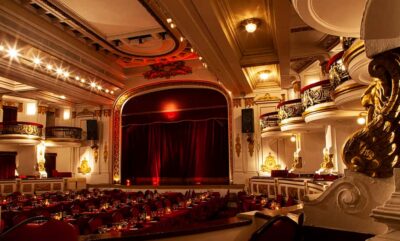
Along the way, you’ll pass two major icons: the Gran Rex and the Opera. The tour frames them historically and also talks about their current role as places of congregation and shows. You aren’t just learning names; you’re learning why these buildings still matter.
One useful thing the guide does on streets like Corrientes is connect architecture to function. These theaters and performance buildings are designed for crowds. When you understand that, the facades and street presence make more sense. They’re built to be seen, reached, and filled.
There’s also a practical rhythm here: corridors like Corrientes can feel loud and active depending on the time of day. Wear comfortable clothes and keep your water handy, since the tour keeps you moving toward the next major photo-and-view point.
Obelisco and Plaza de la República: political symbolism plus city geometry
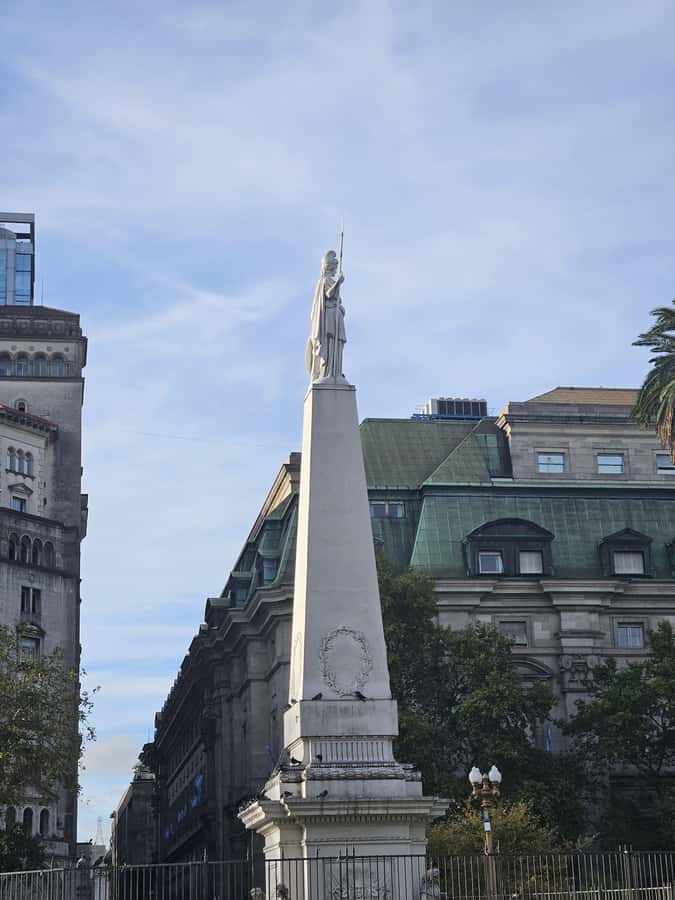
The first part of the tour ends with the Obelisk and Plaza de la República. The Obelisk is one of those landmarks that everyone recognizes, but the tour adds the missing layer: its history and importance for political and social life in Argentina.
From there, you continue along Diagonal Norte for a brief pause around the Obelisk staircase. This gives you a panoramic viewpoint over a key Buenos Aires intersection: Av. 9 de Julio and Corrientes. You get the bigger picture without needing a viewpoint bus or a separate tour.
This is a smart use of your time. You’ve spent the earlier portion reading individual facades. Now the guide helps you step back and see how the city’s main streets push people into shared public space. When you look down at the intersection from a higher angle, the architecture becomes a grid that shapes everyday movement.
If you hate crowds, plan your expectations. This area is central and busy by nature, and your best strategy is to take the viewpoint when the group pauses, then let the guide keep you moving.
Plaza Lavalle: Courts Palace, Julio Argentino Roca School, and the tour’s final stretch
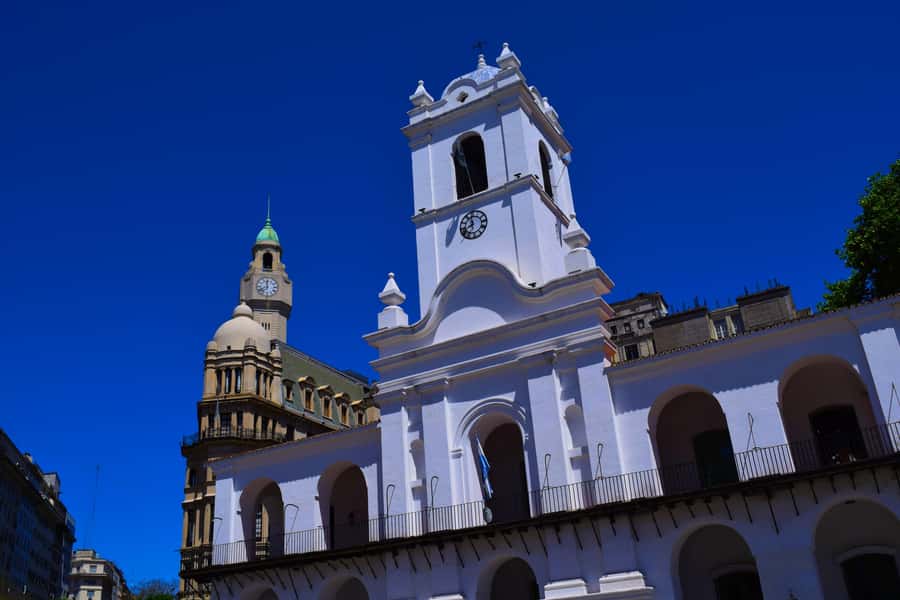
In the last portion, you arrive at Plaza Lavalle. Here you’ll focus on two famous buildings: the Courts Palace and the Julio Argentino Roca School.
This is a quieter “institutional” stop compared to the theaters of Corrientes or the political weight near Plaza de Mayo. Still, it’s important because it rounds out the story: not just government and culture, but education and law. Buenos Aires reads like one big system of public life, and these buildings are part of how that system signals itself.
You’ll also use this zone as the setting for mate. The guide keeps the emotional tone of the tour human and local here, not just academic. It’s a good transition from stone and symbolism to a cultural ritual you can actually experience.
If you’ve been walking in the sun, this is a decent time to pause and reset. The group keeps moving, but the mate tasting gives you a natural break in the program.
Mate tasting with your guide: what you’ll get and why it fits this tour
The tour includes a mate tasting, along with a traditional Argentinean snack and water. The guide explains mate’s history and tradition, so it’s not treated as a gimmick. Instead, it ties the cultural experience into the same theme as the architecture: how Buenos Aires shares identity through daily rituals.
In my view, this is where the tour becomes more than a list of buildings. Architecture is something you look at. Mate is something you participate in, even briefly. That change of pace helps you remember the places better, too. When you taste something local while standing near major civic buildings, it connects culture to context.
From the guides’ style, you can also expect a guided, low-stress experience. Reviews highlight that Juan Ignacio and Loli handle questions well and make the mate experience feel natural and friendly, including the snack portion (like typical cookies) that many first-timers hadn’t tried before.
Bring your usual social sense: if you’re not sure how mate works, just watch what the guide does. The point here is learning and tasting, not performing.
Teatro Colón finish: what to do with the optional guided interior
The tour ends at Teatro Colón. Even from the outside, it’s an iconic endpoint for an architecture walk. Finishing here works because the earlier stops have already mapped the city’s public life—then you close with a building designed for shared performance and cultural gatherings.
The tour includes an option to stay for a guided visit inside Teatro Colón. Entrance is not included, so if you want the inside portion, you’ll need to plan for that cost separately. Still, the fact that the tour brings you here gives you a clean, logical ending instead of scattering you across the city.
If you’re deciding whether to wait for the interior visit, consider your day. If you’re tired, even standing outside Teatro Colón after a full walk feels like a fitting finish. If you’re eager to see more, the interior option is the payoff for your patience.
Price and value: why $25 feels fair for this format
At $25 per person for a 3-hour walking experience, the value comes from what’s included rather than the itinerary length. You get an English-speaking guide throughout, water, a traditional snack, and mate tasting, plus a small-group format capped at 4 participants.
That small group matters more than it seems. In a crowded city center, it’s the difference between hearing the guide clearly versus playing a game of catch-up. It also means you can ask more specific questions about what you’re seeing right then, not only at the end of the tour.
You can also customize the tour based on your interests. If you’re more drawn to the contrast of styles, you’ll want the guide to slow down at points like Banco Hipotecario. If you care more about theater and culture, you’ll probably want extra attention around Corrientes and Teatro Colón. The best tours let you steer a little, and this one is built for that.
Who this Buenos Aires architecture walk suits best
This is ideal if you’re:
- A first-timer who wants the city’s big-name landmarks without only doing the same museum-style route
- An architecture lover who likes context, not just dates and names
- Someone who wants culture through everyday experiences, like mate, not just photos
It’s also a good fit if you like asking questions. Reviews specifically call out that Juan Ignacio has an excellent memory for architects and periods, and that Loli shares stories that connect the architecture to broader South American context. If that sounds like your kind of tour, you’ll probably enjoy the pacing and detail.
If you hate walking or prefer long indoor time, you might find the format tight. This is a street tour. Even the most famous stops are still primarily exterior views.
Should you book From Colonialism to Eclecticism, Buenos Aires arquitectonica?
I think you should book it if you want a short, focused route that turns Buenos Aires buildings into a readable story. The route makes sense: Plaza de Mayo for civic roots, Reconquista and Banco Hipotecario for style contrast, CCK and Corrientes for cultural layers, then Plaza Lavalle and Teatro Colón to close the loop.
Skip it only if you’re looking for a fully indoor, museum-like visit with lots of entrances included. Teatro Colón interior is optional and not included, and the rest is designed for seeing facades, learning on the street, and tasting mate as you go.
If you’re the kind of traveler who enjoys details—especially when the guide can answer questions—this tour is a strong match. With a group of up to 4, you’re not competing for attention, and the architecture lessons feel personal rather than rushed.
FAQ
How long is the tour?
The tour lasts 3 hours.
Where does it start?
It starts in Plaza de Mayo at the intersection of Bolívar and Avenida de Mayo (listed as Bolívar 65).
Where does the tour end?
It ends at Teatro Colón. The activity also notes an end back at the meeting point area.
How big is the group?
It’s a small group limited to 4 participants.
What languages are offered?
The live tour guide offers Spanish and English.
What’s included in the price?
An English-speaking tour guide throughout the tour, water, a traditional Argentinean snack, and mate tasting.
Is the Teatro Colón interior visit included?
No. Entrance to Teatro Colón is not included, though there is an option to take a guided visit inside.
What should I bring?
Bring comfortable shoes, sunglasses, a hat, sunscreen, and comfortable clothes.
Can I customize the tour?
Yes. You can customize the tour based on your tastes and/or interests.
What’s the cancellation policy?
You can cancel up to 24 hours in advance for a full refund.
The Palaces of Buenos Aires, Continued




Just added to our Buenos Aires notebook
- Guided tour Boca Juniors Museum & Stadium + Caminito
★ 3.3 · 3 reviews - Bike Tour: Buenos Aires to the North
★ 4.0 · 3 reviews - From Colonialism to Eclecticism, Buenos Aires arquitectonica
★ 5.0 · 3 reviews - Enjoy a Rural Experience in a Vineyard near Buenos Aires
★ 4.7 · 3 reviews - Café de los Angelitos – Traditional Night in Buenos Aires
★ 4.8 · 3 reviews - Buenos Aires: Rojo Tango Show with Optional Dinner
★ 3.4 · 3 reviews
Landmarks & City Architecture, compared.
 ★ 3.8Classic City Tour of Buenos Aires: Neighborhoods and EmblemsFrom $45282 reviews
 ★ 4.3Palacio Barolo Entry Ticket and Guided TourFrom $67193 reviews
 ★ 4.4Palacio Barolo Guided Night Tour with WineFrom $9054 reviews
 ★ 4.9Historic Buenos Aires Landmarks & Icons TourFrom $2037 reviews
 ★ 4.7Historic District Private Guided Walking TourFrom $529 reviews
 ★ 4.0100% History and architecture of Buenos AiresFrom $125 reviews
 ★ 5.0Montserrat, San Telmo, La Boca, and Puerto …From $1003 reviews
 ★ 4.1MALBA Museo de Arte Latinoamericano TourFrom $1303 reviews
Browse the lists this tour appears in