
Reviewed · BUENOS AIRES
Jewish Buenos Aires Private Tour
Once has a pulse you feel. In about 4 hours, this private Jewish Buenos Aires tour pairs synagogue time with a street-level look at the Once neighborhood, plus powerful AMIA and Holocaust remembrance. I also love the undivided guide attention and the way the route can be tailored to what you care about. One watch-out: two synagogue-related tickets and the Jewish Museum entry cost extra, so your total in practice will be higher than the base price.
This is also not a purely sightseeing stop list. The AMIA-linked history and memorial sites can be heavy, and the emotional tone matters if you’re hoping for a lighter, mostly upbeat walk through the city.
Key things that make this tour worth your time
- Private, customized pacing with a guide who connects Jewish life to Argentina’s modern history
- Once neighborhood walking in the garment district with kosher shops and Jewish institutions you can actually see
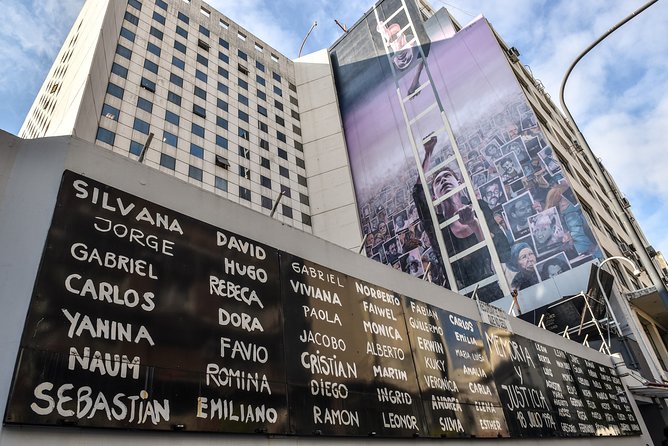
- AMIA memory in two places: a mural outside the federation building and a Holocaust/AMIA memorial inside Catedral Primada
- Museo Judio de Buenos Aires + Libertad Synagogue access tied together with one museum ticket
- A look at older roots with a visit to Great Temple Paso, the oldest synagogue mentioned on this route
- Good odds for real community context if you time it for Friday afternoon or Jewish holidays like Purim
In This Review
- Jewish Buenos Aires Private Tour: what you’re really buying for $280
- Once (El Once barrio comercial): kosher streets, mixed communities, and the feeling of continuity
- AMIA memory stops: why the mural and the later cathedral memorial hit differently
- Jewish Museum of Buenos Aires and Libertad Synagogue: the ticket that doubles as a time machine
- Great Temple Paso: seeing older Jewish roots in a single synagogue visit
- Catedral Primada memorial inside a major cathedral: a quiet place with heavy context
- Price and tickets: how to estimate your true cost
- Who this Jewish Buenos Aires tour fits best (and who might not love it)
- Booking timing and what to check before you leave
- Should you book this Jewish Buenos Aires Private Tour?
- FAQ
- How long is the Jewish Buenos Aires private tour?
- Is this a private tour or shared group?
- What locations offer hotel pickup and drop-off?
- What is the tour price per person?
- Are synagogue and museum tickets included in the price?
- Which museum and synagogue are connected by a single ticket?
- How soon will I get confirmation after booking?
- Is the tour refundable if I need to cancel?
Jewish Buenos Aires Private Tour: what you’re really buying for $280
At $280 per person for roughly 4 hours, you’re paying for three things: a guide who focuses on Jewish history, door-to-door convenience, and a private format where you can ask questions without racing the clock.
You get free hotel pickup and drop-off, plus a modern vehicle with a professional driver. That matters in Buenos Aires because distances are real, traffic can be unpredictable, and the Once area rewards slow street observation more than quick photo stops.
The private part is where the value shows. In Buenos Aires, it’s easy to see buildings and miss meaning. A good guide turns Jewish Buenos Aires into a lived story: migration, community institutions, daily religious rhythms, and the modern trauma connected to AMIA.
The only budget snag is that the tour isn’t all-inclusive on admission. The Libertad Synagogue and Jewish Museum require a ticket (listed as $15 per person), and Great Temple Paso has its own ticket (listed as $10 per person). If you’re counting total costs, plan on adding about $25 per person on top of the base price.
Not sure which barrio to start in? A few more Buenos Aires tours worth a look.
- Buenos Aires Hop-On Hop-Off Bus, Free Walking Tours & Discounts★ 4.5 · 2,218 reviews
- Buenos Aires: Piazzolla Tango Show with Optional Dinner★ 4.4 · 2,122 reviews
- Buenos Aires: City Highlights Guided Tour with Transfer★ 4.7 · 1,946 reviews
Once (El Once barrio comercial): kosher streets, mixed communities, and the feeling of continuity
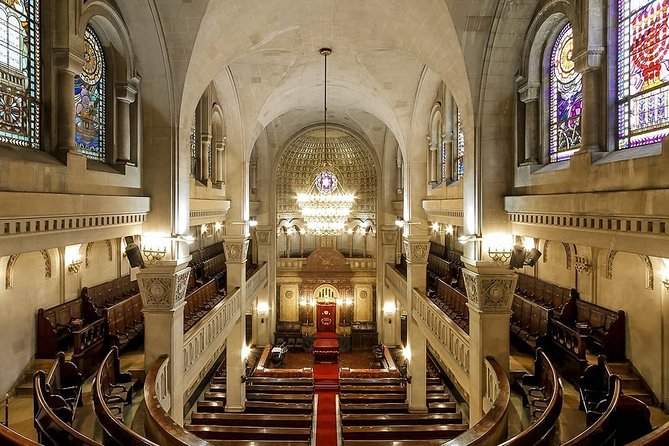
The tour begins in El Once, known as the Jewish Quarter, in the middle of the garment district. This is one of those Buenos Aires neighborhoods where you don’t just read history—you see it in storefronts, institutions, and the everyday rhythm of people walking in familiar patterns.
Expect a small walking segment. It’s not about turning it into a long hike. It’s about getting your bearings fast and noticing the details a car can’t give you: kosher markets, Jewish institutions, and orthodox congregations alongside the non-Jewish neighborhood around them. One of the strongest points here is the way the guide explains how Sephardic and Ashkenazi communities share this space while still carrying different customs.
You also get specific visual anchors in this part of the tour:
- the new building of the Jewish Federation (AMIA) area
- the IFT theater, a former Yidish theater
- local shops and kosher market streets where the past doesn’t feel archived
A small but practical tip: comfortable shoes matter more here than you might expect. Even a short walking stretch on uneven sidewalks can add up when you’re looking up at facades, peeking into store signs, and stopping for explanations.
AMIA memory stops: why the mural and the later cathedral memorial hit differently
Buenos Aires has layers of history, and the AMIA story is one of the most painful. On this route, you’ll connect the 1990s attacks to visible remembrance.
Near the federation building, you’ll see it from the outside along with a mural painted to remember the 1994 terrorist attack. This is the first kind of memorial: public art in a neighborhood street context. It’s close to daily life, not hidden behind a museum wall.
Later, you’ll encounter a second type of remembrance inside the main cathedral of Argentina, Catedral Primada. That memorial is set up specifically for the victims of the Holocaust and the AMIA terrorist attack. Two key differences make these stops land:
- One is street-facing and immediate; the other is inside a major religious site where solemnity and ritual spaces are part of the setting.
- The guide can connect how these events reshape community life, not just how they make headlines.
In the way the tour is framed, you’re not only learning dates. You’re understanding why Jewish Buenos Aires still responds to these events through institutions, cultural continuity, and community memory.
If you prefer only lighter topics, consider whether memorial-heavy stops fit your mood. If you’re okay with emotional weight, this is one of the most meaningful segments in the whole experience.
Jewish Museum of Buenos Aires and Libertad Synagogue: the ticket that doubles as a time machine
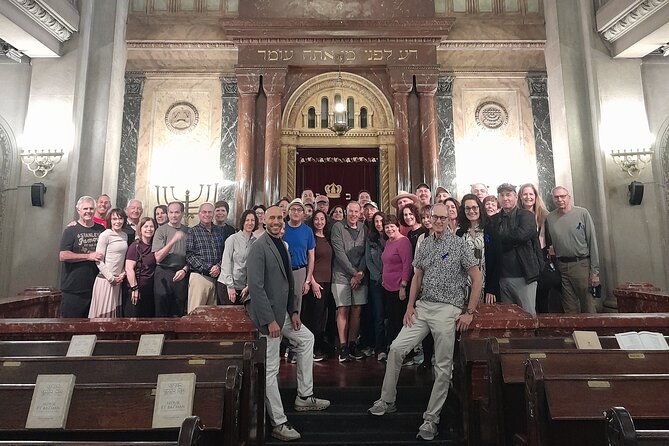
Next comes Museo Judio de Buenos Aires, inaugurated in 1967. It’s positioned next to Libertad Synagogue, which the tour highlights as one of the standout synagogue experiences in Buenos Aires.
This is where the tour shifts from street storytelling into structured history. The museum narrates stories of immigrants, Jewish colonies, and traditions—so you get more than community facts. You get the human timeline behind how Buenos Aires became a major home for Jewish life in Argentina.
Here’s the practical detail that makes planning easier: the Jewish Museum ticket gives you access to Libertad Synagogue. So you’re not buying two separate entries. Your museum ticket covers both the museum visit and entry to the synagogue.
Libertad Synagogue itself is notable for a few reasons the guide can put into context:
- it was built in 1932
- it belongs to CIRA, the Israeli Congregation of Argentine Republic
- that congregation was established in 1862, making CIRA one of the earliest Jewish institutions in the country
If you like architecture and symbolism, this stop can feel like a bridge between the abstract and the physical. You’re seeing how a community expresses identity through building, ritual space, and public presence.
One drawback to keep in mind: museum timing can vary based on your pace and questions. This tour keeps the visit to around an hour for this section, which is usually enough, but if you have a strong interest in artifacts and the timeline, you may want to budget extra time for wandering beyond what your guide covers.
Great Temple Paso: seeing older Jewish roots in a single synagogue visit
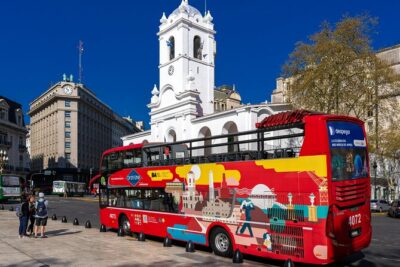
The oldest synagogue highlighted here is Great Temple Paso. The tour includes a visit to this synagogue, and entry is listed as free.
Why it matters: older synagogues aren’t just old buildings. They show how community structures formed early and how religious life took root in Buenos Aires over time. When a guide pairs this visit with stories about migration and local institutions, you start seeing the synagogue as a living chapter, not a historical prop.
Even if you’re not a religious-history specialist, you’ll likely appreciate the way this stop supports the rest of the tour. It gives you a “before” anchor, so when you later see memorials and 20th-century history, the timeline feels less like disconnected events.
The practical caution: despite being a free-entry synagogue on this route, the data lists an additional ticket for Gran Templo Paso ($10 per person). So double-check what is actually included on the day you book, then budget for the synagogue ticket if it applies to your package.
Catedral Primada memorial inside a major cathedral: a quiet place with heavy context
The final stop is Catedral Primada, where you’ll visit a memorial inside the main cathedral. This part is short—about 20 minutes—and admission is listed as free.
You’ll see remembrance for two things:
- victims of the Holocaust
- the terrorist attack against AMIA (Jewish Federation)
The cathedral setting changes the vibe. Outdoors, street memorials can invite reflection while still feeling tied to everyday movement. Inside a grand religious space, the same subject matter often feels slower and more contained. That can be useful. It gives you a pocket of silence after the neighborhood walking and museum context.
If you’re the kind of traveler who likes to pair big history with place-based meaning, this stop is a smart closer. It turns the tour from a “see and learn” experience into something you actually feel.
Price and tickets: how to estimate your true cost
Here’s the math you’ll want before you book:
- Base tour price: $280 per person
- Not included:
- Libertad Synagogue & Jewish Museum: $15 per person
- Gran Templo Paso: $10 per person
So a realistic total often lands around $305 per person, depending on how the paid entries are applied to your day.
This still can be good value, because you’re getting:
- private guide time (not a shared group)
- hotel/Airbnb/cruise pickup and drop-off
- a driver and modern vehicle
- guided access through multiple key Jewish sites in a short window
But you should know what you’re paying for. If you’re traveling on a tight budget and you’re comfortable reading a guidebook while using public transit, a self-guided plan could be cheaper. The private format is what justifies the price here.
Also note: this experience is non-refundable and cannot be changed for any reason. If your travel dates are flexible or you’re traveling with medical risks, build in buffer time and consider travel insurance.
Who this Jewish Buenos Aires tour fits best (and who might not love it)
This tour is a strong match if:
- you want a private, question-friendly guide who can connect Jewish life to Argentina’s larger historical story
- you care about both culture and modern history, including difficult subjects
- you’re interested in seeing how the Once neighborhood functions as an active community space, not just a postcard district
- you’re visiting synagogues and want more than a quick look at architecture
It might not be your best fit if:
- you want a mostly light, entertainment-style city walk
- you’re allergic to memorial sites and would rather save that energy for other days
- you can’t handle extra ticket payments on top of the base tour price
One scheduling tip based on past visitor patterns: if your dates line up, consider doing it on a Friday afternoon, when the neighborhood has extra energy ahead of Shabbat. If you’re in town for Purim, the community layers of the story can feel even more vivid.
Booking timing and what to check before you leave
This tour averages being booked about 54 days in advance, so it’s not a last-minute gamble. If you want a specific day (especially during busy seasons), booking earlier is smarter than hoping.
Before you go, do three simple things:
- confirm pickup location and timing the day before
- wear shoes for some walking in Once
- bring a willingness to slow down for questions, because the best part of this tour is how the guide explains meaning, not just where to stand for photos
Also, since timing changes can happen in the real world, build in a little buffer so you’re not trying to transfer immediately to another timed activity.
Should you book this Jewish Buenos Aires Private Tour?
If your goal is to understand Jewish Buenos Aires beyond a brochure, I’d say yes. The blend is rare in a short window: street life in Once, museum context, synagogue visits, and memorial sites that connect community history to real-world events. The private format makes it feel personal, and the guide’s ability to connect timelines and institutions is the difference between “I saw things” and “I get the story.”
Book it if you’re curious, emotionally steady, and ready to ask questions. Consider skipping if you’re looking for a quick, light city overview or you dislike tours where memorial and 20th-century trauma are part of the route.
FAQ
How long is the Jewish Buenos Aires private tour?
The tour is about 4 hours (approx.).
Is this a private tour or shared group?
This is a private tour/activity. Only your group will participate.
What locations offer hotel pickup and drop-off?
Pickup and drop-off are available at your hotel, Airbnb, or cruise ship terminal.
What is the tour price per person?
The listed price is $280.00 per person.
Are synagogue and museum tickets included in the price?
No. Libertad Synagogue & the Jewish Museum cost $15.00 per person, and Gran Templo Paso costs $10.00 per person.
Which museum and synagogue are connected by a single ticket?
The Jewish Museum of Buenos Aires ticket also provides access to Libertad Synagogue.
How soon will I get confirmation after booking?
Confirmation is received within 48 hours of booking, subject to availability.
Is the tour refundable if I need to cancel?
This experience is non-refundable and cannot be changed for any reason.
Just added to our Buenos Aires notebook
- Guided tour Boca Juniors Museum & Stadium + Caminito
★ 3.3 · 3 reviews - Bike Tour: Buenos Aires to the North
★ 4.0 · 3 reviews - From Colonialism to Eclecticism, Buenos Aires arquitectonica
★ 5.0 · 3 reviews - Enjoy a Rural Experience in a Vineyard near Buenos Aires
★ 4.7 · 3 reviews - Café de los Angelitos – Traditional Night in Buenos Aires
★ 4.8 · 3 reviews - Buenos Aires: Rojo Tango Show with Optional Dinner
★ 3.4 · 3 reviews