
Reviewed · NORTH & SOUTH BIKE CIRCUITS
Private Off the Beaten Path: Hidden Urban Art Bike Tour
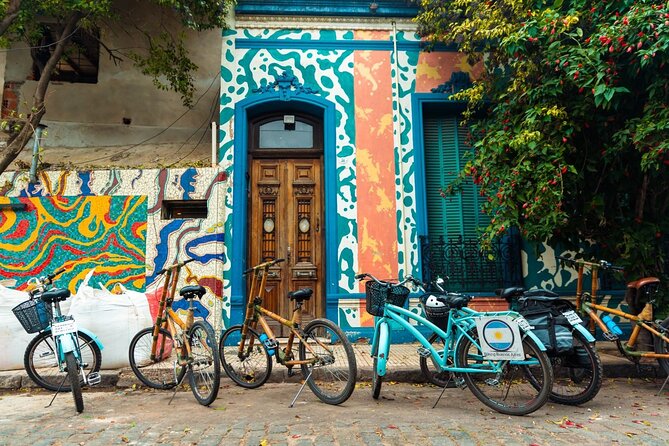
Street art in Buenos Aires makes more sense with wheels. This 4-hour bike tour takes you through working neighborhoods where walls carry stories, politics, sports energy, and local pride.
I especially like the way the route keeps you off the tourist track without feeling random. You get an orientation first, then you’re guided through streets and collectives you’d be unlikely to find on your own.
One thing to consider: this is not a casual roll-through. You’ll need solid comfort biking in an urban setting and riding through non-touristy areas, and the bikes could use a bit more attention to maintenance depending on the day.
In This Review
- Key things that make this tour worth it
- San Telmo start: bike check, street skills, and a mission behind the ride
- Calle Lanín and the story of a street that was almost dead
- Barracas murals and Pasaje Lanín: where size becomes story
- The “who painted what” part, without turning it into a quiz
- Caminito by bike: stencil surprises and time to wander
- La Boca’s murals: collectives, soccer energy, and working-class color
- Design district stops: Metropolitan Design Center and Cooperativa Vieytes
- How the pacing works: about eight stops, breaks on purpose
- Price and value: $115 for a private half-day with bikes and local food
- Safety and ride comfort: what you should know before you say yes
- Practical details that help your day run smoothly
- Should you book the Hidden Urban Art Bike Tour?
- FAQ
- What is the duration of the Buenos Aires street art bike tour?
- Where does the tour start and end?
- How much does it cost?
- Is this a private tour?
- What language will the guide speak?
- Does the tour operate in bad weather?
- Is an e-bike available?
- What kind of cancelation options do I have?
Key things that make this tour worth it
- San Telmo start + bike orientation: you get riding tips before you head south into neighborhood streets
- Calle Lanín’s UNESCO nod: a street with a comeback story tied to artist Marino Santa Maria
- Barracas mural scale: Pasaje Lanín walls and a famous Alfredo Segatori work spanning three buildings
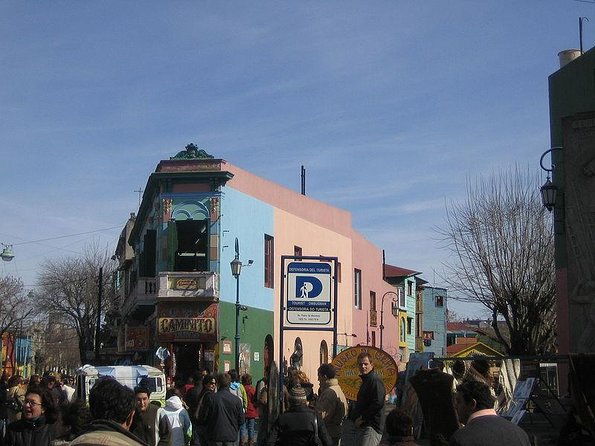
- Caminito with a street-art twist: including a stealth stencil moment plus time to wander
- Stops designed for conversation: about eight stops with breaks for foot-walking, photos, and yerba mate
More two-wheel loops through the barrios of Buenos Aires.
- Buenos Aires: North or South Buenos Aires Bike Tour★ 4.7 · 719 reviews
- Buenos Aires: Full Day Bike Tour with Lunch★ 4.9 · 152 reviews
- Buenos Aires Bike Tour: North Districts, Recoleta and Palermo★ 4.5 · 91 reviews
San Telmo start: bike check, street skills, and a mission behind the ride
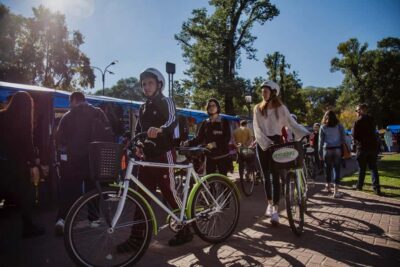
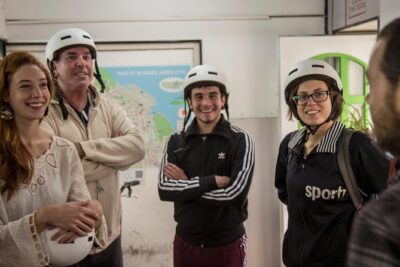
The day kicks off in San Telmo, at Balcarce 1016, early afternoon. Before you pedal anywhere, you’ll get a bike orientation and practical urban-riding tips, which matters because the tour spends real time on backstreets and busy thoroughfares.
This operator also frames the experience with a social-purpose angle. One stop explains they were the first in Argentina to sign a constitutional agreement with Holocary, aiming to operate as a For Purpose Enterprise with a bossless flat structure. You may not notice that on the road, but it helps explain why the guide focus often feels people-first, not just photo-first.
If you’re doing this early in your trip, the payoff is big: you leave with a better instinct for how Buenos Aires neighborhoods work, and how street art connects to identity—sports, community, and politics.
Calle Lanín and the story of a street that was almost dead
From the start area, the route moves you toward Calle Lanín, one of those places you’d miss unless someone pointed it out. The street name has a meaning connected to being almost dead, and it was brought back to life through the work of artist Marino Santa Maria.
What makes this stop special for your visit is the way it changes your reading of the city. Instead of treating murals like decoration, the guide helps you see the transformation: a street’s reputation can shift when art gives it new attention and meaning.
You also get a UNESCO cultural-interest connection here, which adds weight to what you’re seeing, even if you’re not a museum person. It turns a quick street stop into a real mini-lesson in cultural recognition.
Barracas murals and Pasaje Lanín: where size becomes story
Next is Barracas, a neighborhood where street art feels tied to daily life, not tourism. You’ll spend time around Pasaje Lanín, known for detailed mosaics and for the kind of long-view mural-making Buenos Aires does well.
This is also where you’ll see Alfredo Segatori’s major work, identified as El Regreso de Quinquela. The tour notes it used to be the longest mural painted by one person (and is now the longest in Argentina), and it’s associated with Segatori, also known as Pelado.
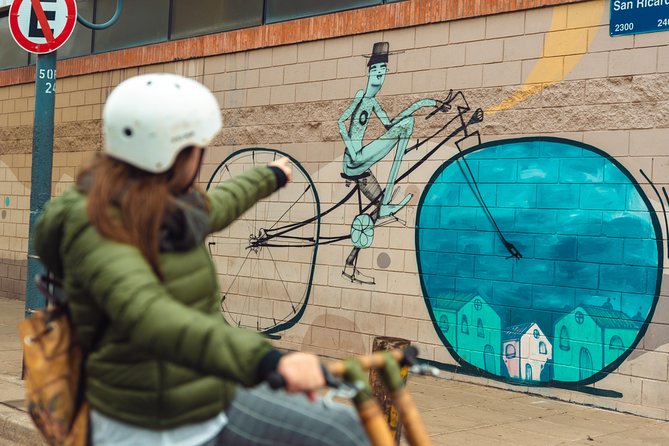
The reason this matters to you as a rider is scale. When a mural stretches across multiple buildings or covers a long corridor, you can feel how the artist is thinking in neighborhoods, not in single walls. Photos will look better too, because you’re not standing at a random angle—you’re moving through the space the way the art was meant to be experienced.
More of Buenos Aires seen from the saddle.
The “who painted what” part, without turning it into a quiz
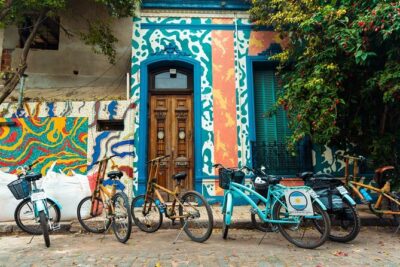
Barracas also includes collaborative works tied to local street-art culture. You may see a collaborative mural representing the Styles Street Art Convention and pieces by local artists such as Pum Pum, Mart, Pol Corona, and Martin Ron.
That list might look like trivia on paper. On the street, it turns into something useful: you start to notice styles, repeating themes, and the difference between tagging, design-forward murals, and politically pointed messaging.
Caminito by bike: stencil surprises and time to wander
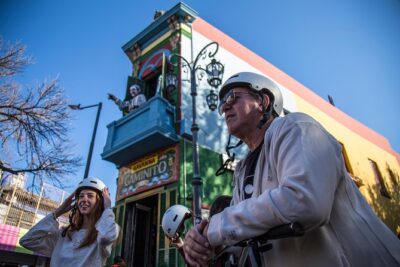
Caminito is the neighborhood most visitors recognize, but this tour doesn’t treat it like a quick sightseeing stop. You’ll spend a longer stretch here—about 1 hour 30 minutes—and the guide helps you understand how it became one of the city’s most visited colorful areas.
What I like about this approach is that you don’t just walk the famous lanes and call it a day. You get context, then you move like a local for photos and exploration time.
There’s also a Stealth Stencil moment built in. Even without you being an art expert, it’s the kind of small, hands-on-style pause that makes the whole street-art theme feel more real. Plus, you’ll sample a local beverage described as a beloved favorite among Argentines, so you get the neighborhood taste, not just the view.
If you’re tight on time in Buenos Aires, Caminito can turn into a trap. Doing it by bike with a guide turns it into part of a bigger story—one that includes working neighborhoods and contemporary creative collectives, not just postcards.
La Boca’s murals: collectives, soccer energy, and working-class color
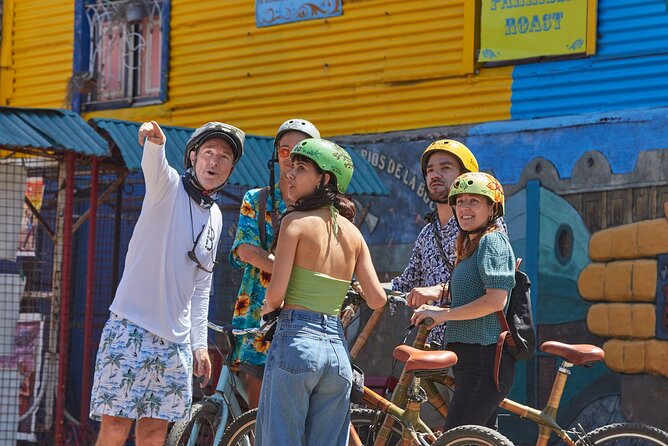
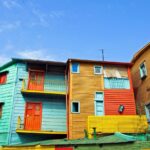
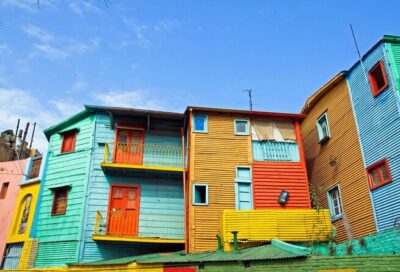
After the Caminito time, the route continues to La Boca. The tour frames this as a historically Italian and working-class neighborhood, best known for Boca Juniors, and for brightly painted buildings.
La Boca is also where the street art gets especially political and community-coded. You’ll check out multiple mural areas and street art tied to how neighborhoods express themselves visually, including street-art references where COLOR BA festival happened.
The guide may point out work from creative collectives like Red Sudakas and Triangulo Dorado. This is helpful because collectives can be hard to identify at street level, especially if you only know artists as names from a website.
Also, because the tour is intentionally “off the beaten path,” you’ll spend time looking at the texture behind the famous colors—side streets and corners where the art feels less staged and more lived-in.
Design district stops: Metropolitan Design Center and Cooperativa Vieytes
One of the smartest parts of the tour is that it doesn’t freeze street art in paint. You also get a look at Buenos Aires’ contemporary design energy in the south.
Stops can include the Metropolitan Design Center and Cooperativa Vieytes. The tour notes Cooperativa Vieytes is housed in a former ice cream factory and has a symbolic mural, which makes it a great “bridge stop” between street creativity and design-minded community work.
These stops add variety to the day. After murals and mosaics, you shift into how people organize creative production and how art becomes part of a community structure. It’s a different angle than the usual walking tour, and it keeps the 4 hours from feeling like nonstop photo stops.
How the pacing works: about eight stops, breaks on purpose
Throughout the ride you’ll make about eight stops, with time to wander on foot, snap photos, and take breaks. This is important because street art rewards slowing down. You want a minute to step back, look at details, and understand where the mural sits in the neighborhood fabric.
You’ll also sip yerba mate, a classic Argentina pause that fits perfectly with a tour that treats the street as a living classroom. There’s also water, snacks, and either coffee or tea mate during the experience.
I like that the pacing is built for conversation. With a guide fluent in English/Spanish, you can ask questions without feeling rushed to move on to the next wall.
Price and value: $115 for a private half-day with bikes and local food
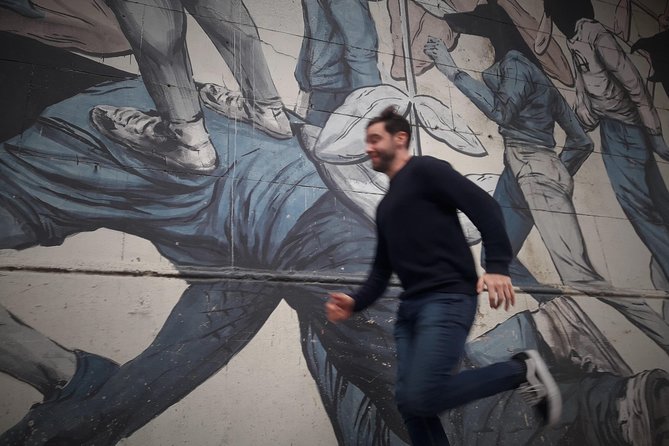
At $115 per person for a private, roughly 4-hour experience, the value depends on what you want from Buenos Aires.
If you’re the type who likes your tours to feel like a local route—not a bus loop—this can be a good deal. You’re paying for a guided ride through multiple neighborhoods, bike use, helmet, and the small comforts that keep your energy steady: bottled water, snacks, and a coffee or tea mate stop.
The private format is also part of the value. You’re not competing for attention, and your guide can adjust pacing, question depth, and photo time based on your interests.
One line item to know: e-bike is optional for an extra fee. If you want a bit more help with urban riding or energy for extra wandering, it’s worth asking when you book.
There’s also a practical planning note: this tour gets booked about 20 days in advance on average, so if you have fixed dates, don’t wait until the last minute.
Safety and ride comfort: what you should know before you say yes
This tour requires a good level of comfort biking in an urban setting and venturing into less touristy areas. That doesn’t mean it’s reckless, but it does mean you should bring basic street-riding confidence.
Two review-based points shape how you should think about it:
- The ride generally feels safe when guided, with routes that prioritize neighborhood streets rather than chaos.
- Bike condition can vary. One note says the bikes could use more maintenance, though they still get the job done.
My advice: if you’re unsure about traffic handling, choose the e-bike option if offered for your day. And if you’re new to city biking, make sure you tell your guide right away so the pace and stop timing can match your comfort.
The tour also runs in all weather conditions, so dress for whatever Buenos Aires decides that afternoon.
Practical details that help your day run smoothly
You’ll start and end at the same meeting point in San Telmo, at Balcarce 1016. After the ride, the guide drops you back there and shares parting tips—useful for what to do next if you’re staying in the city center.
The tour is private, so it’s just your group. It’s also described as near public transportation, which is handy if you’re coordinating with other parts of your trip.
Before you go, plan for a moderate physical fitness level. The mix of cycling plus short walks at stops adds up, even though the overall timing is only about half a day.
If you’re traveling with a service animal, the tour states that service animals are allowed.
Should you book the Hidden Urban Art Bike Tour?
Book it if you want street art in context—where murals connect to neighborhoods, community, sports, and local identity. The best fit is you if you like modern art but also want history and culture explained through what you can see right in front of you.
Skip it (or consider an e-bike) if you’re not comfortable biking in traffic or in areas that aren’t set up for tourists. This is very much a “ride with confidence” kind of tour.
One smart strategy: do this early. You’ll return from the ride with better instincts for where to look next around Buenos Aires, and you’ll recognize more of the city’s street-art language when you’re exploring on your own.
FAQ
What is the duration of the Buenos Aires street art bike tour?
It runs for about 4 hours.
Where does the tour start and end?
It starts at Balcarce 1016 in San Telmo and ends back at the same meeting point.
How much does it cost?
The price is $115.00 per person.
Is this a private tour?
Yes. It’s a private tour/activity with only your group participating.
What language will the guide speak?
The guide is described as speaking English/Spanish.
Does the tour operate in bad weather?
Yes, it operates in all weather conditions, so dress appropriately.
Is an e-bike available?
An e-bike is optional for an extra fee.
What kind of cancelation options do I have?
Cancellation is free, and you can cancel up to 24 hours in advance for a full refund. If you cancel less than 24 hours before the start time, the amount paid is not refunded.
More Rides Around Buenos Aires
More Barrios by Bike
Just added to our Buenos Aires notebook
- Guided tour Boca Juniors Museum & Stadium + Caminito
★ 3.3 · 3 reviews - Bike Tour: Buenos Aires to the North
★ 4.0 · 3 reviews - From Colonialism to Eclecticism, Buenos Aires arquitectonica
★ 5.0 · 3 reviews - Enjoy a Rural Experience in a Vineyard near Buenos Aires
★ 4.7 · 3 reviews - Café de los Angelitos – Traditional Night in Buenos Aires
★ 4.8 · 3 reviews - Buenos Aires: Rojo Tango Show with Optional Dinner
★ 3.4 · 3 reviews
North & South Bike Circuits, compared.
 ★ 4.7North or South Buenos Aires Bike TourFrom $38719 reviews
 ★ 4.9Full Day Bike Tour with LunchFrom $95152 reviews
 ★ 4.5Buenos Aires Bike Tour: North Districts, Recoleta and PalermoFrom $4591 reviews
 ★ 5.0Buenos Aires in a Day – All Inclusive Bike TourFrom $9589 reviews
 ★ 4.5Buenos Aires Bike Tour: San Telmo and La Boca DistrictsFrom $4574 reviews
 ★ 5.0La Boca and City Center Bike TourFrom $3854 reviews
 ★ 4.6Buenos Aires Bike Tour: South or North CircuitFrom $5044 reviews
 ★ 5.0Cultural Experience by Bike around Palermo and Recoleta Max 6 pplFrom $5444 reviews
Browse the lists this tour appears in