
Reviewed · RECOLETA NEIGHBOURHOOD WALKS
Recoleta & Cemetery for curious people
Recoleta’s tombs read like a power map. I like the way this tour links Buenos Aires Gilded Age glamour to real social questions, not just pretty facades. I also love that the discussion-style guide turns the cemetery into a thinking exercise about who gets remembered in Argentina’s capital.
One practical consideration: the walk finishes at Recoleta Cemetery, but your entry ticket is not included and actual entry is optional, with tickets available at the entrance or online in advance.
In This Review
- Key things that make this tour work
- Recoleta for curious people: what this walk really is
- From Rapa Nui to Plaza San Martín: the route sets the tone fast
- Edificio Kavanagh and Torre Monumental: Argentina’s ambition in steel and stone
- Mansión Estrugamou and Casa Basavilbaso: why private wealth became public drama
- A short break at Carrefour Express: practical pacing that keeps you engaged
- Embassy of France, Jockey Club, and Palacio Duhau: elite networks in plain sight
- La Recoleta Cemetery: city of the dead as a social map
- The discussion themes that make it more than sightseeing
- What you’ll carry with you after 150 minutes
- Price and value: is $34 a fair deal?
- Should you book the Recoleta Cemetery and Recoleta walk?
- FAQ
- How long is the tour?
- Is the cemetery ticket included?
- Is it possible to skip entering the cemetery?
- What languages are available?
- Where does the tour meet?
- Is this tour wheelchair accessible?
Key things that make this tour work
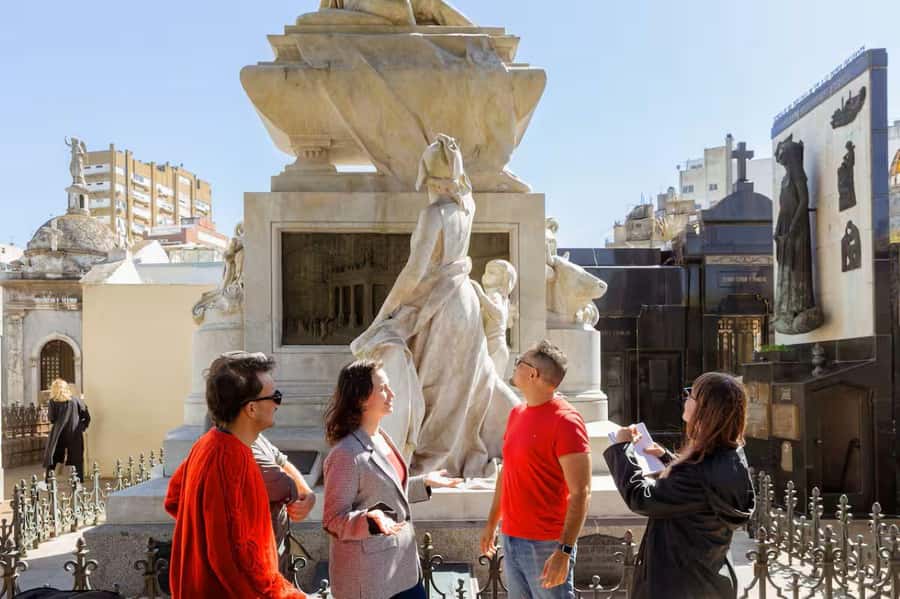
- Recoleta Cemetery as anthropology, not a photo stop: you’ll be asked to look for meaning in the who, what, and why of remembrance
- Architecture as evidence: you connect mansions and landmark buildings to Argentina’s elite and their ambitions
- Active Q&A and real back-and-forth: the guide handles individual questions and stays flexible with pacing
- A small, conversational feel: the format encourages participation instead of a one-way lecture
- A tight 150-minute plan: you get context without losing the rest of your day
Keep drifting through Recoleta and the elegant north of Buenos Aires.
- Recoleta Cemetery – Small Group Tour of History & Secrets★ 5.0 · 53 reviews
- Buenos Aires: Recoleta and Retiro Tip Based Walking Tour★ 4.7 · 50 reviews
- Cultural Experience by Bike around Palermo and Recoleta Max 6 ppl★ 5.0 · 44 reviews
Recoleta for curious people: what this walk really is
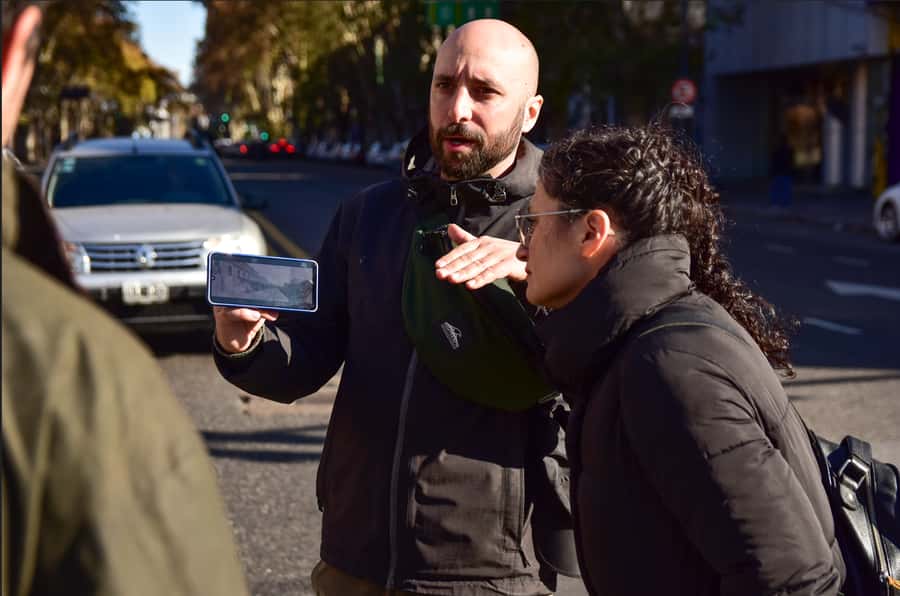
This is a guided walk with a brain attached. You start in Recoleta’s more classic center and move through a sequence of landmark buildings that help you understand how the wealthy tried to shape Buenos Aires. The tone is interactive: you’re not only looking—you’re talking, asking, and weighing ideas.
The guide is described as a university-degree professional, and it shows in how they lead discussions. You’ll get room to focus on what you care about, whether that’s how Argentina’s capital formed its identity or why certain families left such strong marks behind. Tours are available in Spanish, English, and French, and there are private or small-group options, which is ideal when you like asking questions without feeling rushed.
The route is around 150 minutes total, so you’re not signing up for a half-day commitment. Also, the walk is wheelchair accessible, which matters in a neighborhood where some sidewalks can feel tight or uneven.
From Rapa Nui to Plaza San Martín: the route sets the tone fast
The meeting point is at Rapa Nui Store, and you’ll begin with a short guided intro at Plaza General San Martín. This is a smart start because you get bearings first, not last. From there, the tour treats the city like a clue book: you learn what to notice and why those details matter.
The plaza stop is quick, but it plants the big theme. You’ll be nudged to think about power and public image, then you’ll see it play out in stone and scale as you move to the surrounding buildings. If you like tours where the guide helps you read a neighborhood like a story, this format fits.
Edificio Kavanagh and Torre Monumental: Argentina’s ambition in steel and stone
Two of the most noticeable jumps in the walk are Edificio Kavanagh and Torre Monumental. These aren’t just landmarks you pass on the street—they become examples of aspiration, style, and status. The guide pushes you to look at the architecture as communication: the wealthy were saying something about what Buenos Aires could be.
You’ll also learn how this connects to the idea of a Parisian illusion. Buenos Aires earned its reputation by trying on European glamour, and these buildings are physical proof of that ambition. It’s not about pretending Argentina was copying Europe for fun; it’s about understanding how elite groups built prestige and tried to control how the city was perceived.
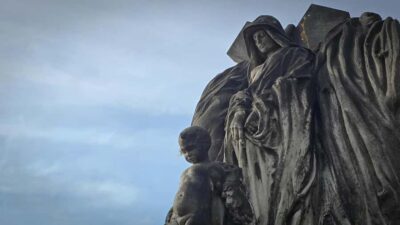
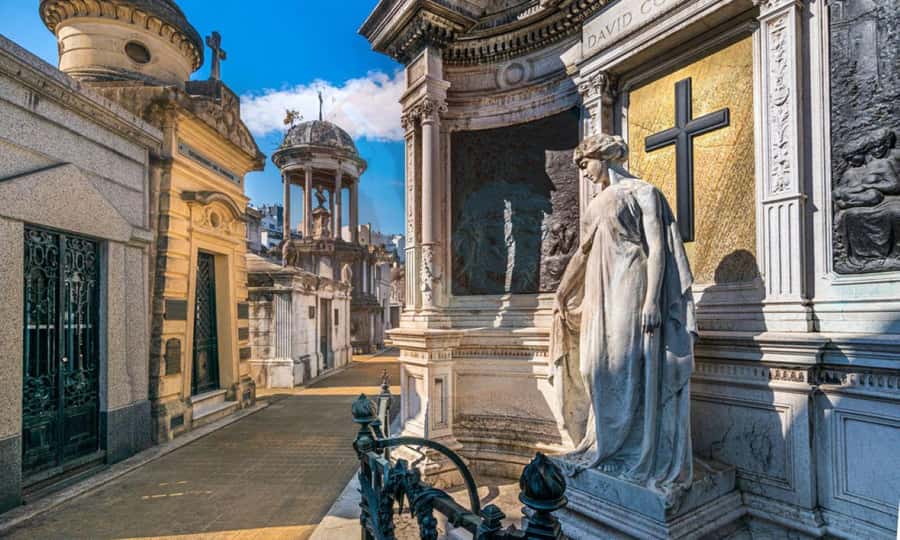
More marble avenues and famous tombs of Recoleta in Buenos Aires.
Mansión Estrugamou and Casa Basavilbaso: why private wealth became public drama
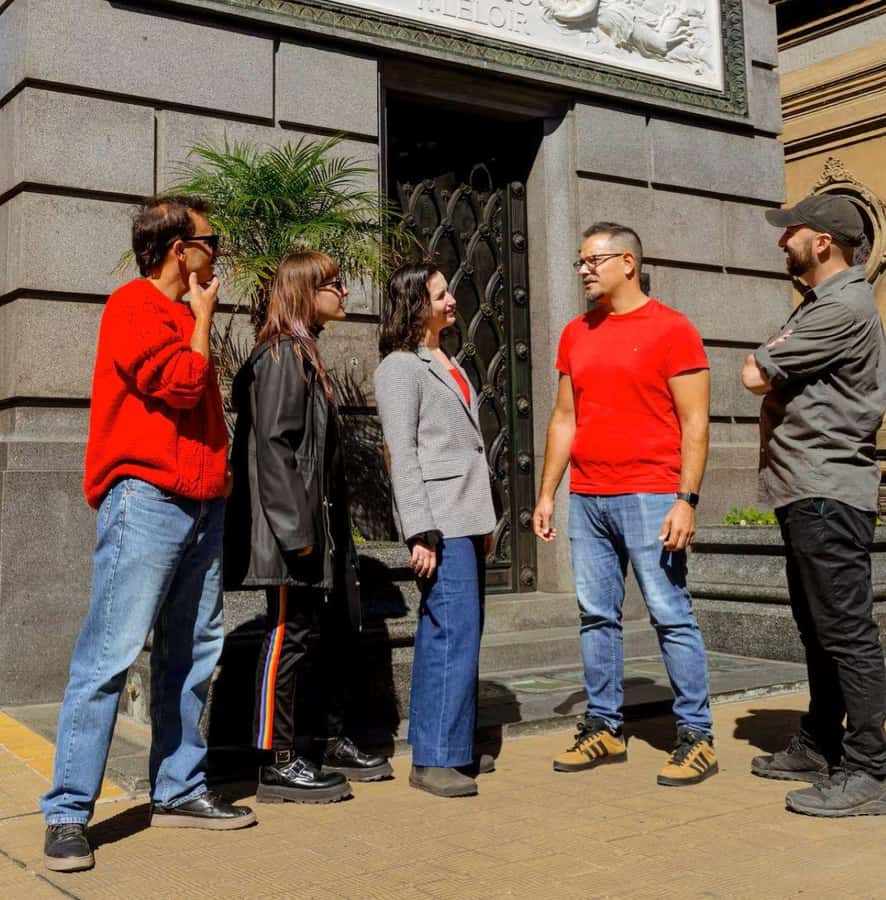
As you move deeper into Recoleta, the tour includes Mansión Estrugamou (also connected to Casa Basavilbaso) and Palacio San Martín. This is where the tour shifts from skyline wow-factor into social mechanics. The mansions and palaces are read as systems of influence: who had money, who had leverage, and how families turned wealth into long-term visibility.
The discussion theme here is the rise-and-fall cycle of Argentina’s “power class.” You’ll talk about an era shaped by huge landownership and debate what happened as Argentina’s expectations collided with reality. This matters because it gives you a reason for the cemetery’s intensity later on. In other words, the architecture isn’t just decoration—it’s a setup.
A short break at Carrefour Express: practical pacing that keeps you engaged
There’s a brief stop at Carrefour Express for a quick break. It’s small, but it matters for a tour like this. When a guide is asking you to think and talk, you want energy levels steady enough to actually participate.
If you’re prone to getting “tour fatigue,” this is the kind of pacing I appreciate. It’s not a sit-down lunch. It’s just enough time to grab water or a snack so you stay sharp for the cemetery piece.
Embassy of France, Jockey Club, and Palacio Duhau: elite networks in plain sight
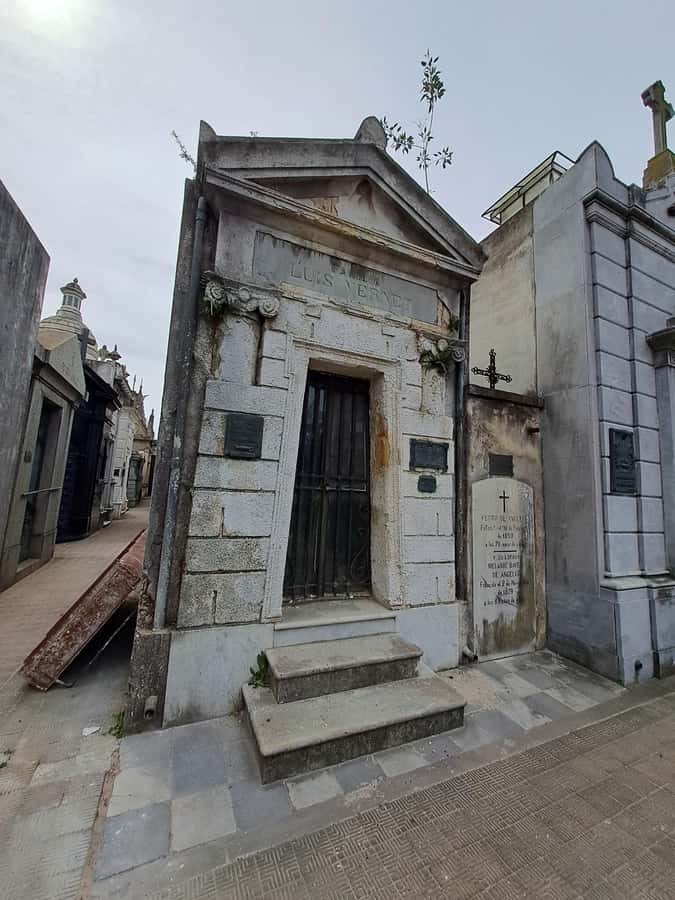
The walk also features the Embassy of France, the Jockey Club, and Palacio Duhau (Park Hyatt Buenos Aires). These stops help you understand that the elite didn’t only live in grand buildings—they organized through institutions. It’s one thing to admire architecture. It’s another to realize that architecture also signals club doors, diplomatic influence, and social ranking.
This is where the tour’s anthropology angle becomes obvious. You start connecting patterns: public-facing power in grand facades, and private power in the way people gather and define status. The guide is geared toward discussion, so you’ll be encouraged to ask how those networks affected what Argentina valued, what it rewarded, and how it managed national identity.
And yes, it can be fun to spot the contrast between today’s polished urban life and the older messages these places were built to send. The cemetery part will feel less random after you’ve seen how carefully status was curated.
La Recoleta Cemetery: city of the dead as a social map
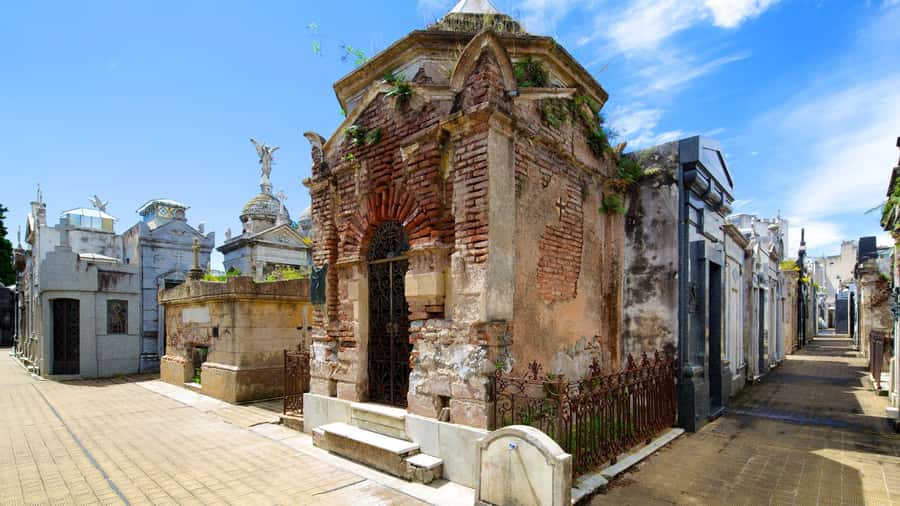
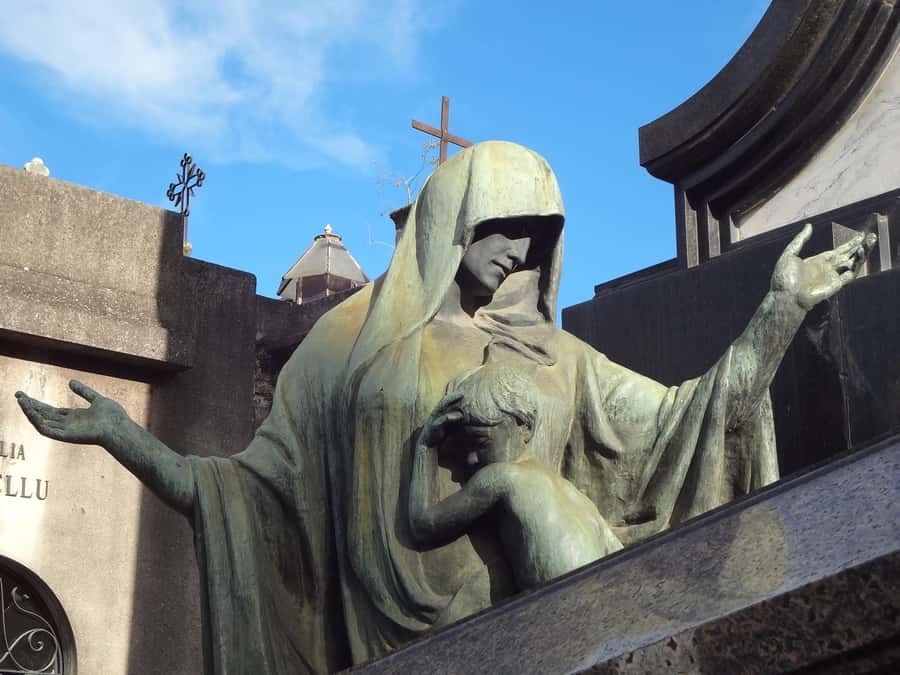
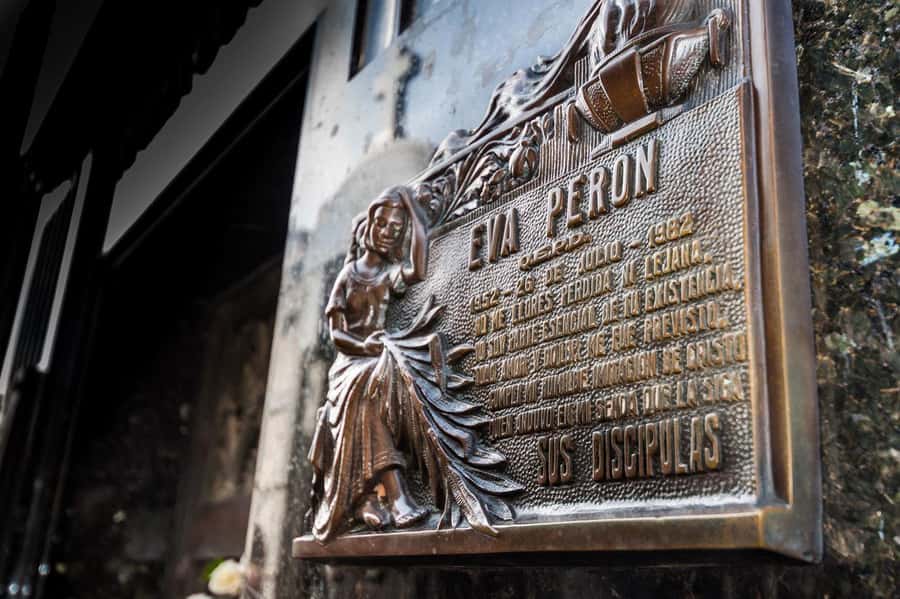
Then you reach the point most people associate with Recoleta: La Recoleta Cemetery. The tour includes a guided 45 minutes here, focused on what the cemetery reveals about society—who is remembered, who is forgotten, and what families wanted to preserve. The guide treats it like a mirror of the living world, not a dusty list of names.
Actual entry is optional, and that’s a key detail for planning. The cemetery ticket isn’t included, but tickets are available at the entrance or online. If you’re the type who likes to see inside tombs and read symbolism closely, plan to step in. If you’d rather observe the neighborhood feel and not worry about tickets, you still won’t miss the big interpretive framework.
Here’s what I think makes the cemetery portion especially effective. Instead of telling you what to feel, the guide teaches you how to look. You’ll be guided toward thinking about design choices, family visibility, and how memory functions like a social currency. In a tour like this, the cemetery becomes a structured conversation about the past, present, and future of Argentina’s capital—without pretending history is simple.
The discussion themes that make it more than sightseeing
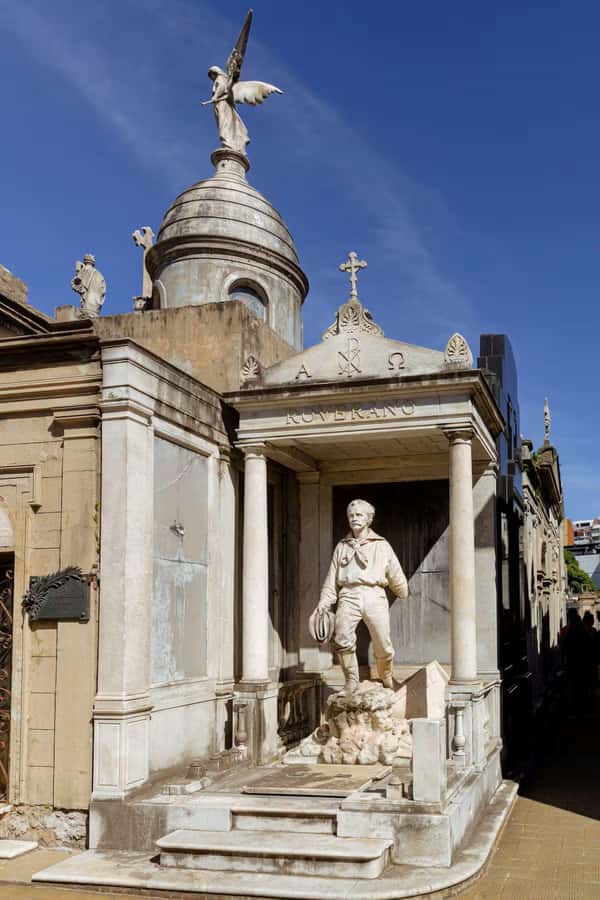
This isn’t a route-only experience. It’s built around three big prompts, and they keep the walk from becoming a string of facts:
- The Parisian illusion: how and why the city chased European glamour
- The rise and fall: the “world power” dream versus Argentina’s real outcomes
- City of the dead: the cemetery as a record of social priorities
What helps is that you’re invited to join in. The guide keeps the topics open-ended enough for questions, and the pacing supports back-and-forth. On top of that, the small-group format tends to make it easier to get your specific curiosities answered rather than being stuck waiting your turn.
If you get a guide like Nicolás or Ignacio, you’re in good hands. The guides named in the experience are known for answering individual questions and mixing humor into the historical explanation, which is exactly what you want for a cemetery discussion. It’s a lot easier to handle big themes when the tone stays human.
What you’ll carry with you after 150 minutes
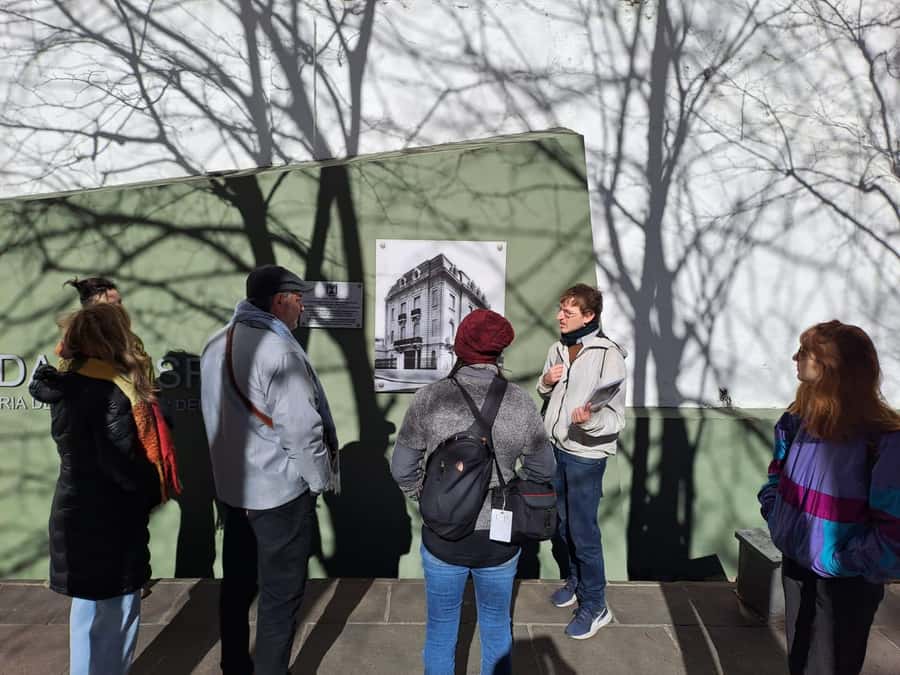
By the end, you should understand Recoleta in layers. You won’t just know the names of buildings or where the cemetery sits. You’ll understand why the neighborhood feels like a staged version of status, and how that staging connects to Argentina’s bigger story.
This is also the kind of tour that improves the rest of your day. Once you’ve seen the link between elite architecture and remembrance, you notice social messaging everywhere: in what gets preserved, what gets polished, and what gets quietly ignored. That makes Recoleta feel less like an Instagram corner and more like a living archive.
Price and value: is $34 a fair deal?
At $34 per person, this tour can be a strong value for the time you get. You’re paying for guided interpretation across multiple major stops plus an active discussion format, not just for walking from point A to point B. The big “add-on” is the cemetery ticket, and since that’s not included, you’ll want to account for that if you plan to enter.
I think this price makes the most sense if you’re:
- Visiting Buenos Aires for the first time and want context fast
- Curious about how social class shows up in architecture and public memory
- The type who likes asking questions and steering the conversation
If you only want quiet sightseeing with no discussion and no thinking, you might prefer a self-guided stroll. But if you like tours that make you see a place differently, this one is built for that.
Should you book the Recoleta Cemetery and Recoleta walk?
I’d book it if you want a smart, human guide and a clear payoff in understanding. You’ll cover key Recoleta landmarks, connect them to the idea of Buenos Aires’s European-style ambition, and finish with a cemetery experience that asks you to think about memory and power.
Skip it only if you strongly dislike guided discussion or if you’re not interested in the cemetery theme at all. Also, if you hate planning around optional ticket entry, keep that in mind so the end of the tour doesn’t feel like a surprise cost.
FAQ
How long is the tour?
The tour lasts 150 minutes.
Is the cemetery ticket included?
No. Tickets to enter the cemetery are not included. You can buy them at the entrance or in advance online.
Is it possible to skip entering the cemetery?
Yes. Actual entry is optional, and you can choose how much you want to do inside.
What languages are available?
The live tour guide is available in Spanish, English, and French.
Where does the tour meet?
The meeting point is Rapa Nui Store.
Is this tour wheelchair accessible?
Yes. The experience is listed as wheelchair accessible.
Back Among the Recoleta Tombs



Recoleta and the Elegant North



Just added to our Buenos Aires notebook
- Guided tour Boca Juniors Museum & Stadium + Caminito
★ 3.3 · 3 reviews - Bike Tour: Buenos Aires to the North
★ 4.0 · 3 reviews - From Colonialism to Eclecticism, Buenos Aires arquitectonica
★ 5.0 · 3 reviews - Enjoy a Rural Experience in a Vineyard near Buenos Aires
★ 4.7 · 3 reviews - Café de los Angelitos – Traditional Night in Buenos Aires
★ 4.8 · 3 reviews - Buenos Aires: Rojo Tango Show with Optional Dinner
★ 3.4 · 3 reviews
Recoleta Neighbourhood Walks, compared.
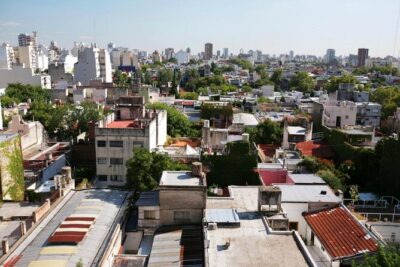 ★ 4.5Buenos Aires Bike Tour: North Districts, Recoleta and PalermoFrom $4591 reviews
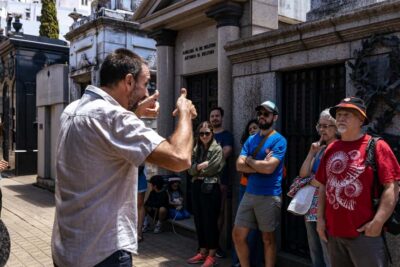 ★ 5.0Recoleta Cemetery – Small Group Tour of History & SecretsFrom $4953 reviews
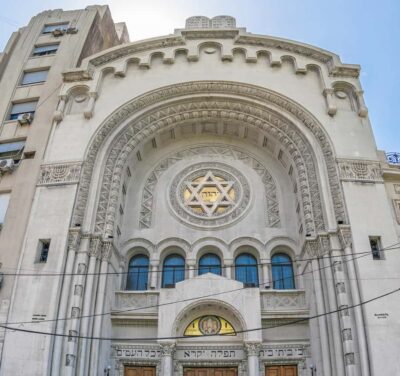 ★ 4.7Recoleta and Retiro Tip Based Walking TourFrom $150 reviews
 ★ 5.0Cultural Experience by Bike around Palermo and Recoleta Max 6 pplFrom $5444 reviews
 ★ 4.7Recoleta Neighborhood Walking TourFrom $9337 reviews
 ★ 4.6Discover Recoleta, Buenos Aires’ Little ParisFrom $5733 reviews
 ★ 4.5Full Day City Tour Buenos Aires, Recoleta Cemetery and TigreFrom $28515 reviews
 ★ 4.6Private Recoleta Cemetery Walking Guided TourFrom $6913 reviews
Browse the lists this tour appears in