
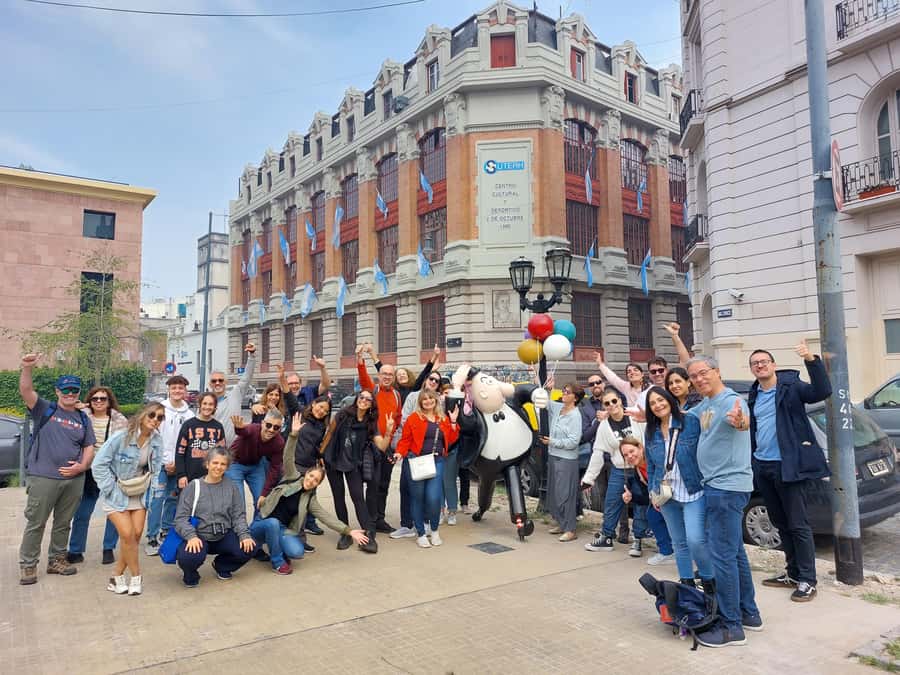
Reviewed · SAN TELMO MARKET & FOOD WALKS
Buenos Aires: San Telmo and Market Guided Walking Tour
San Telmo turns history into real street life. You get colonial-to-modern Buenos Aires context while walking the neighborhood’s cobblestone lanes, then you hit playful stops like the Mafalda statue and other comic-strip sights. I also love the market angle: Mercado San Telmo plus the Sunday fair gives you a food-and-people snapshot in just 2 hours. One drawback to keep in mind: you’re moving through narrow streets, and bigger groups can feel a bit tight.
What makes this work is the human side. The English-speaking guides here can be warm and funny while still keeping the history clear—names that show up again and again include Santiago, Juan, and Jorge, all called out for being helpful and good at answering questions. You’ll start at Parroquia San Ignacio de Loyola, follow a route packed with recognizable landmarks, and finish in San Telmo with the neighborhood still buzzing around you. And yes, it runs rain or shine, so plan for that.
In This Review
- Key moments that make this San Telmo walk worth it
- Where San Telmo’s cobblestones teach the city’s story
- Meeting at Parroquia San Ignacio de Loyola (and finding your guide)
- Iglesia y Convento de San Francisco: colonial Buenos Aires up close
- The Argentine flag creator stop: symbols you can actually place
- Clemente and Paseo de la Historieta: comic culture as local memory
- Mafalda statue: a quick photo moment with real context
- Mercado San Telmo: traditional indoor market life
- Sunday street fair: where the neighborhood shows off
- What I’d watch for on this 2-hour walk
- Price and value: why $13 feels fair for this route
- Tips to make your walk smoother (and more fun)
- Who this tour is best for (and who might prefer something else)
- Should you book this San Telmo walking tour?
- FAQ
- How long is the Buenos Aires San Telmo guided walking tour?
- Where does the tour meet?
- Is the tour in English?
- Does the tour run in bad weather?
- What are the main stops during the walk?
- Can I try food on this tour?
- How much does it cost?
- Can I cancel or change my booking plans?
Key moments that make this San Telmo walk worth it
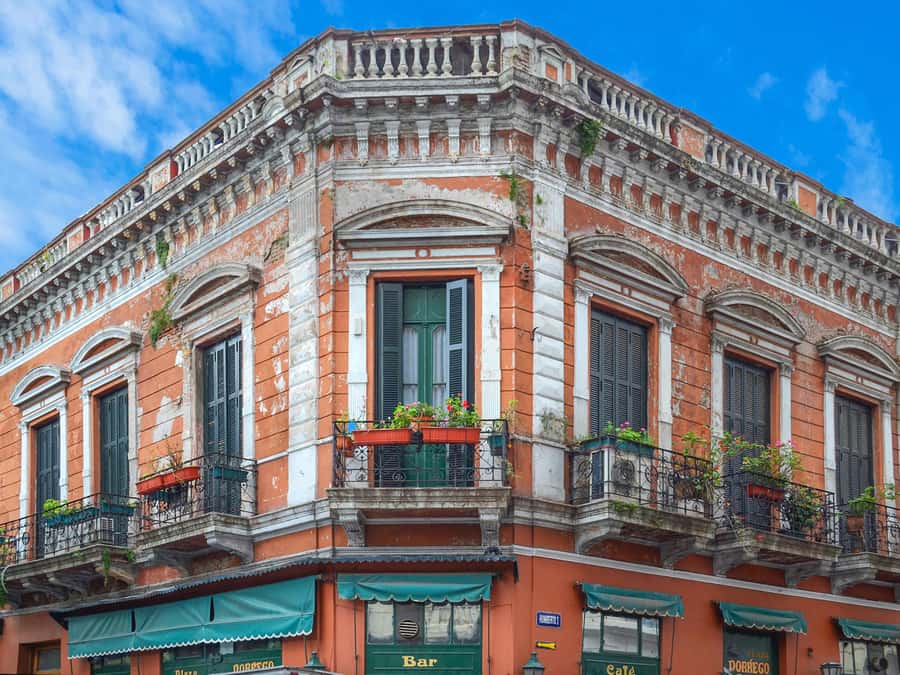
- Comic-strip Buenos Aires: Clemente at Paseo de la Historieta and the Mafalda statue bring Argentine pop culture into the streets.
- Mercado San Telmo stop: a traditional indoor market where you can sample classic Argentine foods.
- Sunday fair energy: music and street life make the neighborhood feel like it has a pulse.
- Colonial and modern Buenos Aires in one route: churches, convent areas, and 19th-century architecture alongside newer city layers.
- A guide who keeps it moving: you’ll get explanations and answers, not just a checklist of sights.
More San Telmo cobblestones, Sunday stalls and parrillas in Buenos Aires.
- San Telmo: Historical Guided Tour with Street Food & Drinks★ 5.0 · 87 reviews
- Buenos Aires Bike Tour: San Telmo and La Boca Districts★ 4.5 · 74 reviews
- BA Flavors Food Tour in San Telmo and Boca With Local Guide★ 5.0 · 67 reviews
Where San Telmo’s cobblestones teach the city’s story
San Telmo is one of those places where the past isn’t trapped behind glass. The streets feel old because they are old—cobblestones, low facades, and that slightly chaotic mix of locals, artists, and shoppers. On this walk, the goal isn’t just photos. It’s understanding how Buenos Aires formed: colonial foundations, the big architecture changes, and how modern Buenos Aires grew from the same streets.
A big theme you’ll hear is immigration. Buenos Aires wasn’t shaped by one wave of people—it was shaped by many, and you can feel that in daily life, food culture, and even the kinds of stories locals repeat. If you’re the kind of traveler who likes a “why” with your “what,” this tour format works well. You get the context while you’re standing in front of the building, not after you’ve left.
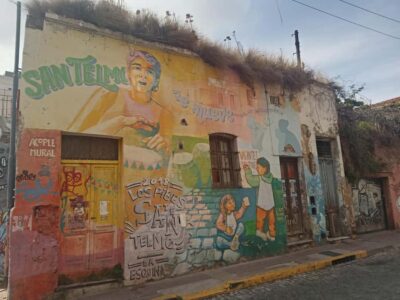
And then there’s the contrast. San Telmo isn’t just colonial-era tourism. You also get the modern edge: street art, comic characters, and public symbolism. That’s what makes the neighborhood feel alive instead of museum-like.
Meeting at Parroquia San Ignacio de Loyola (and finding your guide)
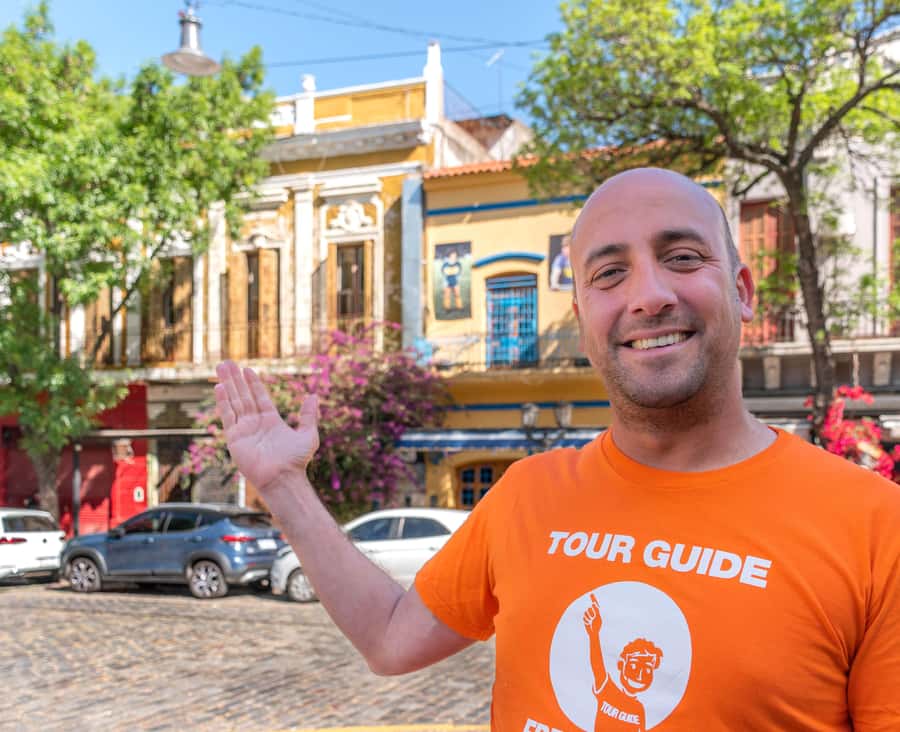
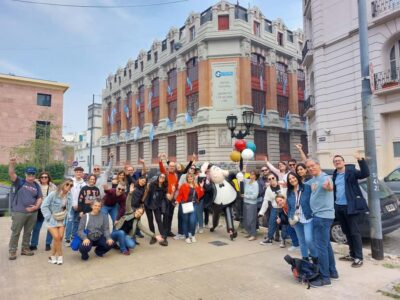
The walk starts at Parroquia San Ignacio de Loyola. Your guide will be easy to spot: they wear an orange T-shirt or carry an orange umbrella. That sounds like a small detail, but when you’re in a busy neighborhood it matters. It reduces that awkward five-minute milling around—especially if you’re traveling solo.
The tour runs 2 hours. That’s a sweet spot. Long enough to see multiple landmarks and reach the market area, but short enough that you’re not wiped out before you can explore on your own afterward. Also, it’s designed to work rain or shine, so you should dress for walking weather rather than waiting for perfect conditions.
If you’re thinking about group size, here’s the practical side: narrow streets mean you’ll likely be shoulder-to-shoulder at points. One review flagged that as a comfort issue when the group felt large. I’d take that seriously. If you hate crowds, consider wearing shoes that let you move quickly and keep your bag zipped, then accept that you may have slow moments around the busiest corners.
Iglesia y Convento de San Francisco: colonial Buenos Aires up close
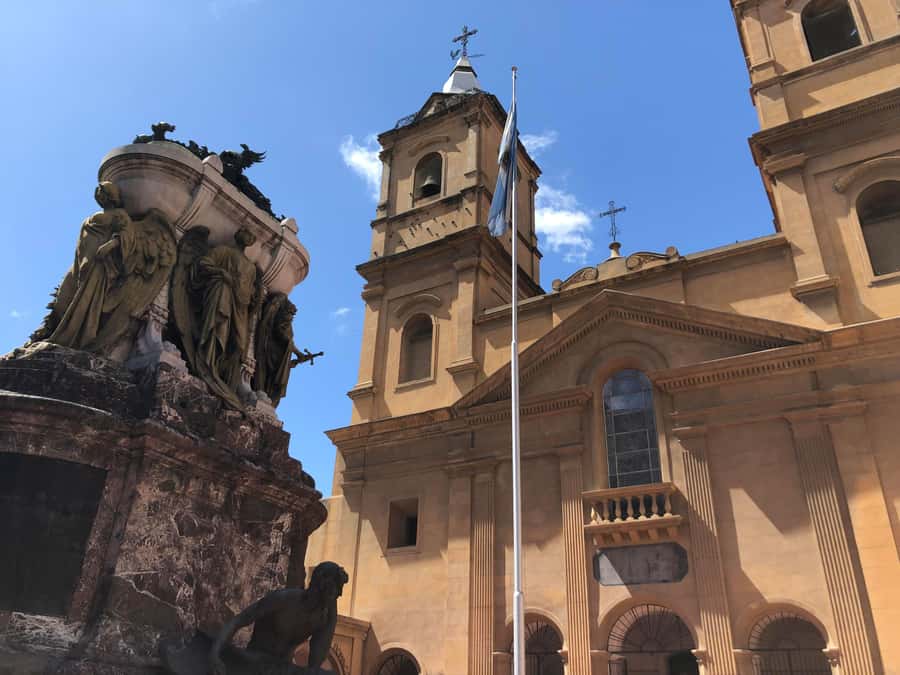
One of the first big stops is Iglesia y Convento de San Francisco. This is where the tour’s “how the city formed” side becomes tangible. You’re walking through a space shaped by colonial-era priorities—religion, community life, and architecture that still anchors the neighborhood.
Your guide’s job here is to translate the building into story. Instead of treating it like a quick photo stop, you get explanations that connect the church and convent to Buenos Aires as it developed. Even if you’re not a church-history person, it helps you understand why San Telmo looks the way it does—thick walls, strong facades, and a layout that reflects older city planning.
Practical note: churches often mean slower movement and more careful steps. Give yourself a little time, keep your expectations realistic, and you’ll enjoy the stop more.
More of Buenos Aires covered on foot.
The Argentine flag creator stop: symbols you can actually place
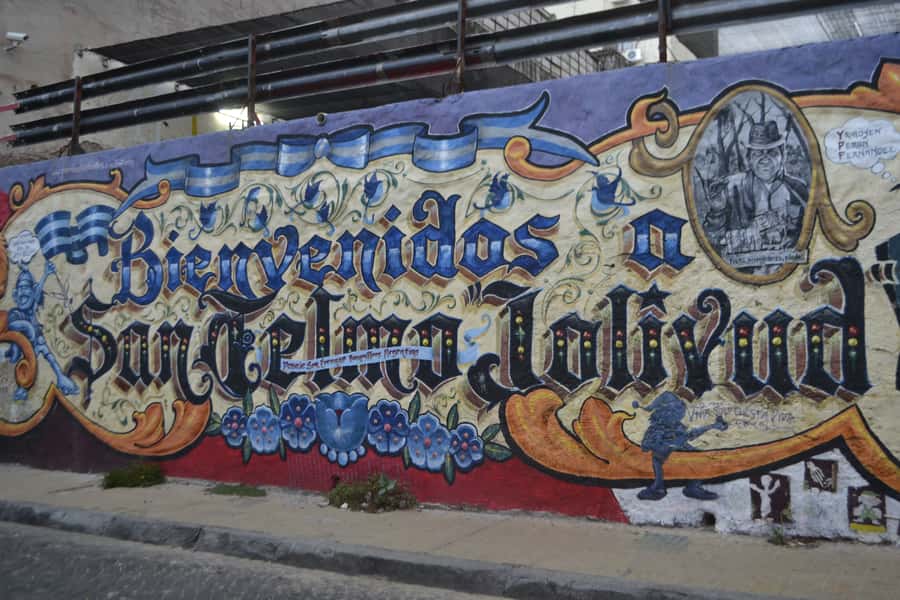
Another highlight is the stop connected to the creator of the Argentine flag. This matters because symbols are easier to remember when you attach them to a real location. You don’t just hear a name and a date—you hear how Argentine history is tied to identity, and how that identity shows up in public life.
This part of the walk is especially useful if you’re visiting Argentina for the first time and want a quick way to build a mental framework. The route keeps pulling you from architecture into national story, then back into street culture. That back-and-forth is one reason the walk feels more satisfying than a simple “look at this, then look at that” tour.
Clemente and Paseo de la Historieta: comic culture as local memory
Next up: Clemente – Paseo de la Historieta. This is where San Telmo gets playful in a meaningful way. Clemente isn’t just a character you pass by—this area connects Argentine comic art to the streets as public storytelling.
What I like about this stop is that it shows a different type of heritage. Instead of only focusing on colonial dates and famous buildings, you also see how culture sticks in everyday spaces. Street art and cartoon characters become part of how people remember themselves.
It also makes the walk easier to enjoy. History can feel heavy when it’s all facts. When you hit cartoon sculptures and murals, your brain resets. You get a break from dates, and you keep learning anyway.
Mafalda statue: a quick photo moment with real context
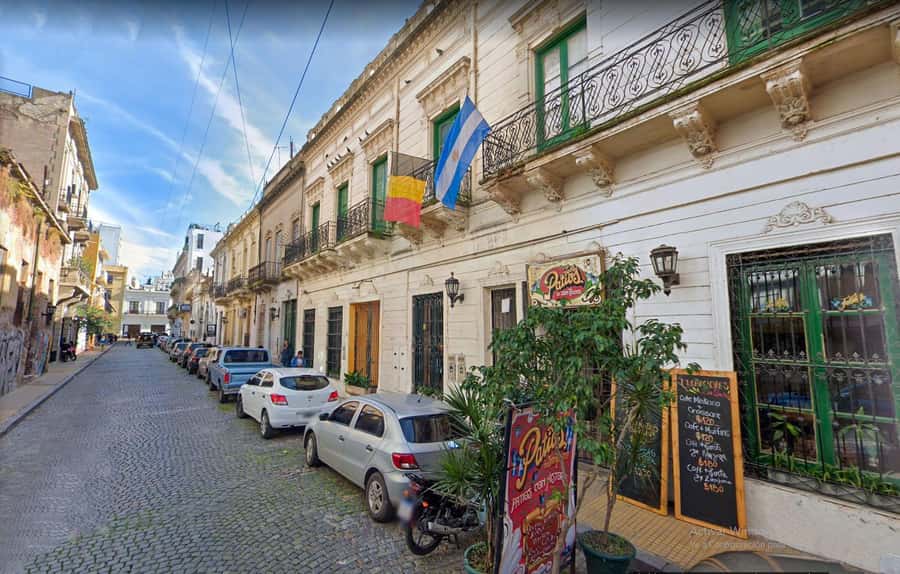
You’ll also make time for the Mafalda statue, another easy-to-spot cultural anchor in the neighborhood. Mafalda is one of those names that many visitors recognize immediately, which helps. But the point here isn’t just a selfie.
A good guide will connect the sculpture to the surrounding neighborhood vibe—Argentina’s humor, its social commentary, and the way public art turns into a landmark people share. If you enjoy public art, this stop feels like a reward.
And because this is a guided walk, you’ll get the “why this is here” explanation while you’re still in the area. That’s the difference between seeing a statue and understanding what it represents.
Mercado San Telmo: traditional indoor market life
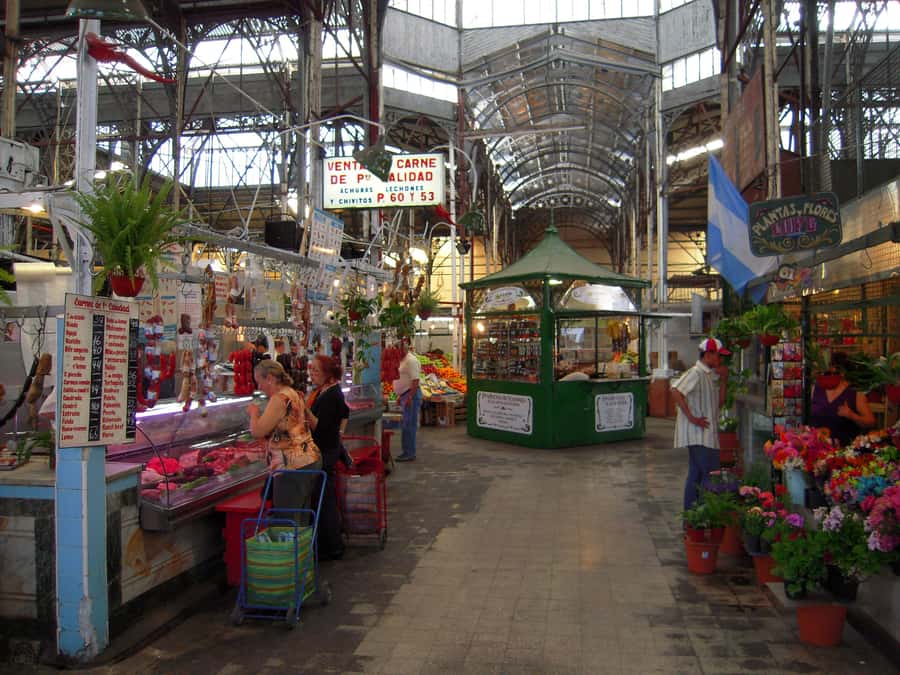
The heart of the food stop is Mercado San Telmo—the traditional indoor market. This is one of the best places to get a sense of how locals shop and eat. It’s not only about spectacle. It’s about routine: stalls, produce and goods, and the kind of atmosphere that doesn’t try to be staged.
The tour’s design works because it places the market stop after the historical and cultural stops. By the time you reach the market, you’re not just tired—you’re ready. You’ll be able to connect what you’ve learned about immigration and local culture to what you see and taste.
You can sample traditional Argentine cuisine here. I suggest you treat that like a flexible mini-plan:
- If you love trying small bites, do it.
- If you’re more cautious, pick one or two items so you don’t lose your appetite for the rest of the walk.
Also, markets can get crowded. Keep your phone secure and move with purpose, especially around peak times.
Sunday street fair: where the neighborhood shows off
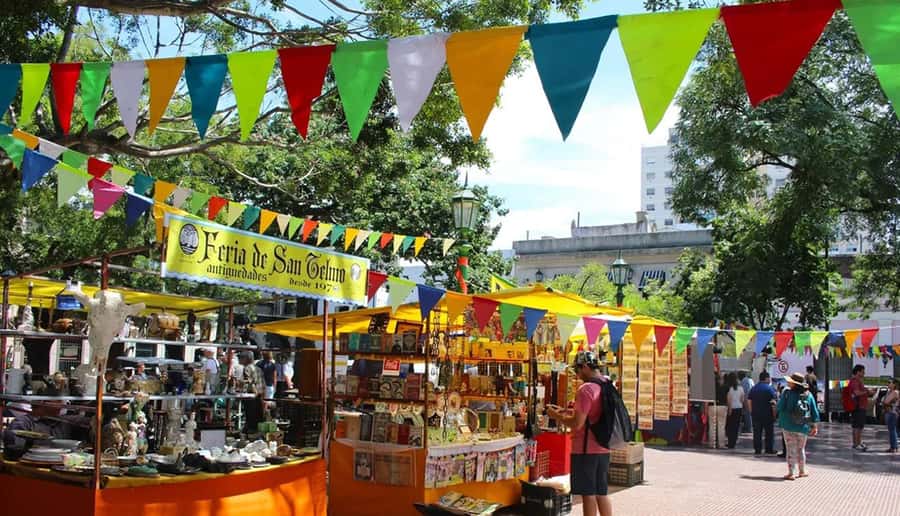
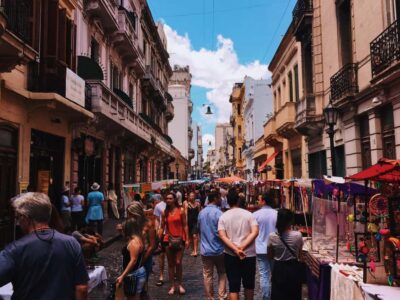
On Sundays, the walk leans into the lively street fair atmosphere. This is where San Telmo stops being just “old buildings” and turns into a social scene.
Think music, art, people chatting, and that feeling that the neighborhood is operating at a different volume. One of the tour highlights is the chance to experience the fair without getting lost in it. The guide’s job is to help you understand what you’re seeing and where to pay attention—so you don’t just stand there watching randomly.
This is also a place where the guide’s personality matters. Several guides mentioned—Santiago, Juan, and Jorge—are noted for being friendly, funny, and good at handling questions in a larger group. On a fair day, that kind of guidance helps you stay oriented.
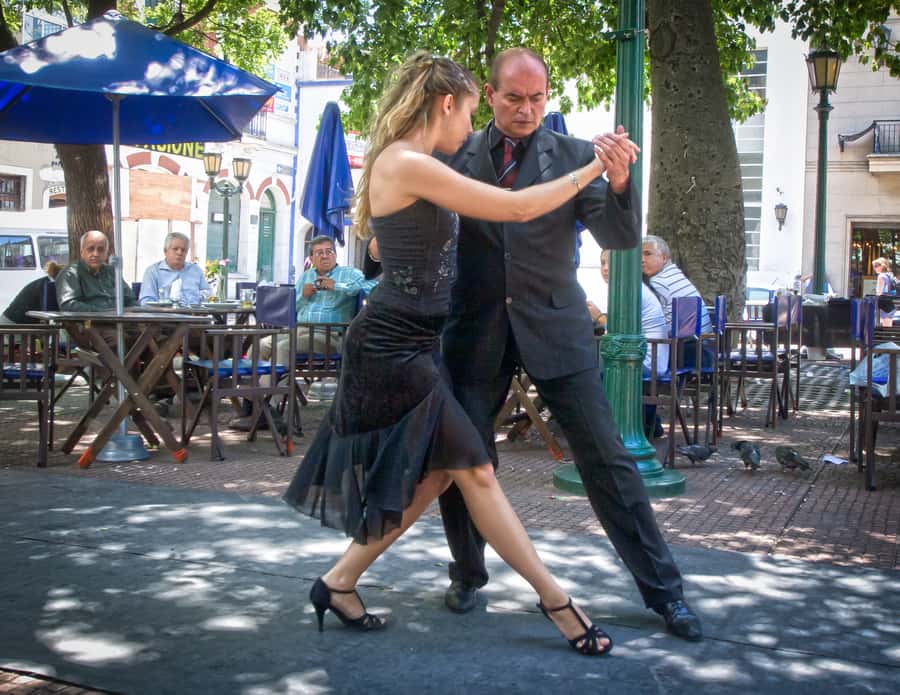
You might even catch tango dancers around the San Telmo square area during your visit, which adds another layer to the “street performance” vibe.
What I’d watch for on this 2-hour walk
This tour is short, which is great—until you expect it to feel like a long hangout. Two hours means you’ll see a lot, but you won’t linger forever at each stop.
Here’s what to watch for, based on the practical feedback you should take seriously:
- Crowding on narrow streets: if the group is large, you’ll compress. Wear shoes that handle stops and starts.
- Photo speed: there are multiple landmarks, including statues and exterior facades. You’ll want quick shots, not 20-minute photo sessions.
- Market timing: you’ll likely want to eat or sample something, but don’t overdo it—save energy for the fair portion.
If you keep expectations realistic, this tour feels efficient rather than rushed.
Price and value: why $13 feels fair for this route
At $13 per person for 2 hours, the value comes from three things: guide time, location variety, and cultural context.
First, you’re not paying for just one sight. The route strings together multiple types of Buenos Aires: colonial church/convent architecture, national-symbol storytelling, comic-art street culture, and a classic market environment. Second, the guide helps you connect dots—history to building, culture to public art, immigration to everyday life. Third, you get an English-speaking guide for a full walking session, which saves you from piecing everything together on your own.
Could you do parts independently? Sure. But you’d be spending time researching and guessing what to look for. For many first-timers, the guide is what makes the walk feel like more than a stroll.
Tips to make your walk smoother (and more fun)
These are small things that make a real difference:
- Bring comfortable walking shoes. Cobblestones add up.
- Dress for weather since it runs rain or shine.
- If you plan to sample food at the market, come with a light appetite and don’t count on the tastings being a full meal.
- Keep a close eye for the orange T-shirt or umbrella at the start, especially if you’re early.
- If you want to learn, ask questions. The guides here are described as friendly and responsive, so use that.
If you’re traveling with kids or you’re a solo traveler, this format is also easy to handle. It’s structured, it’s guided, and you’re not stuck figuring out logistics mid-walk.
Who this tour is best for (and who might prefer something else)
This guided walk is a great fit if you:
- want a fast way to understand San Telmo and why it feels the way it does
- like street culture as much as historical architecture
- enjoy comics, statues, and public art as part of city sightseeing
- are curious about Argentine food markets and local Sunday street life
You might choose a different style of tour if you:
- hate crowds and tight lanes
- want long, sit-down time in markets or museums
- prefer independent wandering with no guide narration
For most people, though, this hits a balanced spot: history plus humor, architecture plus daily life, and a market stop that makes the learning feel practical.
Should you book this San Telmo walking tour?
Yes—if you want an organized, English-guided way to see San Telmo’s highlights in just 2 hours, this is a solid bet. The mix of comic culture (Clemente and Mafalda), Mercado San Telmo, and the Sunday fair atmosphere makes the neighborhood more memorable than a straight architecture tour. And with guides like Santiago, Juan, and Jorge getting called out for being warm, funny, and helpful, you’re likely to get a walk that feels alive, not robotic.
Book it if you’re a first-time visitor or you want a strong “orientation walk” before exploring more on your own. Just go in knowing narrow streets can get crowded, and wear shoes that can handle a lively Sunday.
FAQ
How long is the Buenos Aires San Telmo guided walking tour?
It lasts 2 hours.
Where does the tour meet?
The meeting point is Parroquia San Ignacio de Loyola. Your guide will be wearing an orange T-shirt or carrying an orange umbrella.
Is the tour in English?
Yes. It’s led by an English-speaking guide for the duration of the walk.
Does the tour run in bad weather?
Yes. The tour takes place rain or shine.
What are the main stops during the walk?
You’ll visit the Iglesia y Convento de San Francisco, the Clemente – Paseo de la Historieta area, the Mafalda statue, and Mercado San Telmo, with time also tied to the Sunday street fair atmosphere.
Can I try food on this tour?
The tour includes a guided visit to Mercado San Telmo, where you can sample traditional Argentine cuisine.
How much does it cost?
The price listed is $13 per person.
Can I cancel or change my booking plans?
Free cancellation is available up to 24 hours in advance for a full refund, and you can reserve and pay later to keep plans flexible.
More Walks Through Buenos Aires

Still in San Telmo? Keep Walking


Just added to our Buenos Aires notebook
- Guided tour Boca Juniors Museum & Stadium + Caminito
★ 3.3 · 3 reviews - Bike Tour: Buenos Aires to the North
★ 4.0 · 3 reviews - From Colonialism to Eclecticism, Buenos Aires arquitectonica
★ 5.0 · 3 reviews - Enjoy a Rural Experience in a Vineyard near Buenos Aires
★ 4.7 · 3 reviews - Café de los Angelitos – Traditional Night in Buenos Aires
★ 4.8 · 3 reviews - Buenos Aires: Rojo Tango Show with Optional Dinner
★ 3.4 · 3 reviews
San Telmo Market & Food Walks, compared.
 ★ 5.0Historical Guided Tour with Street Food & DrinksFrom $6987 reviews
 ★ 4.5Buenos Aires Bike Tour: San Telmo and La Boca DistrictsFrom $4574 reviews
 ★ 5.0BA Flavors Food Tour in San Telmo and Boca With Local GuideFrom $6567 reviews
 ★ 5.0Experience The Essence of Buenos Aires in San TelmoFrom $5251 reviews
 ★ 5.0Parrilla Tour San TelmoFrom $13044 reviews
 ★ 5.0San Telmo, History, Bars, and Tango!From $2024 reviews
 ★ 5.0SAN TELMO + CAMINITO THE LOCAL WALKING TOUR!From $358 reviews
 ★ 4.8Small-Group Walking Tour San Telmo NeighborhoodFrom $795 reviews
Browse the lists this tour appears in