
Reviewed · WORKSHOPS
English Classes with Native Teachers
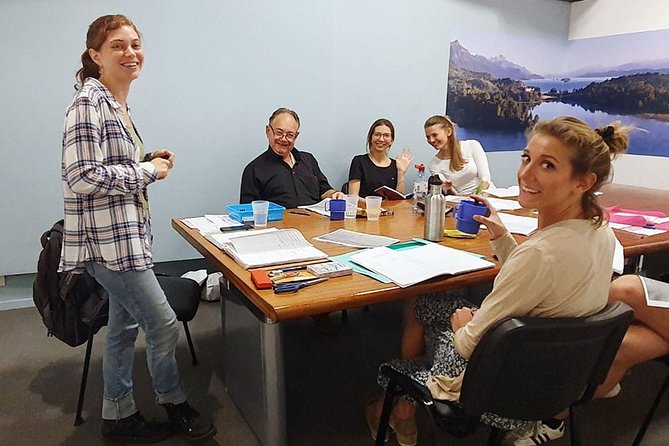
One hour can change how you speak English. At Vamos Academy, you get native teachers and English-only lessons in Buenos Aires, so the class runs in the language you actually want to use.
What I like most is that lessons feel practical right away, with you planning the focus with your teacher (conversation, vocab, grammar, whatever you need most). Second, the academy’s level system is built around real communication skills, so beginners aren’t stuck doing busywork.
One consideration: this is an hour-long session, so real improvement usually comes from taking multiple classes and staying consistent. Also, the listed hours are Monday–Friday, so plan around the schedule.
In This Review
- Key points to know before you go
- English-Only Classes at Vamos Academy: What You’re Really Buying
- Finding Vamos Academy in Buenos Aires (Viamonte 1516) Without Stress
- Choosing Your Level: From Beginner A1 to Higher C2
- What a 1-Hour Session Actually Feels Like
- Native Teachers You Might Work With (And Why That Matters)
- Price and Scheduling: Getting Value From a Short Trip
- How to Get the Most Out of Your Lesson (Practical Tips)
- Who This Fits Best (And Who Might Want a Different Option)
- Should You Book This English Class?
Key points to know before you go
- Native-teacher, English-only instruction so you practice immediately
- A1 to C2 level system designed around how well you can function in real conversations
- Lesson plans you shape with your teacher, not a one-size script
- All levels + exam prep options if you have a specific target
- Private setup for your group, so the class can stay focused
More hands-on classes and workshops in Buenos Aires.
- Buenos Aires: Empanadas and Alfajores Guided Cooking Class★ 4.8 · 486 reviews
- Buenos Aires: Private Tango Lesson★ 4.9 · 244 reviews
- Buenos Aires: Empanada & Alfajor Cooking Lesson in Palermo★ 4.6 · 186 reviews
English-Only Classes at Vamos Academy: What You’re Really Buying
For $20 per person for about an hour, you’re paying for something most language learners can’t get at home: live coaching. This isn’t a lecture where you passively watch. The format is designed for active use of English, fully taught in English, which matters because you’re forced to think and respond in the same moment.
The best value here is how flexible the learning can be. The program is available at all levels, and you can tailor the lesson to what you care about—conversation practice, vocabulary building, grammar clarity, or a mix. If you’re in Buenos Aires for a short trip, that flexibility is huge: you can target the exact English situations you’ll face while traveling or working.
You should also know the academy’s approach is competency-based, not just rule memorization. Their levels are organized by what you can already do, and where you want to go next. That helps you avoid the frustrating feeling of being either bored because it’s too easy or lost because it’s too far ahead.
Finding Vamos Academy in Buenos Aires (Viamonte 1516) Without Stress
Your meeting point is the Vamos Academy Spanish School and English Classes at Viamonte 1516, C1055ABD, Buenos Aires. The good news: it’s near public transportation, which is exactly what you want in a city where you’ll probably hop between neighborhoods.
One small detail that’s useful: you’ll use a mobile ticket, so have it ready on your phone before you arrive. This cuts down on the usual back-and-forth and lets you start the lesson on time.
Because the session is about an hour and you end back at the meeting point, you don’t need to build a whole half-day plan around it. It’s a good “add-on” to your travel rhythm, like one focused block in the day rather than a major commitment.
Choosing Your Level: From Beginner A1 to Higher C2
Vamos Academy lists six English levels:
- Beginner (A1)
- Elementary (A2)
- Pre-Intermediate (B1)
- Intermediate (B1+)
- Upper-Intermediate (B2)
- Advanced (C1)
They also mention Higher (C2). For higher-level students, they often do individual classes or private groups because goals tend to be specific—like international exam preparation or a move to an English-speaking country.
The important part for you is how this level structure is explained: it mainly tracks communication ability, plus where you need help most to function effectively. Yes, grammar and vocabulary still come up, but the course is geared toward using English in real communicative situations.
If you’re unsure which level fits, your best move is to start by telling the teacher what you want out of the class. Since the lessons can be planned with your teacher, you’re not locked into just “finishing the chapter.” You’re steering toward improvement you can feel during the session.



What a 1-Hour Session Actually Feels Like
The class runs for about 1 hour and is held entirely in English. That means you’re not just hearing English—you’re using it, responding to questions, and getting corrected or guided while you talk.
In practice, this kind of structure usually lands in a few predictable modes:
- Conversation practice focused on real prompts, not just reading
- Targeted grammar help when a mistake keeps showing up
- Vocabulary and expression work tied to what you’re trying to say
The academy’s structure supports this because they teach at a level that matches what you can already do. So if you’re a beginner, you’re not expected to instantly produce advanced sentences. If you’re intermediate, you can spend time tightening your clarity and fluency, instead of treating every sentence like a translation exercise.
A big perk is that you can tailor your lesson focus. That’s more useful than it sounds. Many schools say they teach “conversation,” but you quickly learn whether conversation actually means you get to speak or whether it means you get to listen. Here, because your lesson plan is adjustable—conversation, language points, vocab, grammar—you’re better positioned to make sure you’re doing the talking.
Native Teachers You Might Work With (And Why That Matters)
The academy emphasizes native teachers, and the names that show up in people’s experiences include teachers like Maria, Camila, Frederick, Ty, Taine, Cortland, and Linda. Different teachers can bring different teaching styles and accents, and that can be a real advantage in Buenos Aires where you may encounter many English variations through books, media, and future conversations.
One of the most praised outcomes is confidence. When you’re in a classroom where the language is actually the medium, not just the subject, you start to reduce the mental delay between understanding a question and forming an answer. You get used to hearing English at normal speed and you practice how to recover when you don’t know a word.
Another strongly valued point: friendly, helpful staff and teachers. That might sound like a soft benefit, but it affects learning. If you feel comfortable asking for clarification, you waste less time stuck on one misunderstanding.
Price and Scheduling: Getting Value From a Short Trip
Let’s talk money honestly. At $20 per person for about an hour, the cost is low enough that you can take multiple sessions without feeling like you have to commit to a huge course. That matters because language learning works better when you repeat and reuse the same skills across time.
You also get mobile ticket convenience and a session that doesn’t require a long time block. If you’re balancing sightseeing, Spanish study, work, or jet lag, this kind of format is easier to keep up than a daily, multi-hour program.
Hours listed are Monday to Friday, 9:00 AM to 9:00 PM. If you’re visiting during a weekday and you can fit one class into your day, you’ll likely have an easier time scheduling. If your trip includes weekends, you may need to plan your class timing around those weekdays only.
Also, the activity is described as private, meaning only your group participates. For you, that’s a practical win: your class time stays focused on your needs rather than being diluted across a larger group.
How to Get the Most Out of Your Lesson (Practical Tips)
Since the lesson can be tailored, walk in with a simple plan. You don’t need a detailed notebook, just a few targets:
- Pick one speaking goal, like asking follow-up questions or describing your plans clearly.
- Bring one real-life topic you care about (work, travel, daily life in Buenos Aires).
- If you keep making the same grammar mistake, tell the teacher and ask for specific correction.
Here’s the quiet trick: treat the hour like a workshop, not a class. If you only “attend,” you’ll improve slowly. If you actively respond, ask for clarity, and repeat corrected sentences, your progress tends to feel faster.
If you have exam prep needs, you can arrange special preparation. That’s helpful if you’re working toward something specific, but you should be direct about your target so the teacher can steer the lesson accordingly.
And if you’re the type who wants variety—different accents, different teaching styles—having more than one native teacher over time can help you adapt. That’s especially relevant if you’re planning to communicate with people from multiple English-speaking countries.
Who This Fits Best (And Who Might Want a Different Option)
This experience is a strong fit if:
- You want speaking practice with a native teacher.
- You prefer English-only instruction and learn faster by using the language.
- You need a clear level structure (A1 through C2) based on communication ability.
- You want lessons that can be tailored to your exact needs instead of following one rigid curriculum.
It may be less ideal if:
- You’re expecting a full “course” in just one hour. This works best as part of a series.
- You need weekend hours, since the listed operating window is Monday–Friday.
Should You Book This English Class?
I’d book it if you want a focused, practical hour where you speak in English, get guided feedback, and leave with clearer next steps. The price is reasonable, the class runs in English, and the ability to tailor the lesson makes it useful whether you’re a beginner or already advanced.
Book with confidence if you can fit weekday scheduling and you’re willing to take more than one session to see steady gains. If your trip is very short, plan your first class as a “reset and direction-setting” session—then add another soon after to build momentum.
More Workshops in Buenos Aires



Just added to our Buenos Aires notebook
- Guided tour Boca Juniors Museum & Stadium + Caminito
★ 3.3 · 3 reviews - Bike Tour: Buenos Aires to the North
★ 4.0 · 3 reviews - From Colonialism to Eclecticism, Buenos Aires arquitectonica
★ 5.0 · 3 reviews - Enjoy a Rural Experience in a Vineyard near Buenos Aires
★ 4.7 · 3 reviews - Café de los Angelitos – Traditional Night in Buenos Aires
★ 4.8 · 3 reviews - Buenos Aires: Rojo Tango Show with Optional Dinner
★ 3.4 · 3 reviews
Workshops, compared.
 ★ 4.8Empanadas and Alfajores Guided Cooking ClassFrom $37486 reviews
 ★ 4.9Private Tango LessonFrom $39244 reviews
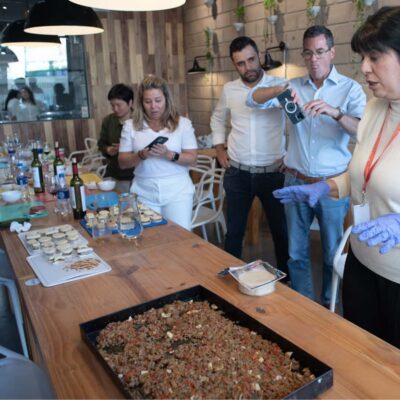 ★ 4.6Empanada & Alfajor Cooking Lesson in PalermoFrom $49186 reviews
 ★ 4.0Tango Porteño Show with Optional Dinner and Tango LessonFrom $3597 reviews
★ 5.0Buenos Aires – Private Tango lessonFrom $3996 reviews
★ 4.0Tango Porteño Show with Optional Dinner and Tango LessonFrom $3597 reviews
★ 5.0Buenos Aires – Private Tango lessonFrom $3996 reviews
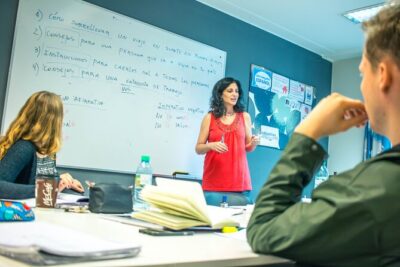 ★ 5.0Spanish Group Course in Buenos Aires, Argentina: 20 LessonsFrom $27572 reviews
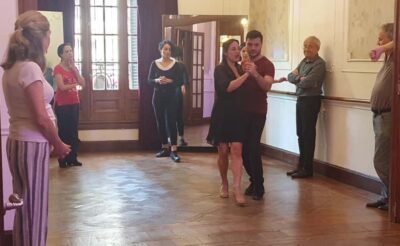 ★ 4.4Group tango class with mate and snacksFrom $2544 reviews
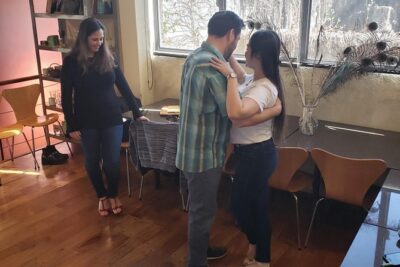 ★ 5.0Private Argentine Cooking Class and Tango Lesson in Buenos AiresFrom $18237 reviews
Browse the lists this tour appears in