
Reviewed · LA BOCA & CAMINITO
Buenos Aires: Montserrat, San Telmo, La Boca, and Puerto …
Buenos Aires has a way of stacking surprises close together. This 4-hour walk strings together Montserrat, San Telmo, La Boca, and Puerto Madero so you get real texture, not just postcards. I especially like how it pairs major sights (Plaza de Mayo, Caminito, Puente de la Mujer) with smaller, older corners like the city’s oldest bookstore, church, and pharmacy.
The other big win is the guide factor. On recent tours, Alejandra has been praised for clear, friendly storytelling that makes names and buildings feel usable, not just read-and-forget. Sebastian also gets credit for keeping the experience smooth so you spend time looking around, not figuring out what’s next.
One consideration: this is not suitable for wheelchair users, and it involves a good amount of walking over uneven city streets. If your feet are only “okay,” plan for sturdy shoes and a slower pace on your own where needed.
In This Review
- Key things you’ll remember
- Montserrat starts at Catedral Metropolitana and Plaza de Mayo
- Avenida de Mayo’s Café Tortoni visit depends on availability
- Montserrat’s oldest bookstore, church, and pharmacy
- San Telmo’s Calle Defensa: Mafalda, legends, and the smallest house
- Plaza Dorrego and the French Passage: photo backdrops and square time
- San Telmo Market since 1897: antiques, stalls, and quick bites nearby
- La Boca: Boca Juniors Stadium and Caminito’s colorful street life
- Puerto Madero’s skyline shift and the Puente de la Mujer by Calatrava
- Costanera Sur Ecological Reserve: nature near the center
- Price and logistics: is $100 per person worth it?
- Who should book this walking circuit (and who should skip)
- Should you book VIP TOURS BA?
- FAQ
- How long is the tour?
- Where does the tour start?
- Which neighborhoods are included?
- What are the main landmarks on the route?
- Is Café Tortoni part of the tour?
- Are meals included?
- What languages is the live guide available in?
- Is the tour wheelchair accessible?
- What should I wear?
- What’s the cancellation policy?
Key things you’ll remember
- Plaza de Mayo and Avenida de Mayo: the old political center plus the city’s first grand boulevard
- Montserrat’s oldest trio: bookstore, church, and pharmacy, plus the first two-story building
- Calle Defensa in San Telmo: Mafalda, the smallest house, and tales of sailors and immigrants
- San Telmo Market (since 1897): antiques, fruit and veg stalls, and quick meal options nearby
- La Boca’s football + tango vibe: Boca Juniors Stadium and colorful Caminito
- Puerto Madero’s Puente de la Mujer: Santiago Calatrava’s striking landmark over the river
Down by the Caminito, more of La Boca we have wandered across Buenos Aires.
- Buenos Aires: Navigation from Pto. Madero to La Boca★ 4.1 · 147 reviews
- Buenos Aires Bike Tour: San Telmo and La Boca Districts★ 4.5 · 74 reviews
- La Boca, a collective creation: Port, immigrants, arts and football★ 5.0 · 58 reviews
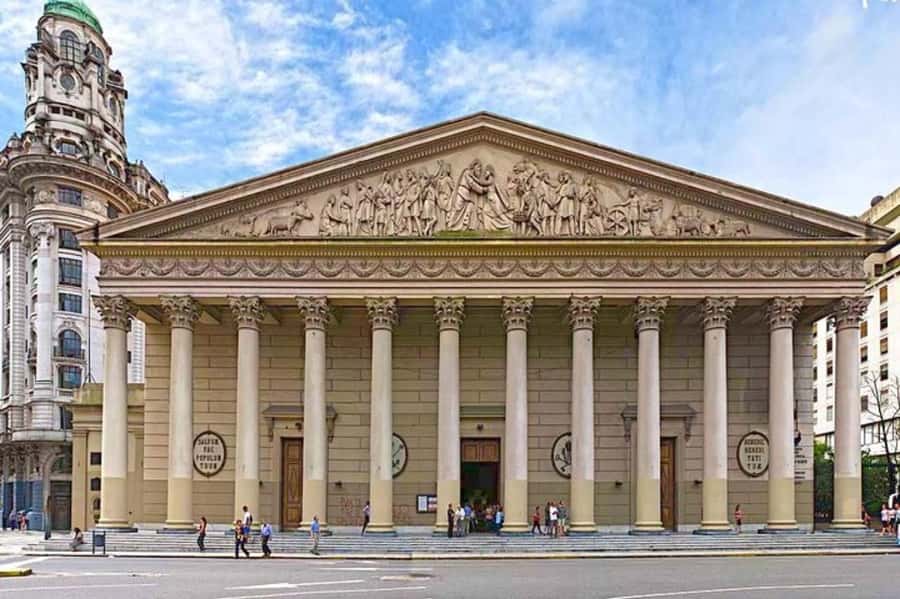
Montserrat starts at Catedral Metropolitana and Plaza de Mayo
Your tour begins at Catedral Metropolitana de Buenos Aires, a solid starting point because it puts you in the right mindset: this city runs on layers—religion, government, and street life all in one small radius. From there, you move into Montserrat, the neighborhood that circles the Plaza de Mayo—the city’s oldest and its loudest in terms of meaning.
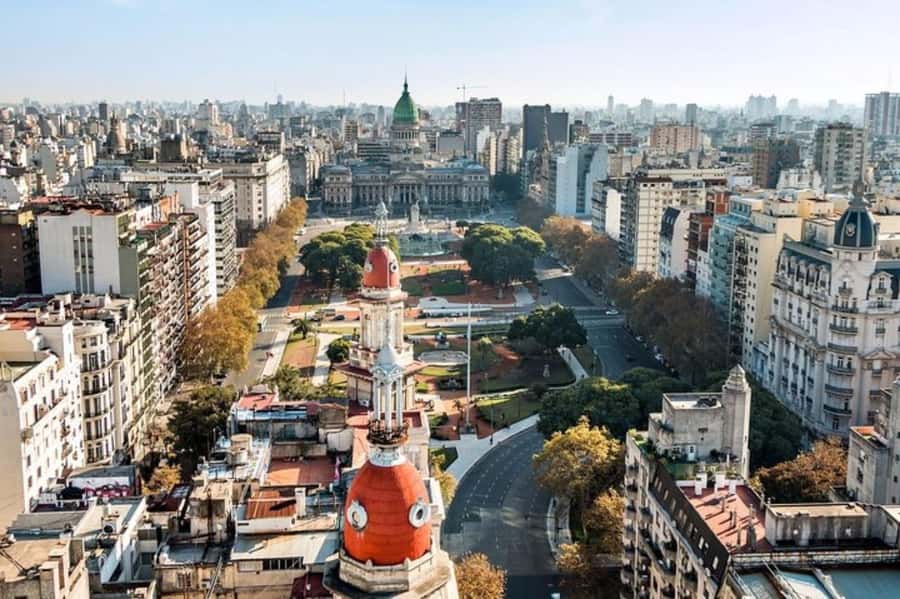
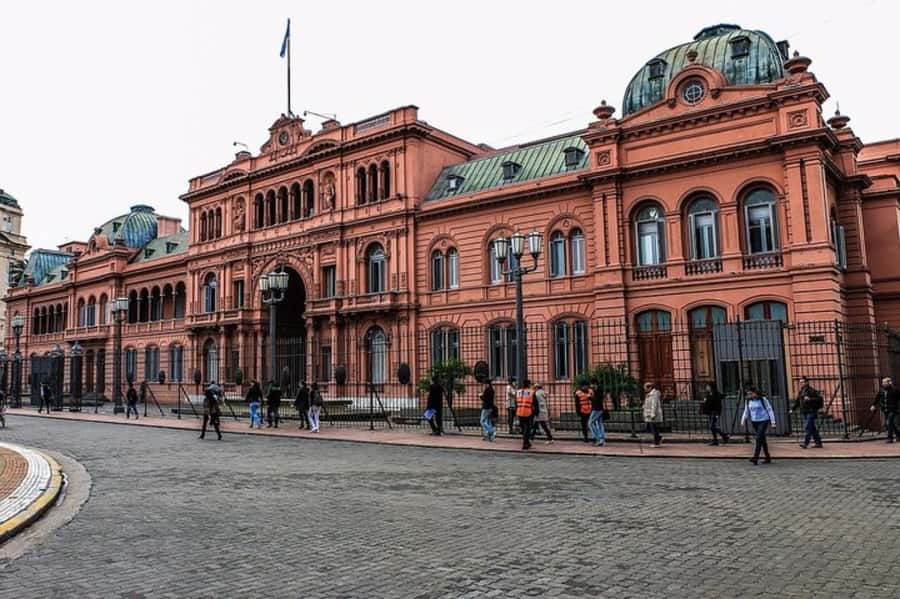
Plaza de Mayo is ringed by the big names: the Casa Rosada (executive office), the Cabildo, the Metropolitan Cathedral area, and major ministries. You’ll also get time to understand why Avenida de Mayo matters. It’s not just a pretty street; it’s described as the city’s first boulevard and the first avenue in South America that connects national power and daily urban life.
A practical tip here: if you want photos without stress, think about the time of day. This area is busy, and you’ll do better when you’re not fighting crowds. Wear your walking shoes early in the day and keep your phone charged. City-center sidewalks can feel like they were built for fast steps, not slow ones.
Avenida de Mayo’s Café Tortoni visit depends on availability
Avenida de Mayo is also where you hear about Café Tortoni, widely noted as the oldest café in Argentina and South America. The tour includes a visit, but it’s explicitly subject to availability, so don’t plan your schedule around it like it’s guaranteed.
If you do get in, it’s a good place to pause without turning the tour into a long break. You can reset your legs, watch the room, and connect the “big boulevard” story to something more human—people talking over coffee instead of just statues and stone.
If you don’t get in, you still come away with the point: this area is where Buenos Aires mixed politics and culture long before it became a tourist route. Either way, the tour gives you the context so the streets make sense when you keep walking on your own later.
Montserrat’s oldest bookstore, church, and pharmacy
One reason I like this tour is the way it slows down for the small stuff. In Montserrat, you’ll see the oldest bookstore, oldest church, and oldest pharmacy in Buenos Aires. That trio is a simple idea, but it works. Bookstore = ideas. Church = community. Pharmacy = daily needs. Put together, they explain a neighborhood better than a single monument ever will.
You’ll also learn about the first two-story building. It’s the kind of detail that seems minor until you realize it’s a clue to how the city changed. Those early “rules” of buildings show up everywhere in the city if you know what to look for.
You’ll likely spend time around historic Calle Defensa as you connect these sights. Calle Defensa is one of those streets where architecture and street-culture talk to each other. The best part of having a guide here is that you don’t have to guess why something looks the way it does—you get a reason.
More San Telmo cobblestones, Sunday stalls and parrillas in Buenos Aires.

San Telmo’s Calle Defensa: Mafalda, legends, and the smallest house
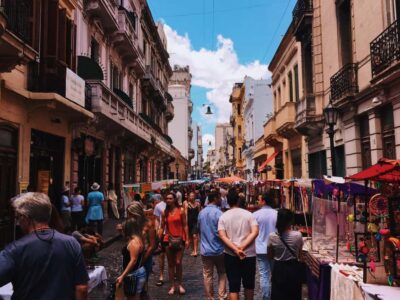
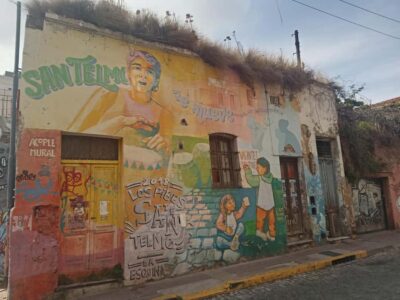
Next comes San Telmo, described as the city’s second oldest neighborhood, and it shows in the way the streets feel like a museum you can still walk through. You’ll go down Calle Defensa again, but this time it’s more about local character. A statue of Mafalda is a highlight. She’s basically Buenos Aires in a comic form—smart, skeptical, and street-level.
This section also includes stories and rumors-with-roots. You’ll hear tales about sailors, immigrants, slaves, and historical urban legends. Even when you can’t verify every detail, these stories point to real waves of people that shaped the neighborhood. It’s like learning to read the city’s “footnotes.”
You’ll also see the smallest house in Buenos Aires. That sounds like a gimmick, but it’s actually useful. It helps you understand how buildings, land pressure, and changing needs can compress a whole era into something you can photograph and remember.
Plaza Dorrego and the French Passage: photo backdrops and square time
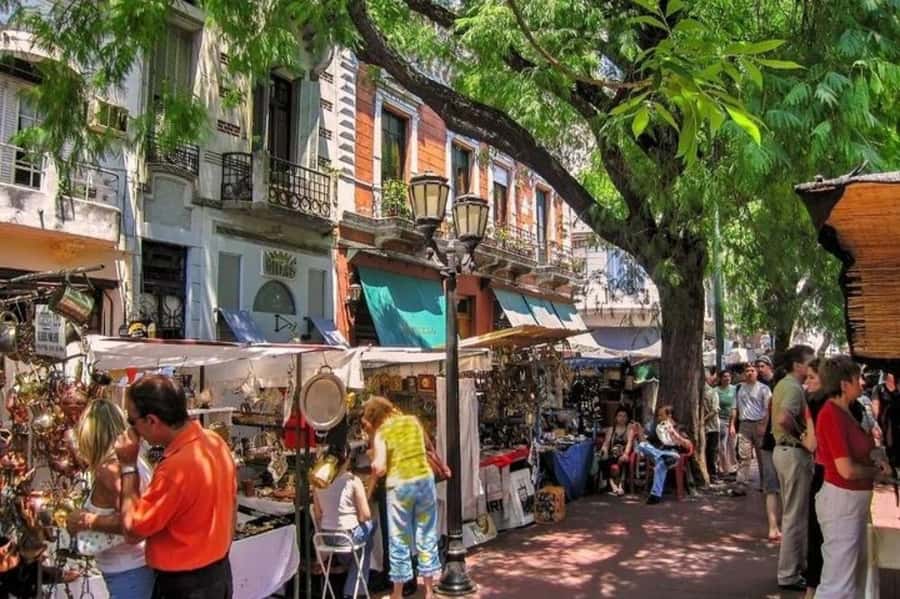
Before you push further, you’ll stop at Plaza Dorrego, noted as the second oldest square in Buenos Aires. Squares are more than space; they’re where commerce, gossip, and public life meet. You’ll also find nearby references to Ezeiza’s house, and the tour uses this area to set up the market section.
Another photo-friendly beat is the French Passage. Even if you’re not a “photo every corner” person, it’s worth slowing down here. Passages like this can feel like you’ve stepped into a different Buenos Aires—more enclosed, more architectural, less wide-open.
Also, plan for an actual break for your stomach soon after. This part of town is well suited for it, and the tour specifically notes that lunch or a meal is available in the area (not included).
San Telmo Market since 1897: antiques, stalls, and quick bites nearby
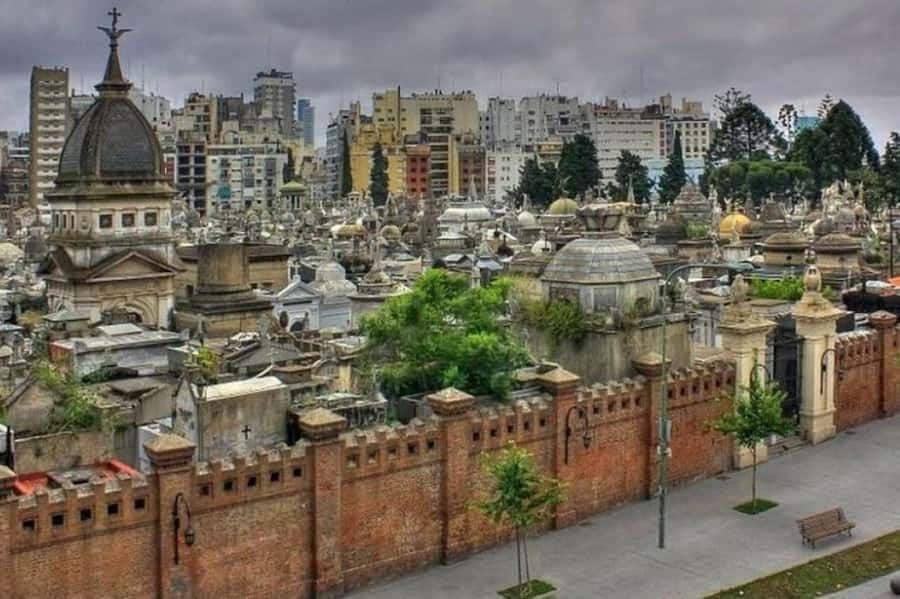
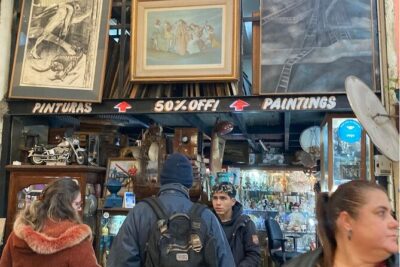
San Telmo Market is a key stop. It was inaugurated in 1897, and it has evolved into a lively hub of antique shops, small restaurants, and traditional fruit and vegetable stalls. That mix matters because you’re not just looking at the past—you’re seeing the city’s everyday market life still going.
This is one of those moments where a guide helps you move efficiently. You don’t need a long shopping spree. You just need enough time to understand what’s there and pick something simple if you want it.
You’ll also be close to places where you can grab a meal before heading toward La Boca. Since meals are not included, treat the market as your “fuel station,” not your “I must buy souvenirs” stop.
La Boca: Boca Juniors Stadium and Caminito’s colorful street life
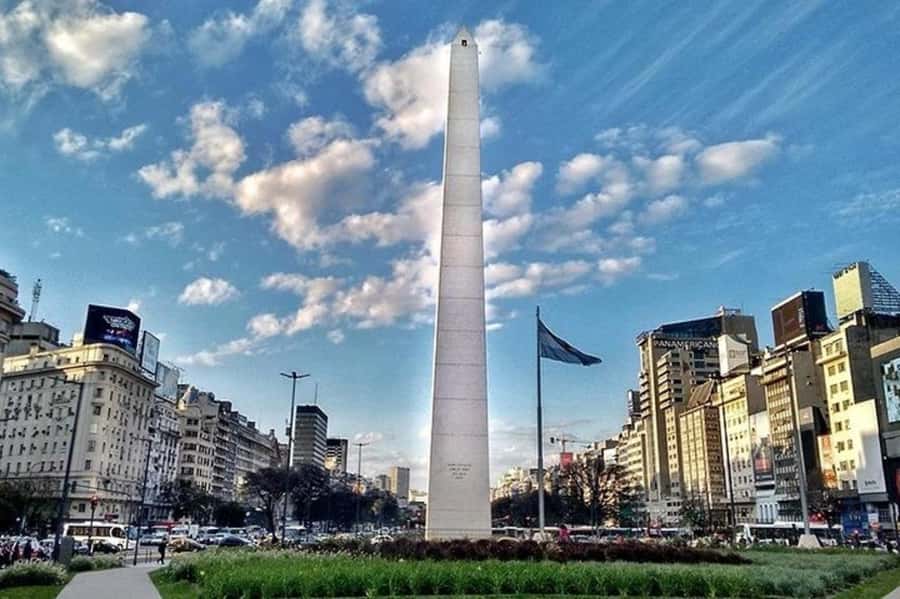
Then you hit La Boca, and the tour turns louder. This neighborhood is famous for Boca Juniors Stadium, and the football club is a big part of the local identity. It’s not just a stadium; it’s an emotional landmark for many Porteños.
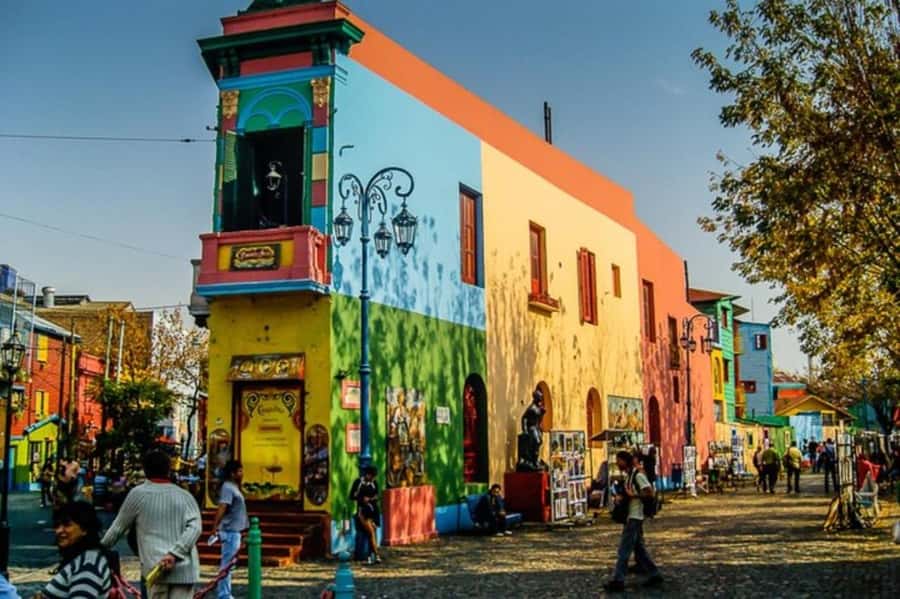
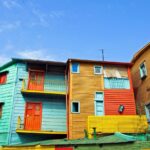
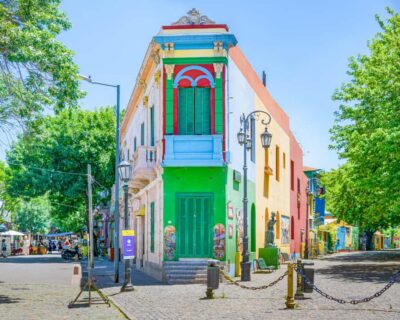
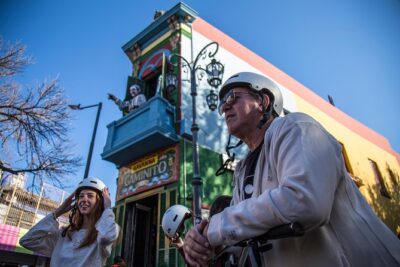
From there, you explore Caminito, an open-air street described as an area full of color and known like a kind of museum. You’ll see it through the lens of tango’s roots in the neighborhood, with the tour noting that it’s part of tango’s birthplace story.
Caminito is also where you can spot tango dancers in traditional restaurants. If you’re the kind of person who likes to catch performance without booking a separate ticket, this is the format you’ll appreciate.
Souvenirs are also part of the deal here. If you like shopping, you’ll find lots. If you don’t, you’ll still learn how the neighborhood turns culture into street energy—something that’s hard to understand from online photos alone.
One small downside of La Boca timing: it can feel crowded, and you may want to step slightly aside to avoid shoulder-to-shoulder photo pressure. That’s normal for the most famous blocks.
Puerto Madero’s skyline shift and the Puente de la Mujer by Calatrava
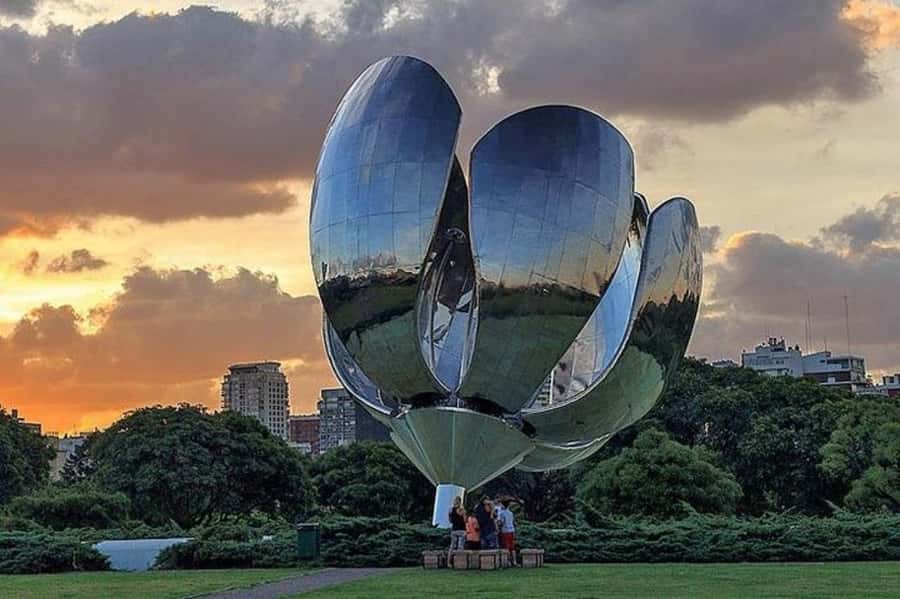
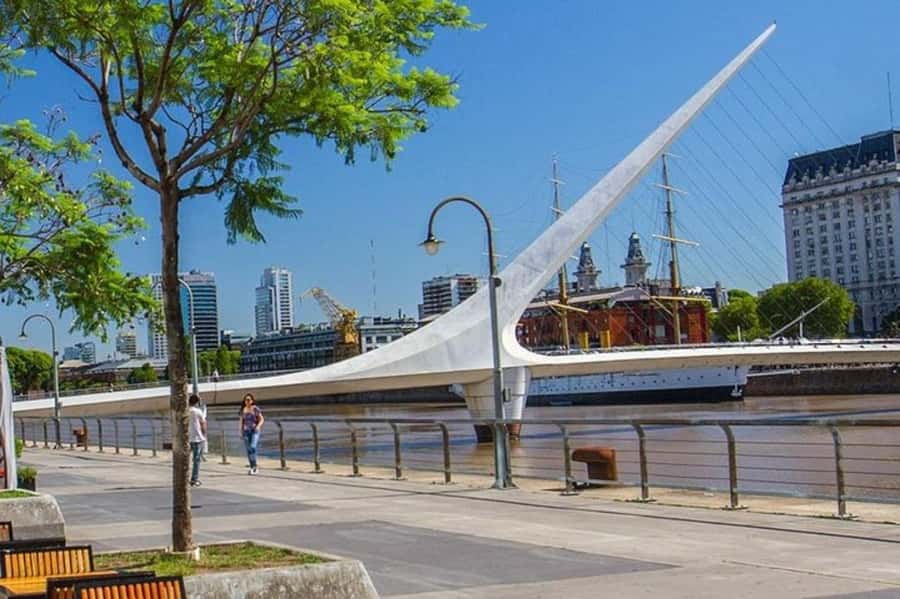
After the older neighborhoods, you get a contrast: Puerto Madero. This area used to be an abandoned port project and is now a modern district with tall buildings and a riverside promenade full of bars and restaurants. It’s a different Buenos Aires mood—cleaner lines, newer construction, and a calmer rhythm you can feel on foot.
The tour highlights the Puente de la Mujer, designed by architect Santiago Calatrava. This bridge is one of those “stop what you’re doing” sights. Even if you’re not an architecture nerd, you’ll understand why people photograph it. It’s sculptural, different from the surrounding city geometry, and it frames the river like a viewfinder.
You’ll also see historical treasures in the area, including the frigate Sarmiento and the corvette Uruguay. The tour keeps it visitor-friendly, using them to add story without forcing a long museum commitment.
If you like to pace yourself, Puerto Madero is a good place to do it. It’s not as tightly packed as parts of the center, and you can pause whenever you want.
Costanera Sur Ecological Reserve: nature near the center
One of the tour highlights you shouldn’t overlook is the Costanera Sur Ecological Reserve. It’s described as a natural space near the city center, which is a rare treat in a place known for dense streets and big buildings.
You likely won’t treat this like a full-day hike. Think of it as a breather: a moment to step away from asphalt and see how Buenos Aires holds onto pockets of nature close to everything else. It’s a good reset before you wrap up at the bridge.
If your travel style is “I need one non-street moment,” this is your box checked.
Price and logistics: is $100 per person worth it?
At $100 per person for 4 hours, the value depends on what you want from Buenos Aires. If your plan is to hit Montserrat, San Telmo, La Boca, and Puerto Madero in one day on your own, you’ll spend a lot of time routing and recalculating.
This tour’s structure helps. You cover multiple neighborhoods with short transfers and then guided walking in the key areas. That efficiency matters because it lets you learn what you’re seeing instead of just moving between landmarks.
You’re also paying for interpretation: oldest bookstore/church/pharmacy, the smallest house story, why Plaza de Mayo and Avenida de Mayo connect national power, and how Boca’s football identity ties into the tango-shaped street culture of Caminito. Those are the kinds of details that are hard to reconstruct from street signs alone.
Finally, it includes the big “photo anchor” stop: Puente de la Mujer. If you’re coming to Buenos Aires with limited time, that one bridge plus a cluster of classic neighborhoods can make the price feel reasonable fast.
Who should book this walking circuit (and who should skip)
This tour is a strong match if you want a fast, well-structured introduction to Buenos Aires neighborhoods. It’s especially good if you like a mix of history + street culture + football culture + architecture. The pacing also suits travelers who prefer not to plan every stop from scratch.
It may be less ideal if you need wheelchair access, since it’s not suitable for wheelchair users. And if you’re traveling with very limited walking ability, the city blocks can add up quickly.
If your Spanish is basic or nonexistent, you’ll still be in good shape. The tour offers live guidance in English, Spanish, and Portuguese, and that’s a practical advantage for understanding the stories as you walk.
One more note from the reviews: the experience is often praised for guides who keep things friendly and organized. Alejandra has been highlighted as both knowledgeable and kind, and Sebastian has been recognized for making sure the day feels thoroughly enjoyable. That team energy matters more than people think.
Should you book VIP TOURS BA?
If you want a one-day sampler that still feels like Buenos Aires (not a rushed bus tour), I’d say yes. The itinerary hits iconic anchors like Plaza de Mayo, Caminito, and Puente de la Mujer, then adds the kind of small details that make neighborhoods feel lived-in.
Book it when:
- you want a guided route across Montserrat, San Telmo, La Boca, and Puerto Madero
- you care about stories behind buildings, not just buildings
- you have about half a day and want real value from that time
Skip it if:
- you need wheelchair accessibility
- you’d rather explore slowly with no guided pacing
FAQ
How long is the tour?
It lasts 4 hours.
Where does the tour start?
It starts at Catedral Metropolitana de Buenos Aires.
Which neighborhoods are included?
You’ll visit Montserrat, San Telmo, La Boca, and Puerto Madero.
What are the main landmarks on the route?
Key stops include Plaza de Mayo, Avenida de Mayo, San Telmo Market (1897), Plaza Dorrego, Caminito, Boca Juniors Stadium, and Puente de la Mujer.
Is Café Tortoni part of the tour?
Yes, the tour includes a visit to Café Tortoni, but it depends on availability.
Are meals included?
No. Meals and drinks are not included.
What languages is the live guide available in?
The live tour guide is available in English, Spanish, and Portuguese.
Is the tour wheelchair accessible?
No. It is not suitable for wheelchair users.
What should I wear?
Wear comfortable shoes and dress for the weather since it’s a walking experience.
What’s the cancellation policy?
You can cancel up to 24 hours in advance for a full refund. You can also reserve and pay later.
If you tell me your travel dates and what you’re most interested in (football, tango, architecture, or “old Buenos Aires”), I can suggest how to pace the day around this tour.
The Palaces of Buenos Aires, Continued



Still in San Telmo? Keep Walking


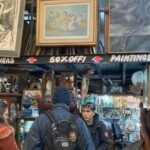
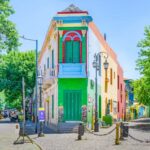
La Boca, a Few More Corners


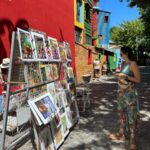
Just added to our Buenos Aires notebook
- Guided tour Boca Juniors Museum & Stadium + Caminito
★ 3.3 · 3 reviews - Bike Tour: Buenos Aires to the North
★ 4.0 · 3 reviews - From Colonialism to Eclecticism, Buenos Aires arquitectonica
★ 5.0 · 3 reviews - Enjoy a Rural Experience in a Vineyard near Buenos Aires
★ 4.7 · 3 reviews - Café de los Angelitos – Traditional Night in Buenos Aires
★ 4.8 · 3 reviews - Buenos Aires: Rojo Tango Show with Optional Dinner
★ 3.4 · 3 reviews
La Boca & Caminito, compared.
 ★ 4.8La Boca Guided Walking Tour in EnglishFrom $131,587 reviews
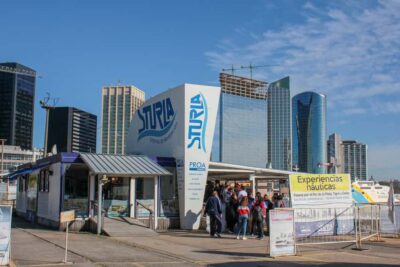 ★ 4.1Navigation from Pto. Madero to La BocaFrom $18147 reviews
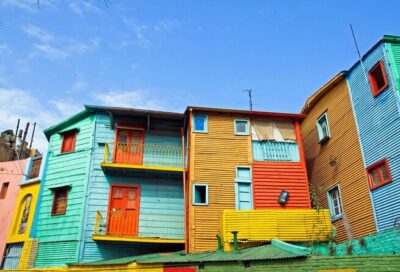 ★ 4.5Buenos Aires Bike Tour: San Telmo and La Boca DistrictsFrom $4574 reviews
 ★ 5.0La Boca, a collective creation: Port, immigrants, arts and footballFrom $6558 reviews
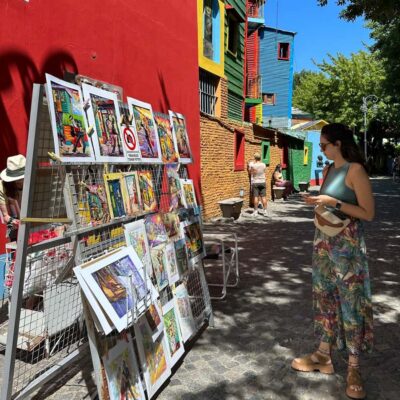 ★ 4.8La Boca Art and History Walking TourFrom $4655 reviews
 ★ 5.0La Boca and City Center Bike TourFrom $3854 reviews
 ★ 5.0SAN TELMO + CAMINITO THE LOCAL WALKING TOUR!From $358 reviews
 ★ 5.0La Boca Out off the Beaten TrackFrom $356 reviews
Browse the lists this tour appears in