
Reviewed · LANDMARKS & CITY ARCHITECTURE
Buenos Aires: Historic District Private Guided Walking Tour
Buenos Aires history walks with you. This private 2-hour tour packs the city’s political heart and colonial details into a simple route you can actually manage on foot, with panoramic views built in. I particularly like that you get a guide who turns landmark walls into stories, and I also love the practical focus on key sites like Plaza de Mayo and the Metropolitan Cathedral. One watch-out: the meeting point can be updated day-of, so bring reliable internet access and double-check any messages.
You start outside Café Tortoni and finish with a better sense of how this city was shaped, from 16th-century roots to architecture you’ll want to photograph twice. I like that the tour includes entrance tickets for the Cabildo and the cathedral, so you’re not stuck hunting paperwork in a line. A possible drawback is that without hotel pickup, you’ll want to plan your arrival time to the meeting spot carefully.
In This Review
- Key highlights at a glance
- Meeting Outside Café Tortoni: Quick Start, Real Context
- Panoramic Views and the Historic District Feeling
- Plaza de Mayo (Founded in 1580): Buenos Aires’ Original Center of Gravity
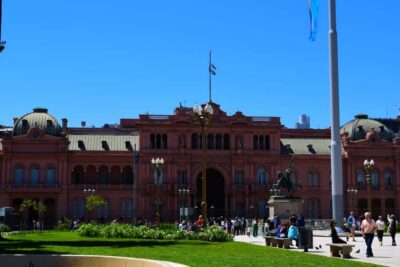
- Casa Rosada: Why the President’s Office Belongs in the Story
- Cabildo: Colonial Government You Can Actually Step Into
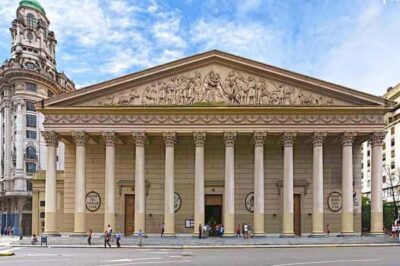
- Metropolitan Cathedral: Neoclassical Architecture with a Strange, Strong Personality
- The Plaza de Mayo Subway Station: A Small Clue to Big Change
- What You’re Really Paying $52 For
- Guide Quality: Clear English and a Q&A-Friendly Pace
- A Quick Reality Check: Logistics and the One Possible Hiccup
- Who Should Book This Walking Tour
- Should You Book This Buenos Aires Historic District Private Guided Walking Tour?
- FAQ
- Where does the tour start?
- How long is the walking tour?
- What is the price per person?
- Is this a private tour?
- What’s included in the ticket price?
- Do I need to buy tickets for the Cabildo and cathedral?
- What languages are available for the live guide?
- Is the tour wheelchair accessible?
Key highlights at a glance
- Café Tortoni meeting point start: your guide sets the scene with Argentina’s classic hangouts
- Plaza de Mayo (founded 1580): see where Buenos Aires began
- Casa Rosada and civic power: understand why these buildings matter
- Cabildo with entry: step into the colonial seat of town council
- Metropolitan Cathedral’s neoclassical look: a style choice that feels unusual in context
- Plaza de Mayo subway station: where the city’s subway system started
More Belle Epoque palaces and grand landmarks of Buenos Aires.
- Classic City Tour of Buenos Aires: Neighborhoods and Emblems★ 3.8 · 282 reviews
- Buenos Aires: Palacio Barolo Entry Ticket and Guided Tour★ 4.3 · 193 reviews
- Buenos Aires: Palacio Barolo Guided Night Tour with Wine★ 4.4 · 54 reviews
Meeting Outside Café Tortoni: Quick Start, Real Context
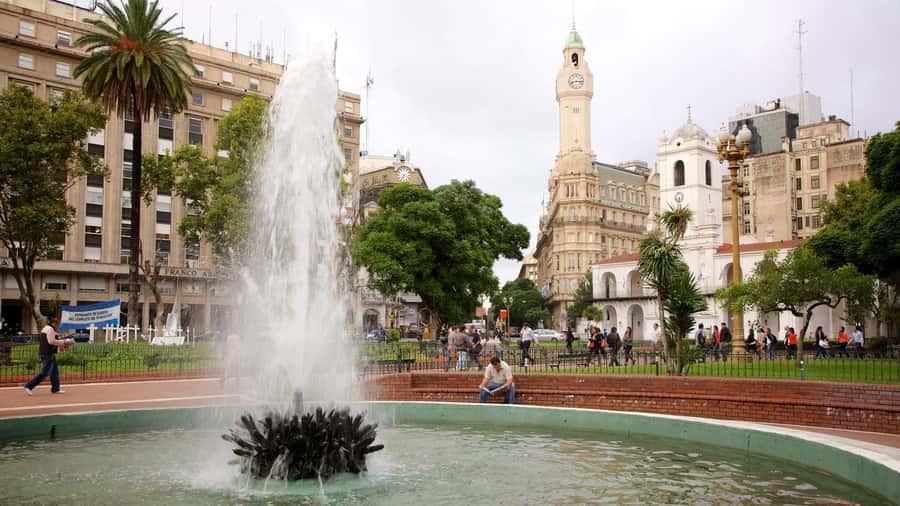
You meet outside Café Tortoni, one of Buenos Aires’ best-known landmarks for meeting up, lingering, and swapping ideas. The tour isn’t just about ticking off big buildings. It starts by putting you in the right mood, and your guide explains how famous Argentine personalities used places like this as a social “hub” over time.
This opening matters because the Historic District can feel like a photo tour if you arrive cold. Instead, you get a thread you can follow. You’ll know what you’re looking at and why the neighborhood developed the way it did.
I also appreciate the format: it’s a private group, so you’re not being rushed by a crowd. If you have questions, your guide can actually answer them. That’s a big deal when you’re walking and learning at the same time.
One practical point: bring comfortable shoes. The route is paced for a walk, but central Buenos Aires can still mean uneven sidewalks and a bit of standing around in sun or wind.
Panoramic Views and the Historic District Feeling
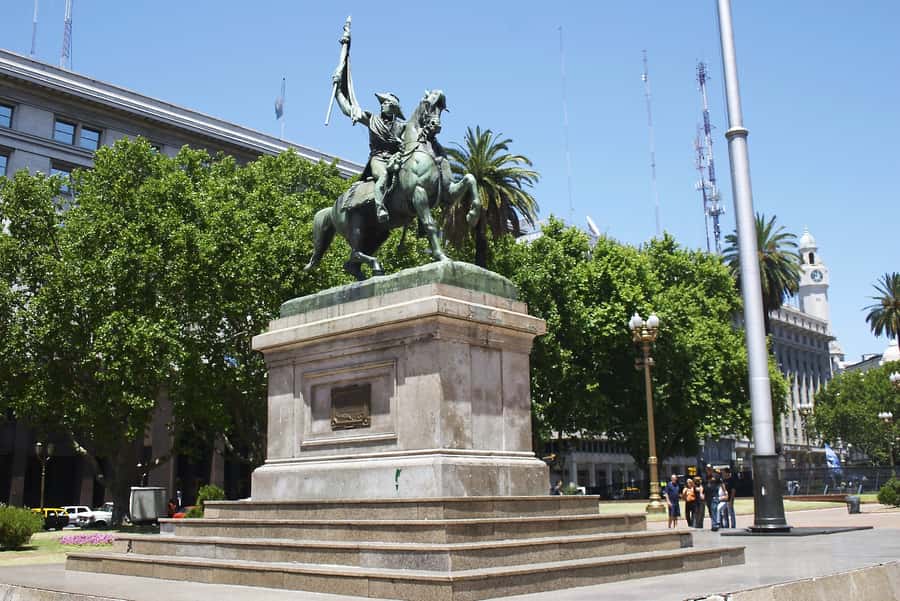
The tour’s description promises panoramic views from one of the city’s dazzling neighborhoods, and even if you’re not a serious skyline photographer, those sight lines help. They give you geography: you start understanding the downtown grid, where civic buildings cluster, and how the architecture “speaks” to its surroundings.
Then the route shifts into close-up storytelling. Instead of long transfers, you get to stay in the neighborhood where the walking history is visible. It’s the difference between reading about Buenos Aires and walking through the pages.
If you’re traveling with limited time, this is a smart way to sample the core without exhausting yourself. Two hours goes fast, though, so I’d keep the rest of your day flexible for a little wandering after.
Plaza de Mayo (Founded in 1580): Buenos Aires’ Original Center of Gravity
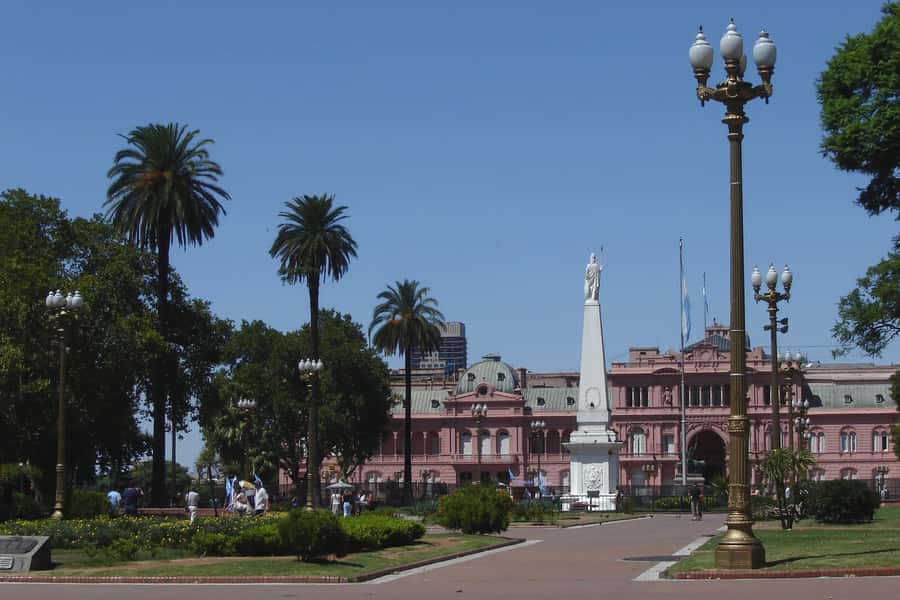
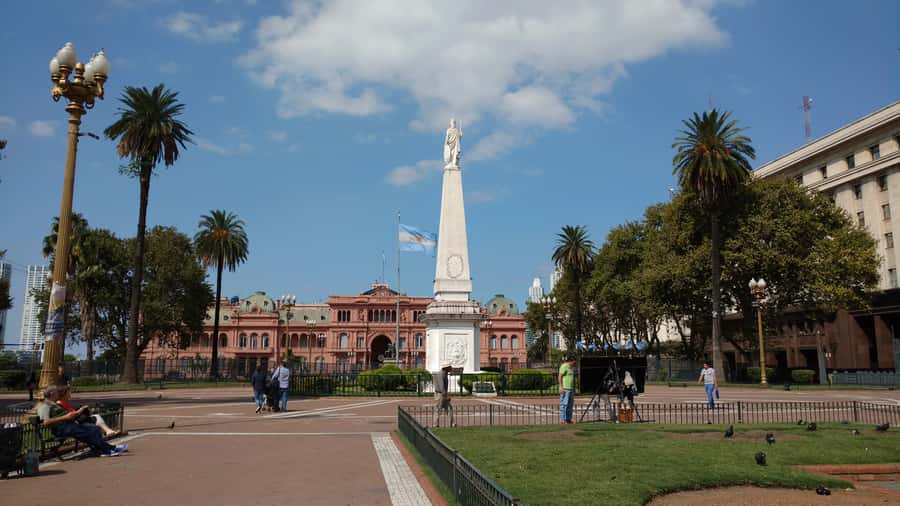
You’ll spend real time at Plaza de Mayo, the square where Buenos Aires was founded in 1580. This is the spot where the city’s civic life concentrates. It’s not subtle, and that’s the point. The square is designed for public movement—crowds, speeches, decisions, and the constant buzz of official life.
Your guide connects the dots between the square and Argentina’s independence, history, and traditions. You’re not just seeing architecture; you’re learning how people used this space to represent power and identity over centuries.
Also, this stop works for first-time visitors and returnees alike. If you’ve seen Plaza de Mayo from photos, you’ll understand the scale differently in person. If you’ve been before, you’ll likely enjoy the way a guide can frame details you might otherwise miss.
Tip for your visit: look around before you focus on one building. Plazas make more sense when you know how the buildings “face” each other. It helps you get that historical layout in your head.
More of Buenos Aires covered on foot.
Casa Rosada: Why the President’s Office Belongs in the Story
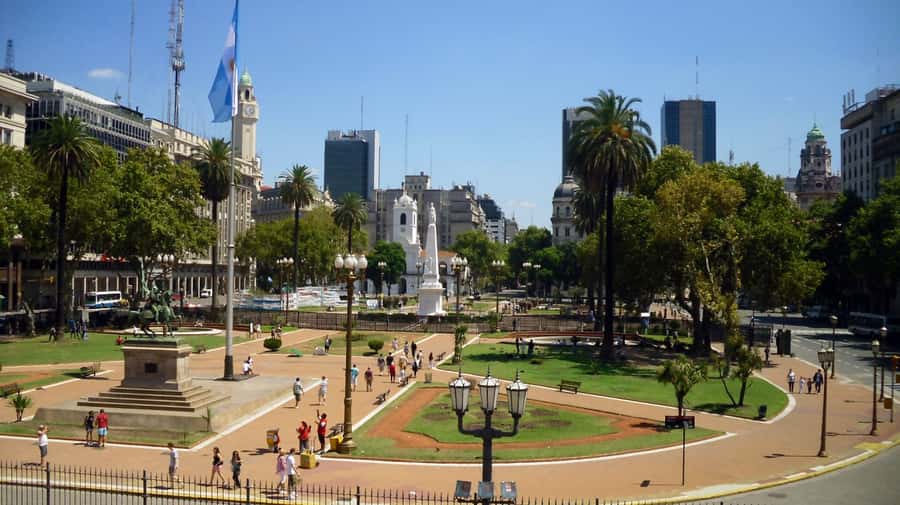
After getting your bearings in the plaza, you’ll see Casa Rosada, the president’s office. Even if you know it by name, it’s worth viewing as part of a larger system rather than as an isolated icon.
This stop helps you understand why these civic buildings sit where they do. In cities like Buenos Aires, official architecture isn’t just decoration—it’s a message. Your guide will explain the meaning behind the institutions and how independence-era narratives shaped what leaders wanted the public to see.
One reason I like including Casa Rosada in a walking tour is pacing. It keeps you focused: you go from the founding space (Plaza de Mayo) to the ongoing power structure (Casa Rosada) without a gap where your attention can drift.
If you prefer your photos clean and wide, consider taking one early while the group is together. Later, you may find yourself absorbed in the stories more than the camera.
Cabildo: Colonial Government You Can Actually Step Into
Next up is the Cabildo, a historic building that served as the seat of the town council during colonial times. This is where you feel the “everyday government” side of history, not just the big symbolic stuff.
Your ticket is included, and the tour is designed to skip the ticket line. That matters in Buenos Aires, where lines can steal time and energy. For a 2-hour experience, saving even 20 minutes can be the difference between seeing everything comfortably and rushing through.
What makes the Cabildo special is that it gives you a sense of how authority operated at the municipal level. Independence and national politics are essential, but colonial administration set up the systems people lived under long before independence declarations changed the story.
If you like architecture, take a slower lap inside. Even without a lot of formal instruction time, the building’s role makes details feel purposeful.
Metropolitan Cathedral: Neoclassical Architecture with a Strange, Strong Personality
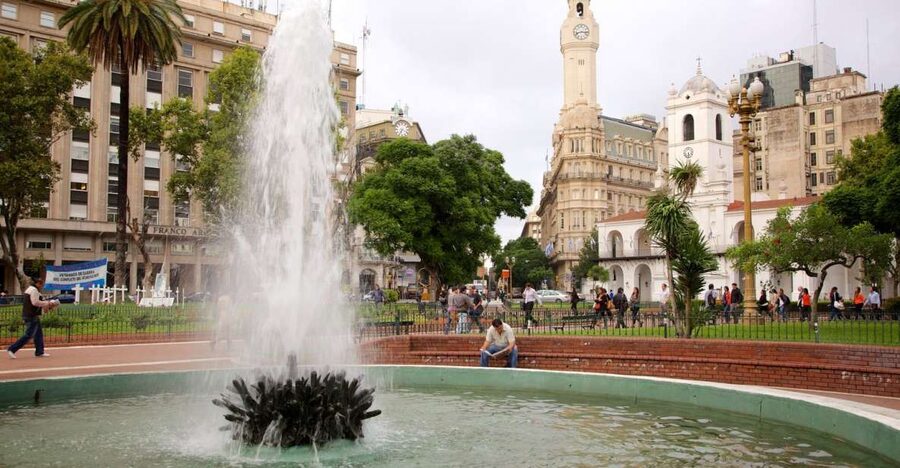
Near the cathedral, you’ll spot the Metropolitan Cathedral, and this is one of the tour’s most specific promises: its unusual neoclassical design. That “unusual” word is important. Buenos Aires has lots of styles and layers, and the cathedral’s look can surprise people who expect one uniform theme.
Your entrance to the cathedral is included, so you can go in rather than peering from the outside. Neoclassical architecture often signals ideals—order, formality, seriousness. But in the middle of Buenos Aires, that style can feel like a bold statement rather than a background element.
Your guide’s job here is to connect design choices to cultural history. Instead of staring at stone and trying to guess meaning, you get context fast.
If you’re sensitive to crowds, don’t wait too long to head inside. The group plan is built around efficiency, and it’s easier to enjoy the interior calmly while everyone’s still together.
The Plaza de Mayo Subway Station: A Small Clue to Big Change
Near the cathedral area, you can see the Plaza de Mayo subway station, where Buenos Aires’ subway system began. This is the kind of stop that many walking tours skip, but it’s a smart addition because it shifts from “old world” history to modern urban change.
Subways are about more than transportation. They reflect growth, new rhythms of commuting, and the city’s shift toward a faster daily life. Seeing where the subway started helps you understand the timeline: Buenos Aires didn’t just preserve the past—it kept building into it.
This is also a good moment to reset your legs. If you’ve been walking and standing for a while, watching the city move around the station area can give you a short breather while still feeling like part of the story.
What You’re Really Paying $52 For
At $52 per person for a private 2-hour guided walk, the value comes from a few clear elements:
- You’re paying for a live guide who connects history and traditions to the places you see.
- You get included entrances to the Metropolitan Cathedral and the Cabildo.
- The tour is set up to skip the ticket line, which protects your time.
For short visits, time is often your biggest cost. This tour helps you buy back time by bundling guide + access. You’re also not paying for hotel pickup, since there isn’t any—so the pricing is focused on the walk itself and the key-site entries.
Language is another part of value. The guide may speak English, Portuguese, or Samoan, so you’re more likely to get a smooth explanation rather than a rushed translation. Based on the strongest feedback from guide performance, clarity matters here—and this tour leans into that.
Guide Quality: Clear English and a Q&A-Friendly Pace
The strongest praise in the feedback is consistent: the guides explain well, answer questions, and keep things approachable. Names that come up include Juan Manuel Sanchez and Juan Miguel, and the common thread is clear, understandable English paired with solid historical context.
That quality is not a small detail. On a walking tour, your understanding rises or falls based on how well the guide can talk while you move. When the guide is sharp and personable, you’ll remember the story later, not just the buildings.
I also like the private group angle here. It’s easier to ask something in the moment—why a building looks the way it does, or what independence-era events the landmarks connect to—without worrying about slowing down a larger crowd.
A Quick Reality Check: Logistics and the One Possible Hiccup
Most walks in central Buenos Aires are straightforward, and the tour format is simple. Still, there’s one recurring risk with any city tour that uses a fixed meeting place: last-minute changes.
One past issue involved a guide not appearing at the designated meeting point due to a meeting location update communicated by email, with contact attempted through WhatsApp-style messaging. The traveler also struggled because they didn’t have the ability to install or access the app while roaming.
I don’t say this to scare you. I say it to help you travel smart: keep your internet access working, read any day-of messages, and be ready to contact the guide if the meeting point shifts. If you rely on Wi-Fi only, consider enabling a data plan before you start.
Who Should Book This Walking Tour
This tour fits best if you:
- Want a high-density look at Buenos Aires’ civic core in just 2 hours
- Like walking tours where the guide explains what you’re seeing
- Prefer access that includes entry tickets instead of adding extra stops and lines
- Are comfortable meeting at street level, outside a known landmark (Café Tortoni)
You might also like it if you’re visiting for the first time and want a clean introduction to the city’s independence-era story, told through institutional buildings rather than museums alone.
If you’re someone who needs constant movement to stay interested, this will likely work. The itinerary is structured to keep you moving between major sites, with breaks built into each segment.
Should You Book This Buenos Aires Historic District Private Guided Walking Tour?
I think it’s a strong choice for short stays—especially if you value a guide who can explain clearly and keep the pace friendly. You get the key pillars of the Historic District (Plaza de Mayo, Cabildo, the Metropolitan Cathedral, and Casa Rosada) plus a small modern history clue with the subway station.
Book it if you want value from bundled access and you’re ready to walk a compact route. Skip it (or at least plan carefully) if you can’t reliably manage day-of meeting-point communication, because there’s no hotel pickup and the start depends on arriving at the correct spot.
If you do book, do two simple things: wear comfortable shoes, and make sure you can access internet on the day. That tiny prep removes the biggest potential hassle.
FAQ
Where does the tour start?
The meeting point is outside Café Tortoni.
How long is the walking tour?
It lasts 2 hours.
What is the price per person?
The price is $52 per person.
Is this a private tour?
Yes. It’s a private group.
What’s included in the ticket price?
You get a live guide, a walking tour, and entrance to the Metropolitan Cathedral and Cabildo.
Do I need to buy tickets for the Cabildo and cathedral?
No. You get entrance included and the tour includes skip-the-ticket-line access.
What languages are available for the live guide?
The guide can be English, Portuguese, or Samoan.
Is the tour wheelchair accessible?
Yes, it’s wheelchair accessible.
More History in Buenos Aires

More Walks Through Buenos Aires

The Palaces of Buenos Aires, Continued



Just added to our Buenos Aires notebook
- Guided tour Boca Juniors Museum & Stadium + Caminito
★ 3.3 · 3 reviews - Bike Tour: Buenos Aires to the North
★ 4.0 · 3 reviews - From Colonialism to Eclecticism, Buenos Aires arquitectonica
★ 5.0 · 3 reviews - Enjoy a Rural Experience in a Vineyard near Buenos Aires
★ 4.7 · 3 reviews - Café de los Angelitos – Traditional Night in Buenos Aires
★ 4.8 · 3 reviews - Buenos Aires: Rojo Tango Show with Optional Dinner
★ 3.4 · 3 reviews
Landmarks & City Architecture, compared.
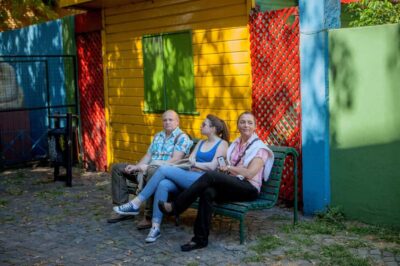 ★ 3.8Classic City Tour of Buenos Aires: Neighborhoods and EmblemsFrom $45282 reviews
 ★ 4.3Palacio Barolo Entry Ticket and Guided TourFrom $67193 reviews
 ★ 4.4Palacio Barolo Guided Night Tour with WineFrom $9054 reviews
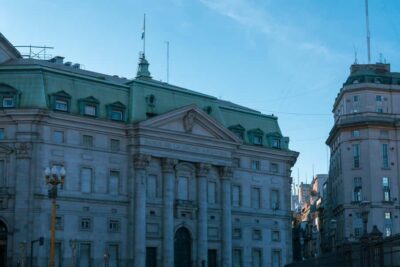 ★ 4.9Historic Buenos Aires Landmarks & Icons TourFrom $2037 reviews
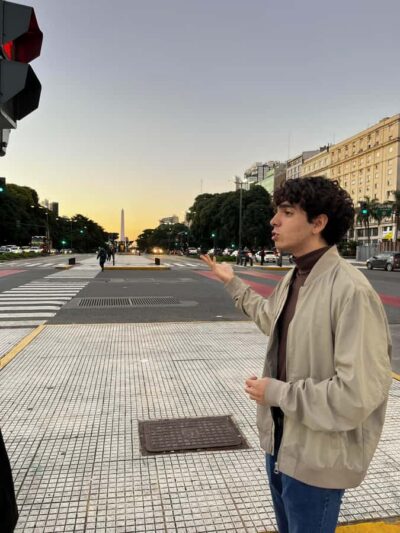 ★ 4.0100% History and architecture of Buenos AiresFrom $125 reviews
 ★ 5.0Montserrat, San Telmo, La Boca, and Puerto …From $1003 reviews
 ★ 4.1MALBA Museo de Arte Latinoamericano TourFrom $1303 reviews
 ★ 5.0From Colonialism to Eclecticism, Buenos Aires arquitectonicaFrom $253 reviews
Browse the lists this tour appears in