
Reviewed · TANGO LESSONS & MILONGAS
Tango Lesson in Buenos Aires with professional dancers
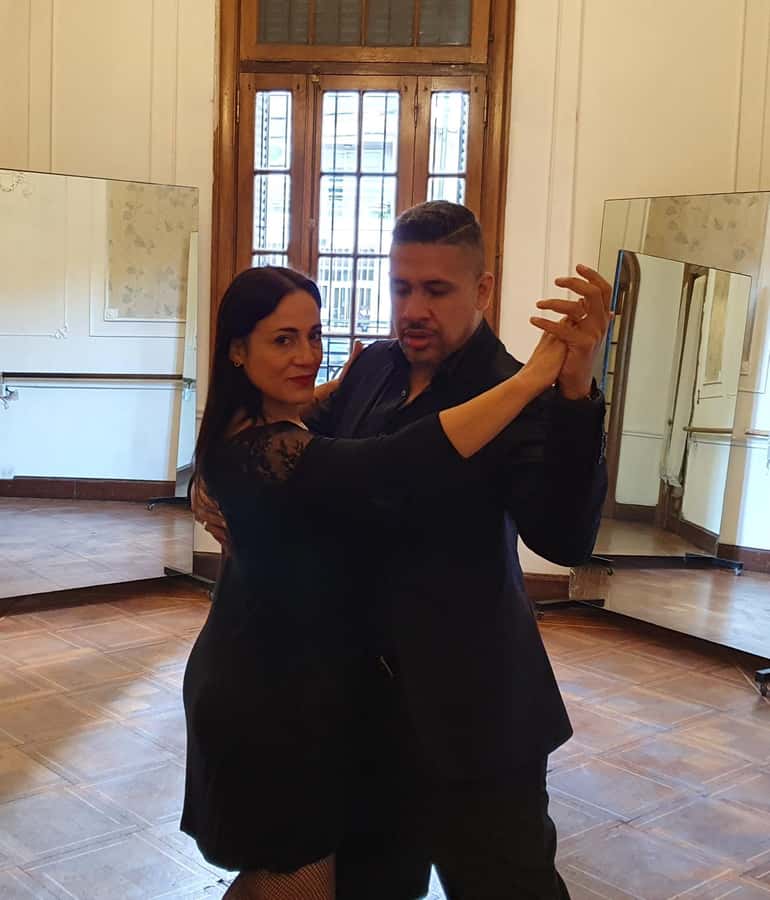
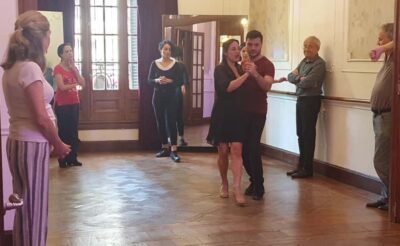
Tango lessons get real fast. In one hour at a working school housed in an antique-style house, you’ll get hands-on guidance from professional dancers, learning the embrace and walking foundations, plus you’ll hear why each tango hall matters. I especially like how the teaching is patient and practical, and how the rooms themselves turn history into something you feel—not just something you read. One consideration: the session is only one hour, so you’ll leave with fundamentals, not a full show-ready routine.
I recommend you treat this as your first “tango reset.” You’ll meet instructors at the tango school by ringing the doorbell, then move into special halls designed for lessons, not a random living room. With English or Spanish instruction and a private setup for up to two people, it’s a strong value if you want direct coaching without guessing what to fix.
In This Review
- Key Things I’d Prioritize Here
- Ring the Doorbell: Starting Your Tango Lesson in an Old Buenos Aires House
- The Antique Tango School and Special Halls: Why the Setting Helps You Learn
- One Hour of Private Class With Professional Dancers: What You Actually Do
- Embrace, Walk, and Partner Connection: The Skills That Make Tango Click
- How the Lesson Uses Tango Hall History (Without Making It Feel Like a Museum)
- The Live Tango Exhibition: Why It’s Worth Your Attention
- Price and Value: Is $120 for a 1-Hour Tango Lesson Worth It?
- Language and Comfort: English or Spanish, Plus What to Wear
- Who This Tango Lesson Suits Best (and Who Should Skip It)
- A Quick Reality Check Before You Book
- Should You Book This Private Tango Lesson?
- FAQ
- How long is the Tango lesson?
- What is the price for the experience?
- Is this a private class or a group class?
- Do I need any dance experience?
- What languages are the instructors?
- Where is the meeting point?
- What should I wear or bring?
- Is alcohol allowed during the lesson?
- Is there a live tango exhibition?
- Is it suitable for children or people with accessibility needs?
Key Things I’d Prioritize Here
- Private coaching with professional dancers so your basics get corrected, not guessed
- Antique house + dedicated dance halls that make the experience feel authentic and focused
- Embrace and walking fundamentals taught for real partner movement
- A live Tango exhibition during the visit for immediate inspiration and context
- History explained through the tango halls, tying steps to meaning
- Small, one-hour timing that works well for first-timers who don’t want a long night
Want to actually dance? More tango lessons and milongas around Buenos Aires.
- Buenos Aires: Private Tango Lesson★ 4.9 · 244 reviews
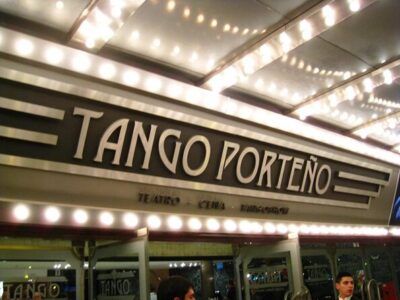
- Tango Porteño Show with Optional Dinner and Tango Lesson★ 4.0 · 97 reviews
- Buenos Aires – Private Tango lesson★ 5.0 · 96 reviews
Ring the Doorbell: Starting Your Tango Lesson in an Old Buenos Aires House
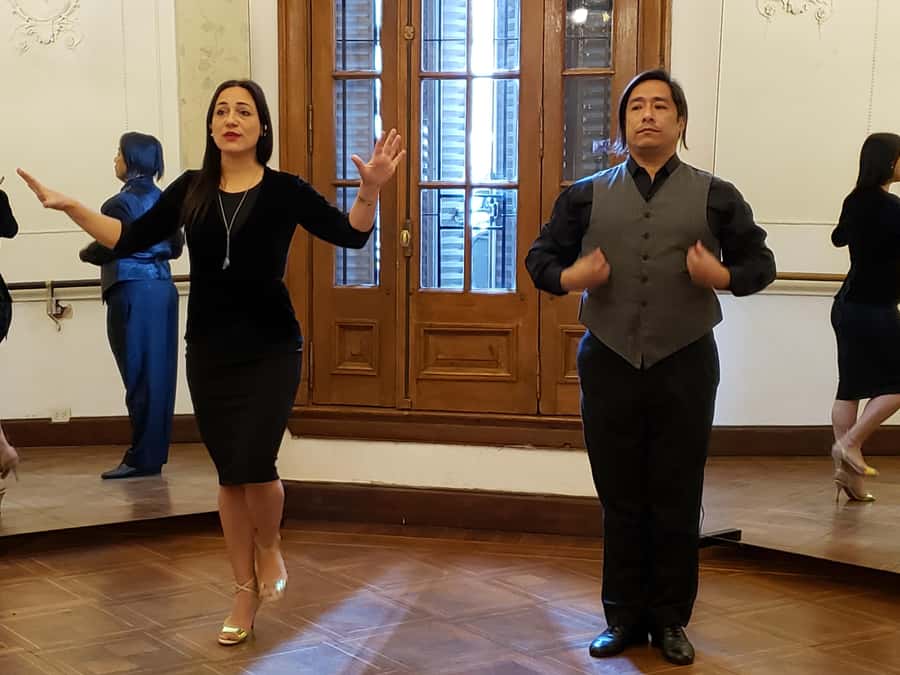
Your first clue you’re in the right place is simple: you’ll see a tango school inside an old house. You ring the doorbell to meet your instructors, which keeps things intimate and low-fuss. This kind of setup matters in Buenos Aires because it signals you’re not doing a “tour stop.” You’re entering a real classroom.
This also sets the tone for the lesson. Tango schools often feel theatrical from the street, but inside, the goal is practical. Expect you’ll be guided into the lesson space quickly, then start working right away.
Practical tip: plan on arriving a few minutes early. With a doorbell meeting point, you don’t want to stand around guessing the exact entrance while your class time ticks on.
The Antique Tango School and Special Halls: Why the Setting Helps You Learn
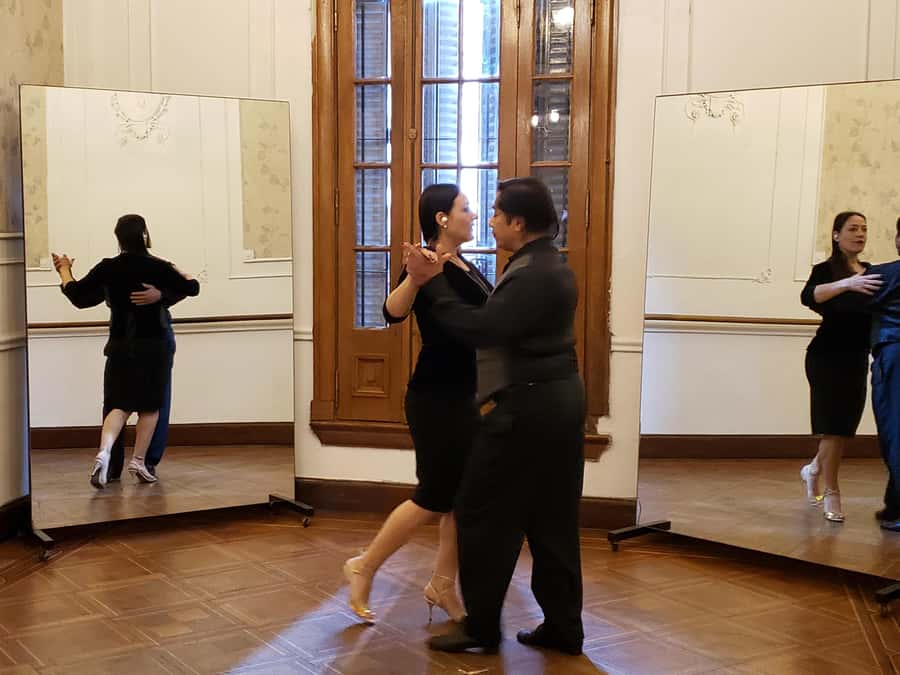
This experience doesn’t just claim authenticity. It’s built into the building design: an antique-styled house adapted as a Tango School, with special halls for dance classes. That means you’re learning in spaces made for movement and partner work, rather than squeezed into whatever corner happens to be available.
I like that the experience frames the environment as part of the lesson. You’re guided to learn the history that lives in each tango hall, so the embrace and basic walk won’t feel like random tricks. You’ll get the cultural meaning behind the way tango partners move close and communicate through posture.
In plain terms: when the room makes you slow down and pay attention, your feet learn faster. Tango isn’t hard because it’s complicated. It’s hard because you need timing, comfort, and partner awareness. A proper class hall helps with all three.
One Hour of Private Class With Professional Dancers: What You Actually Do
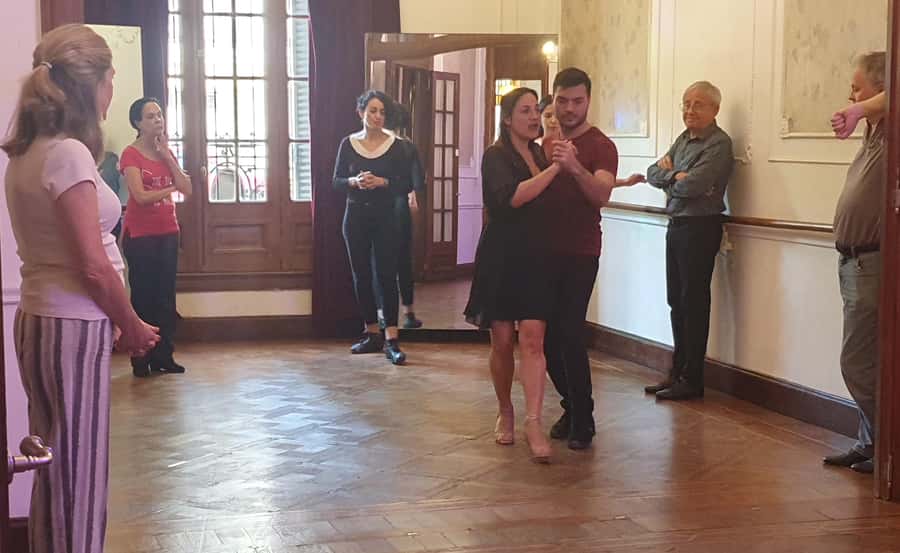
The core experience is a one-hour private class with a professional tango couple. You’ll learn the basic steps in a way that’s described as simple and fun. The big win is the “private” part: you can ask questions, get corrections, and repeat the same section until it clicks.
Here’s what that usually means in a tango lesson focused on beginners:
- You start with fundamentals of how to stand and connect with a partner.
- You practice basic step patterns that work for the embrace.
- You refine the walk so it feels like tango motion, not just side steps.
This is also where having professional dancers matters. Even if you’ve never danced before, a good instructor can explain what your body should do in clear terms. The experience is designed for people with no dance knowledge, so the pace should be beginner-friendly.
One more detail I’d keep in mind: one hour goes fast. Even with a private class, you’ll want to focus on nailing the essentials—embrace comfort and the basic walk—rather than trying to collect every possible variation.
More hands-on classes and workshops in Buenos Aires.

Embrace, Walk, and Partner Connection: The Skills That Make Tango Click
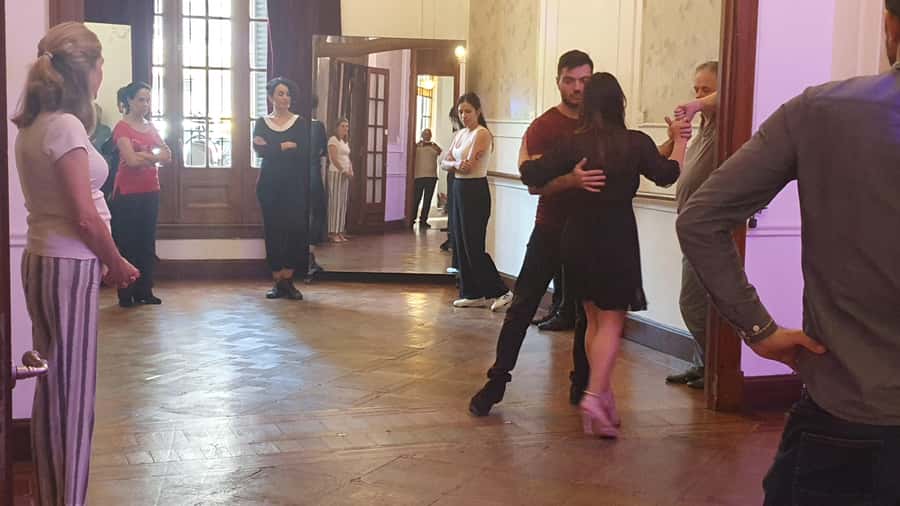
If you’re new to tango, the biggest surprise is often the embrace. Tango isn’t just footwork. It’s how your upper body frames the connection. This lesson specifically targets:
- the embrace,
- the basic steps,
- and the walk with your partner.
The walk part is especially important because it’s tango’s backbone. When your walk has the right rhythm and intention, the rest gets easier. You can think of it like this: your feet may be doing the steps, but your body is doing the communication.
In past sessions, an instructor named Joana stood out for patience while guiding people through the basics. That matters because beginners don’t need speed. You need clarity, and you need time to fix small things—like posture tension or step placement—without feeling rushed.
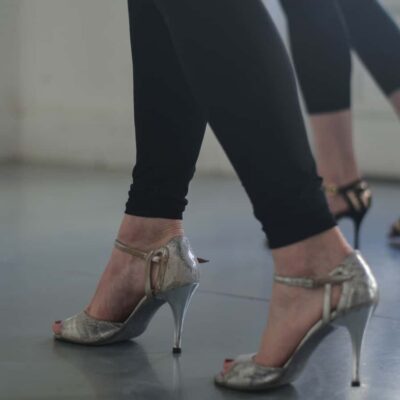
Practical tip: wear comfortable shoes and clothes you can move in. You want stable footing and freedom through your legs. If your shoes are too stiff or too slippery, it becomes harder to learn the rhythm you’re being taught.
How the Lesson Uses Tango Hall History (Without Making It Feel Like a Museum)
The experience includes learning the history that lives in each tango hall. That can sound abstract, so it helps to know what you should be looking for while you’re there: specific cues about why tango looks and feels the way it does.
Instead of a lecture, you’re learning in context. You’re in the kind of building where tango has been taught and practiced for a long time, and the lesson connects your movements to that cultural setting. That connection is what makes your steps feel purposeful.
You don’t need to memorize dates. You just need to understand the role of the embrace, the walk, and the partner dynamic. When those pieces land emotionally and physically, tango stops being awkward and starts feeling like a language you can speak.
The Live Tango Exhibition: Why It’s Worth Your Attention
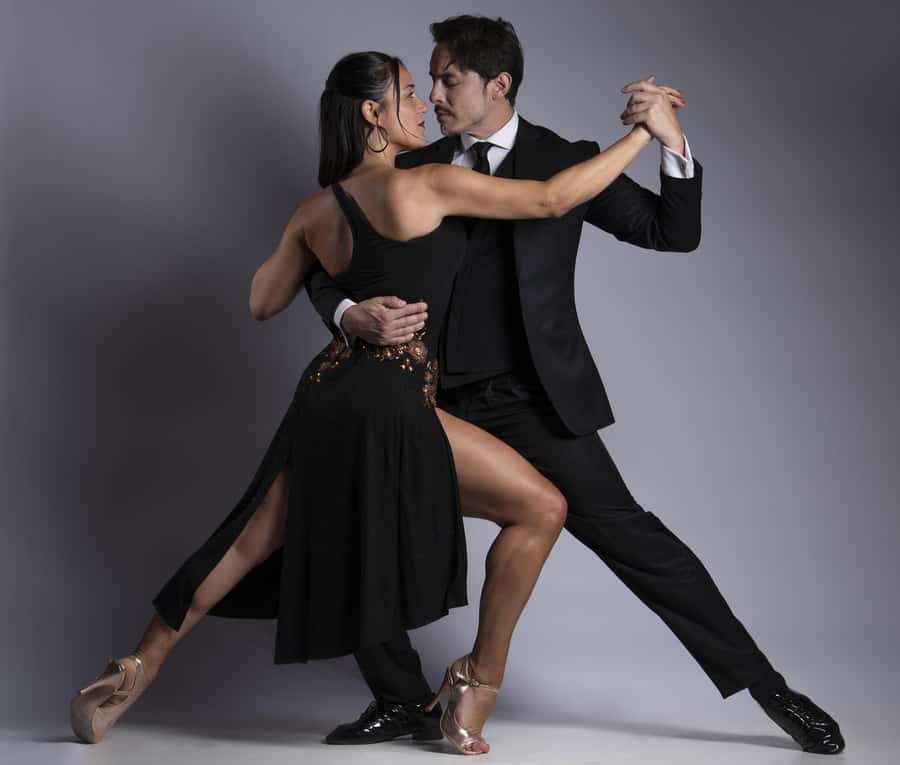
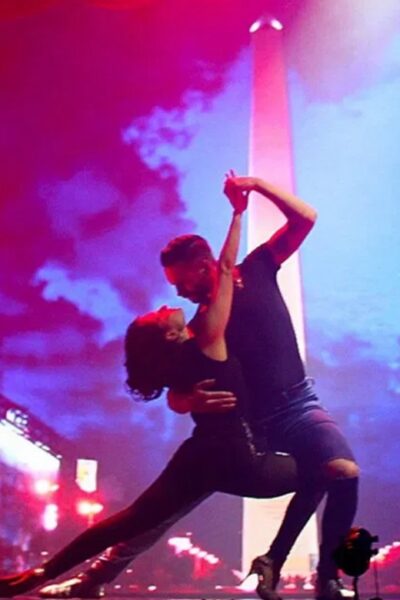
On top of the class, you’ll enjoy a live tango exhibition in an authentic traditional tango school. Even if you’re a total beginner, this part is useful because it gives you a clear model to copy.
Watch for three things:
- posture and how dancers maintain connection,
- how weight shifts create the tango rhythm,
- and how the walk creates motion even when steps look simple.
Then return to your lesson and compare what you feel in your body. When the exhibition matches what you just practiced, you’ll understand the lesson faster.
One practical consideration: the exact flow of class versus exhibition time isn’t spelled out in detail here. If you’re short on time, still plan to stay present through the whole session so you don’t miss the performance piece.
Price and Value: Is $120 for a 1-Hour Tango Lesson Worth It?
The price is $120 per group up to 2, and the lesson lasts one hour. On paper, that’s not cheap. In practice, private tango instruction in Buenos Aires can be one of those costs that’s actually buying something tangible: personalized correction and time.
Here’s what you’re really getting for the money:
- Professional dancers teaching you basics you can apply immediately.
- A private setup where you can slow down and repeat.
- A building designed for classes, with history woven into the experience.
If you were to try learning tango from videos or casual classes, you’d spend hours without the same level of feedback. This lesson compresses that learning curve into a focused hour.
If you’re traveling with one person, it can also be a smarter value because it’s priced per group up to two. If you’re traveling solo, you’ll want to confirm how the private pairing works, since the information here focuses on group size rather than solo logistics.
Language and Comfort: English or Spanish, Plus What to Wear
Instruction is available in English and Spanish, which is a big plus if you don’t want to play charades with dance terminology. You’ll also have guidance on what to bring: comfortable shoes and comfortable clothes.
In tango, comfort isn’t just about feeling good. It directly affects technique. Tight clothing can restrict movement. Unstable footwear can make your steps feel unsafe. When you choose comfort on purpose, the lesson becomes easier to absorb.
Also note what’s not allowed: alcohol and drugs. That’s reasonable for a movement class, and it helps keep the session focused.
Who This Tango Lesson Suits Best (and Who Should Skip It)
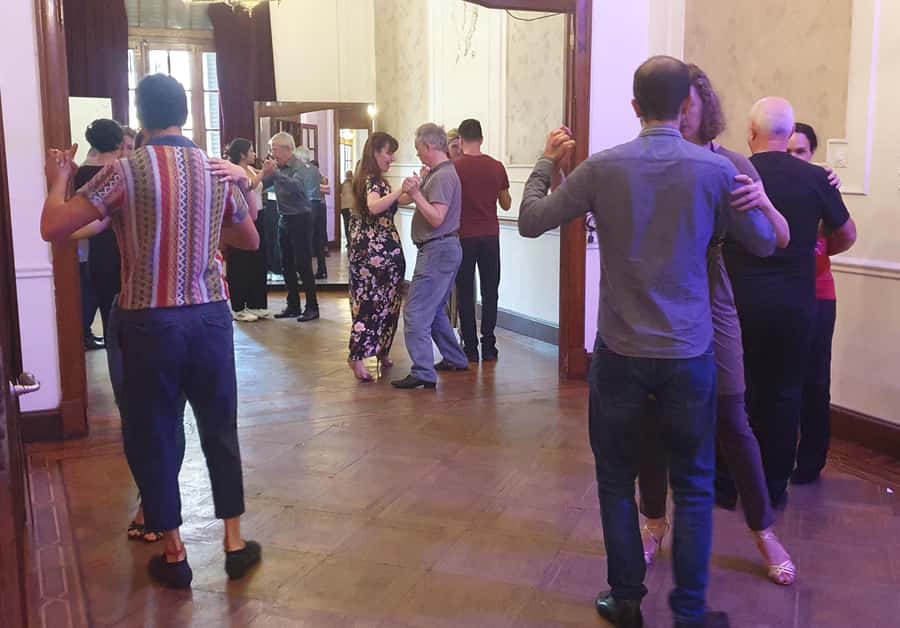
This tango lesson is aimed at first-timers and people with no dance knowledge needed. It’s also a good fit if you want an experience that feels local and intentional, taught in a traditional tango school environment with special class halls.
It’s not suitable for:
- children under 10,
- people with mobility impairments,
- wheelchair users,
- visually impaired people,
- hearing-impaired people,
- people with pre-existing medical conditions.
If you fall into one of those categories, it’s better to look for alternatives that explicitly match your needs. A tango lesson can still be meaningful without being physically challenging, but this specific format is set up for a certain type of participation.
A Quick Reality Check Before You Book
You’re booking an instruction-first tango experience. Yes, you’ll watch a live exhibition, and yes, the halls come with history. But the main event is the private class, so plan to prioritize learning.
If you want a fun, structured start with embrace and walk fundamentals, this works well. If you’re expecting a long performance night or a multi-hour deep dive into choreography, you may feel limited by the one-hour format.
Should You Book This Private Tango Lesson?
Yes—if your goal is to learn the basics in a way you can actually use. The biggest reason to book is the combination of private coaching and professional dancers, inside a tango school building made for lessons. You get feedback, not just entertainment, and that’s where you move from watching tango to doing tango.
Book it if:
- you’re a complete beginner,
- you want personalized corrections,
- you like learning through real settings, not just explanations.
Think twice if:
- you need a longer practice time to build confidence,
- you’re not able to participate in the physical format listed as not suitable.
If you’re ready to focus on the embrace and the walk for one solid hour, this is a smart, practical way to start your Buenos Aires tango story.
FAQ
How long is the Tango lesson?
The duration is 1 hour.
What is the price for the experience?
It’s $120 per group (up to 2 people).
Is this a private class or a group class?
It’s a private group experience.
Do I need any dance experience?
No dance knowledge is required.
What languages are the instructors?
The lesson is offered in English and Spanish.
Where is the meeting point?
You meet at the Tango School in an old house, and you’ll need to ring the doorbell upon arrival.
What should I wear or bring?
Bring comfortable shoes and comfortable clothes.
Is alcohol allowed during the lesson?
No. Alcohol is not allowed.
Is there a live tango exhibition?
Yes. You’ll enjoy a live tango exhibition in the tango school during the experience.
Is it suitable for children or people with accessibility needs?
It’s not suitable for children under 10, and it’s also listed as not suitable for people with mobility impairments, wheelchair users, visually impaired people, hearing-impaired people, and people with pre-existing medical conditions.
More Workshops in Buenos Aires




Ready to Dance? Keep Going
Just added to our Buenos Aires notebook
- Guided tour Boca Juniors Museum & Stadium + Caminito
★ 3.3 · 3 reviews - Bike Tour: Buenos Aires to the North
★ 4.0 · 3 reviews - From Colonialism to Eclecticism, Buenos Aires arquitectonica
★ 5.0 · 3 reviews - Enjoy a Rural Experience in a Vineyard near Buenos Aires
★ 4.7 · 3 reviews - Café de los Angelitos – Traditional Night in Buenos Aires
★ 4.8 · 3 reviews - Buenos Aires: Rojo Tango Show with Optional Dinner
★ 3.4 · 3 reviews
Tango Lessons & Milongas, compared.
 ★ 4.9Private Tango LessonFrom $39244 reviews
 ★ 4.0Tango Porteño Show with Optional Dinner and Tango LessonFrom $3597 reviews
★ 5.0Buenos Aires – Private Tango lessonFrom $3996 reviews
★ 4.0Tango Porteño Show with Optional Dinner and Tango LessonFrom $3597 reviews
★ 5.0Buenos Aires – Private Tango lessonFrom $3996 reviews
 ★ 4.4Group tango class with mate and snacksFrom $2544 reviews
 ★ 5.0Private Argentine Cooking Class and Tango Lesson in Buenos AiresFrom $18237 reviews
 ★ 5.0Private Underground Tango ImmersionFrom $33031 reviews
 ★ 3.7Madero Tango: Executive Only Tango & Folklore ShowFrom $3918 reviews
 ★ 5.0Intimate Tango ExperienceFrom $6211 reviews
Browse the lists this tour appears in