
Reviewed · WALKING TOURS
Buenos Aires: 7 Hour Small Group “BA 101” Walk
Buenos Aires can feel big and a little confusing, so this walk helps you get your bearings fast while still seeing the real highlights. I like the small-group size (up to 7) because it makes it easy to ask questions and actually hear the answers, not just follow along. I also love how much ground it covers without making it feel like a rushed checklist.
The tour is packed with iconic places like Recoleta Cemetery and Plaza de Mayo, plus more local stops along the way. You’ll also get a coffee break, a lunch with a beverage, and time on public transport so the day feels like how people actually move through the city. The main drawback to plan for: it’s a solid 7-hour day with a lot of walking and standing, so comfortable shoes matter.
In This Review
- Key things BA 101 gets right
- First stop: Barrio Norte and El Ateneo’s bookish beauty
- Coffee, the metro, and the surprise of Palacio de Aguas Corrientes
- Recoleta Cemetery and Plaza Francia in one focused run
- From Teatro Colón to the Supreme Court area and Avenida 9 de Julio
- Florida Street, Casa Rosada, and Plaza de Mayo’s real center stage
- Ending in San Telmo: markets, Plaza Dorrego, and cobblestones
- Price and value: what you’re really paying for
- Pace, comfort, and who should book this
- Guide style: why Tracy and Chris made the difference
- Should you book the BA 101 walk?
- FAQ
- How long is the BA 101 Buenos Aires walk?
- Where do you meet and where does the tour end?
- What’s included in the price?
- Which major sights are part of the route?
- Do you take public transport during the tour?
- Is this a small group?
- What should I bring?
Key things BA 101 gets right
- Small group of 7 with an English-speaking guide who answers questions
- Recoleta Cemetery and Evita’s resting place plus major Recoleta landmarks
- Metro and bus time built into the route, not just sightseeing-from-the-street
- Iconic city center stops like Teatro Colón, Plaza de Mayo, and the Obelisk area
- San Telmo finisher at Plaza Dorrego and the San Telmo Indoor Market (1897 iron structure)
- Food included: morning coffee, local lunch with main and beverage, plus water
More of Buenos Aires covered on foot.
- Buenos Aires Hop-On Hop-Off Bus, Free Walking Tours & Discounts★ 4.5 · 2,218 reviews
- Buenos Aires: La Boca Guided Walking Tour in English★ 4.8 · 1,587 reviews
- Nazis in Buenos Aires: a historical walking tour★ 4.9 · 193 reviews
First stop: Barrio Norte and El Ateneo’s bookish beauty
Your day starts at 10am in the Recoleta/Barrio Norte area, near Av. Santa Fe and Av. Callao. This is a smart choice because Barrio Norte sets the tone: broad avenues, classic architecture, and an easy rhythm for walking tours. It’s also a practical setup since the tour later transitions into older, denser neighborhoods without you having to figure out the city’s geography on your own.
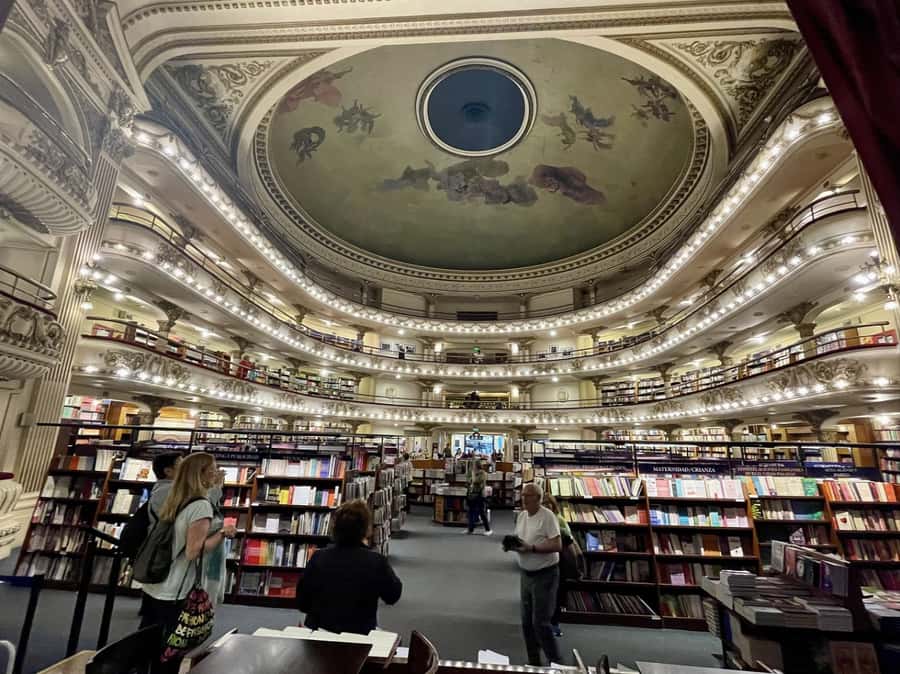
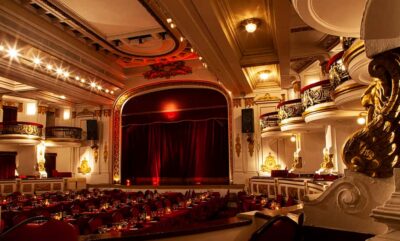
One of the first places you’ll see is El Ateneo Grand Splendid, a gorgeous old theater-turned-bookstore. Even if you only glance in at the scale and details, it gives you an immediate sense of how Buenos Aires likes to reuse and reinvent. The tour also makes a quick stop at Plaza Rodriguez Peña, a leafy green space tied to the Palacio Sarmiento and Argentina’s Ministry of Education. In other words, you’re not just spotting famous facades—you’re learning what the city uses these spaces for and why they became important.
If you love architecture, this early stretch is a nice momentum-builder. And if you’re jet-lagged or new to the city, it’s also calming: you’re in a well-known area with manageable walking.
Coffee, the metro, and the surprise of Palacio de Aguas Corrientes
After you settle into the route, expect a coffee (or an equivalent drink) as a morning reset. This matters on a walking day because it gives you a real break before the day turns into a long string of landmarks.
Then comes one of my favorite “only-in-Buenos-Aires” moments: Palacio de Aguas Corrientes. This building is the kind of stop you’d miss if you were traveling solo because it’s not always on the top-of-mind list of Buenos Aires icons. The tour explains its story and what makes it such a striking presence. You’ll get that sense of Buenos Aires as a city of clever surprises—grand infrastructure, ornate design, and layers of history you can’t always see from a quick street glance.
The tour also includes time on public transport, including a metro ride. That’s a practical bonus. Instead of treating transit like an obstacle, you learn which lines or routes connect areas like Recoleta/Barrio Norte with the city center. Even if you don’t remember the exact line names later, you’ll walk away with a better sense of how the city flows.
Recoleta Cemetery and Plaza Francia in one focused run
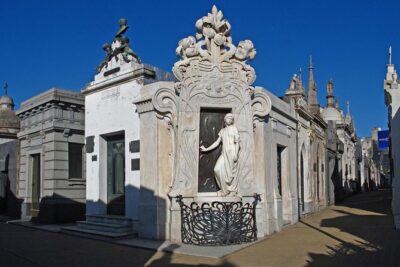
Recoleta is where Buenos Aires shows its dramatic side. The walk brings you into the Recoleta neighborhood for the cemetery visit—Recoleta Cemetery is a city within a city, with elaborate tombs and strong symbolism. This isn’t a quick “photo-and-go” moment either. You’ll learn what you’re looking at, and why the cemetery matters culturally.
The standout here is Eva Perón’s (Evita’s) final resting place. Seeing her tomb in context helps the whole story click, especially if you’ve heard of her but never really understood how iconic her legacy became. Alongside that, the tour points out other mausoleums that show how Buenos Aires talks about fame, memory, faith, and power through stone.
After the cemetery, you’ll head to Plaza Francia and the Our Lady of Pilar Church. The focus here is architecture and preservation—one of the best-preserved examples of colonial architecture in the city. This combo works well: cemetery emotion first, then a more grounded look at the colonial-era structure and what it represents in a city that has changed a lot over time.
One practical note: cemetery walking is still walking. Bring shoes that can handle uneven ground and plan to stand still at viewpoints long enough to hear the guide.
From Teatro Colón to the Supreme Court area and Avenida 9 de Julio
You’ll move into the San Nicolas neighborhood for a string of major landmarks around the city center. The tour includes Teatro Colón, one of the world’s most famous opera houses. You don’t need to be an opera expert to feel why this place matters. Seeing it on foot, in the context of the surrounding plazas and streets, helps you understand how central the arts are to Buenos Aires identity.
Then there’s a stop at Plaza Lavalle and the Palacio de Justicia de la Nación, the home of Argentina’s Supreme Court. The point isn’t just to check a building off. It’s about seeing how government and civic life sit right next to culture and shopping streets in a city that loves layering functions in the same urban blocks.
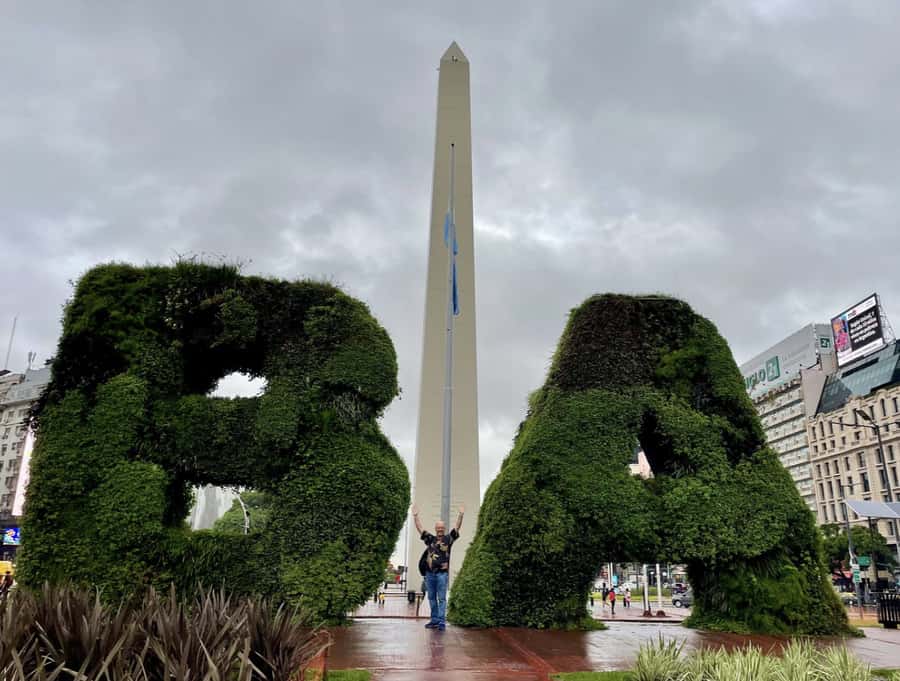
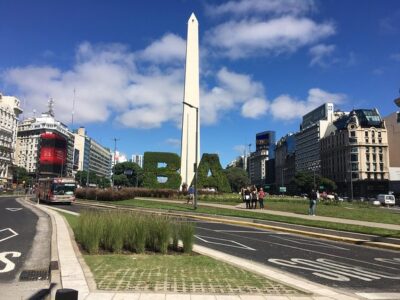
Next comes the wide-open showpiece: Avenida 9 de Julio and the Obelisco. This is your classic Buenos Aires photo moment. The tour also includes a photo-op with the green BA sign, which is a fun and easy way to mark the day once you hit this central corridor.
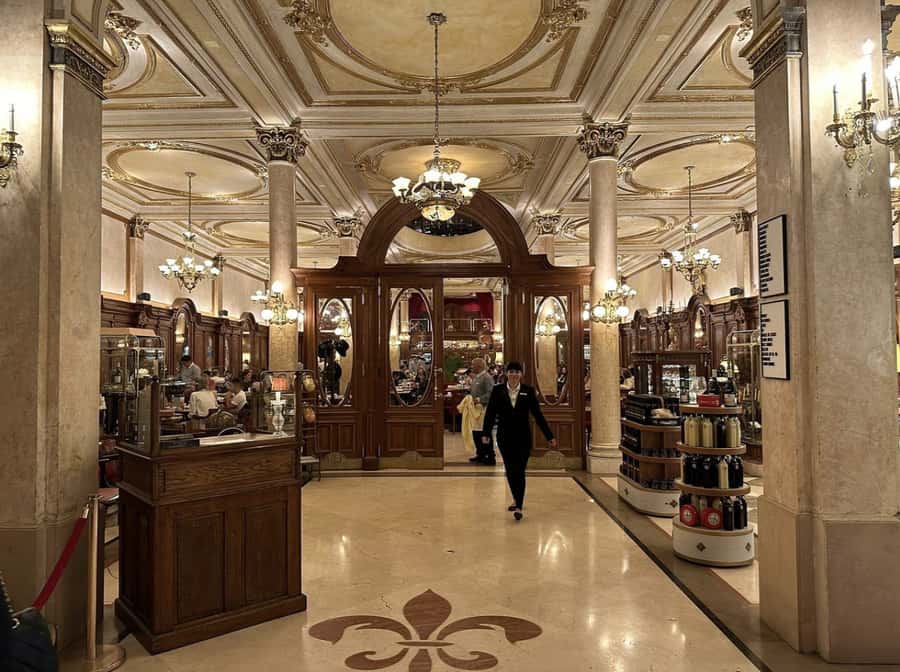
As you keep walking, the route turns toward Avenida Corrientes, known as the street that never sleeps. You’ll also see Confiteria La Ideal, a restored old café. This is one of those stops that feels like you’re seeing the “Buenos Aires attitude” rather than just monuments—food culture, old-school elegance, and a city that likes to linger.
Florida Street, Casa Rosada, and Plaza de Mayo’s real center stage
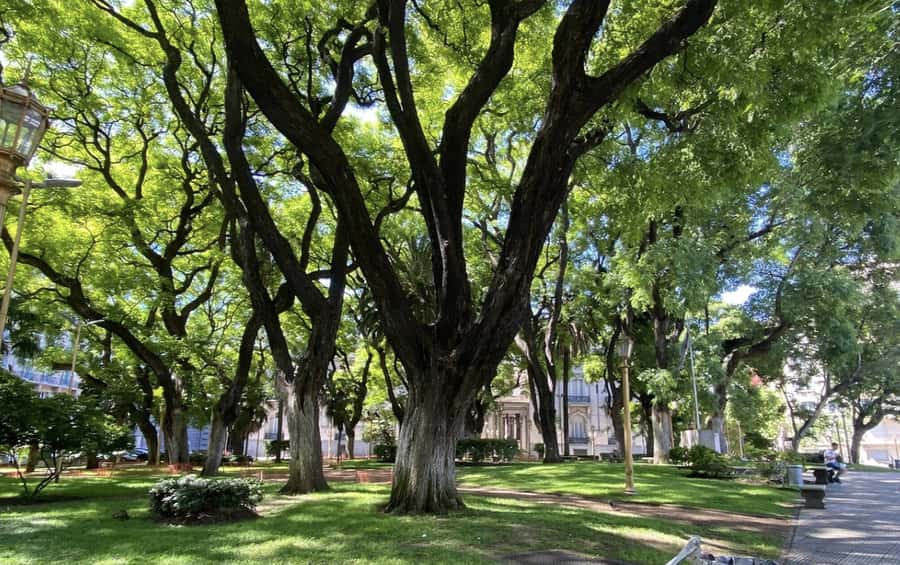
From the city center, the tour continues toward the pedestrian shopping area on Florida Street and the Galería Güemes, another standout for architecture and old grandeur. These are good breaks in the day because they let you slow down and look around rather than only moving between landmarks. If you like browsing, this is the kind of street you’ll want to return to after the tour.
Then you get to the core of political and historic Buenos Aires: Plaza de Mayo. The tour frames it as the main square where the city was successfully founded in 1580 and where Buenos Aires began to grow. Standing in the square and hearing that context changes how you view the buildings surrounding it. It stops being just a big open space and starts feeling like a stage where the city’s story has played out for centuries.
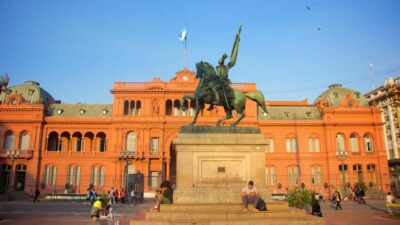
You’ll see Casa Rosada, the Pink House, Argentina’s executive government branch, including the famous balcony where President Perón and first lady Evita used to address crowds. It’s one thing to read about these speeches. It’s another to stand where the addresses would have landed in real time.
The tour also includes the Buenos Aires Cathedral, a key site for national identity. You’ll learn it’s the last resting place of Argentina’s independence hero, and that Pope Francis used to give mass there. If you’re someone who likes seeing how spiritual and political history overlap, this stop is worth paying attention to.
Ending in San Telmo: markets, Plaza Dorrego, and cobblestones
Your day finishes in San Telmo, starting around 5pm near plenty of places to eat, drink, and shop. San Telmo is a great neighborhood to end with because it’s energetic without feeling like a theme park. You get the atmosphere of old Buenos Aires in the way streets are built and businesses are set up.
First up is Plaza Dorrego, one of the city’s oldest and most popular squares. The tour shows you the square’s classic character, with atmospheric bars and restaurants and handicraft sellers. This is the part of the walk where you can easily switch from tour mode to wandering mode.
Next is the San Telmo Indoor Market, an impressive iron structure built in 1897. The market environment is exactly what you want after a day of landmark walking: it’s hands-on and sensory, full of antiques, souvenirs, and restaurants, plus local vendors with fresh food and produce. Even if you don’t plan to buy anything, you’ll get a stronger sense of what people come here for.
The final stretch includes Defensa Street, a cobblestone road through San Telmo known for antique dealers and original Spanish and Italian architecture. This is a strong ending because it feels like a reward for reaching the older parts of the city center.
Price and value: what you’re really paying for
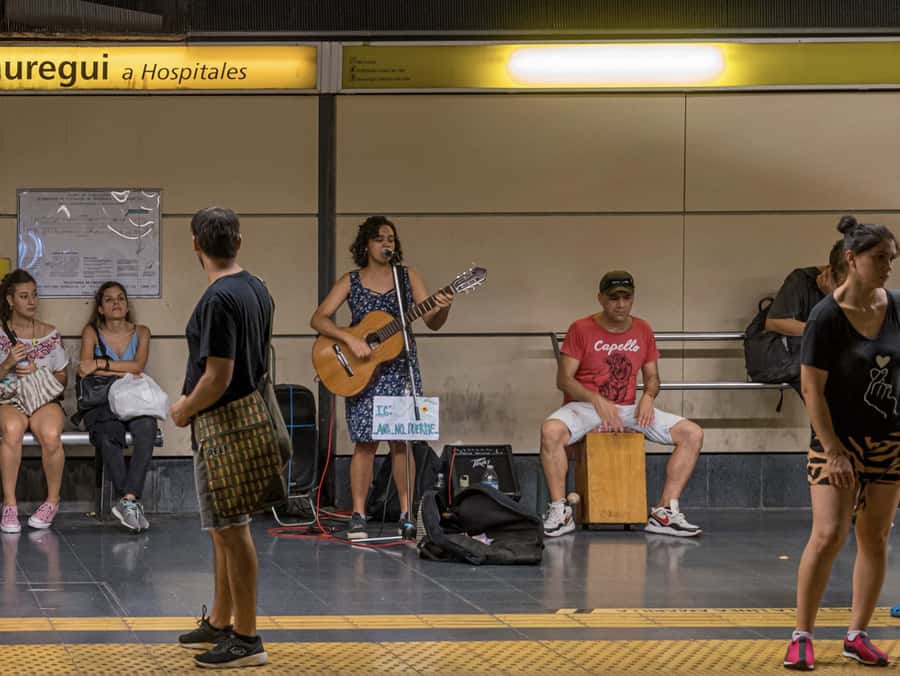
At $160 per person for 7 hours, this isn’t a bargain in the way a free walking tour is. But it also isn’t just paying for someone to point at buildings.
You’re paying for the guide’s expertise plus real costs that add up in Buenos Aires. Entrance fees are included, including Recoleta Cemetery (listed as a value of US$15+ per person). You also get a tasty local lunch with a main and beverage, plus coffee (or an equivalent-priced drink) and a bottle of water. On top of that, the tour covers public transport during the route, including metro and bus use.
So the practical value equation looks like this: you’re getting a day’s worth of guided interpretation, paid entry at at least one major attraction, and food plus transit support. If you would otherwise spend your day hopping between places solo, this price can feel fair fast because you’d still have to buy tickets, figure out logistics, and pay for at least one meal and coffee.
One more value point: the pacing is built for making decisions. By the time you hit San Telmo, you’ve already seen the kinds of neighborhoods you might want to return to later.
Pace, comfort, and who should book this
This tour is designed as a full 7-hour walk with public transport. That means you should be comfortable standing and walking in a city that doesn’t slow down for your itinerary. If you’re sensitive to long days, consider that the tour is not built around quick seat-and-rest breaks.
Bring comfortable shoes. Dress for walking weather. And plan to take your time when the guide stops for context—those moments are where the tour earns its keep.
This experience is also not suitable for everyone. It’s not meant for children under 10, wheelchair users, people with a cold, or those over 95. If any of those apply, you’ll be happier choosing a different format.
If you’re traveling solo, the small group (up to 7) is a big plus because you’re not stuck shouting over a crowd. If you’re visiting for the first time and want a concentrated overview, this is one of the better ways to learn the city without committing to a massive self-planned day.
Guide style: why Tracy and Chris made the difference
The best thing about this kind of tour is how it turns landmarks into stories you can remember. The guide experience here seems consistently personal and question-friendly, with language and local history expertise that helps you connect dots.
From the guide feedback, I’ve seen two names linked to strong experiences: Tracy and Chris. Tracy’s take centers on personal experience, friendly nature, and strong local history and language skills. Chris’s style is described as history-focused with sassy stories, plus excellent handling of questions and attention to architectural details you might otherwise miss.
What that means for you: you can ask why a place looks the way it does, what people meant when they built it, and how Buenos Aires became what you see today. That’s the difference between sightseeing and actually learning something useful.
Should you book the BA 101 walk?
Book it if you want a smart first-day plan: major sights, neighborhoods that feel distinct, and a route that includes transit and meals so the day doesn’t collapse into logistical stress. It’s also a good choice if you’re deciding where to return later, because you’ll finish with a strong sense of the city’s geographic pull from Recoleta and Barrio Norte down to San Telmo.
Skip it or consider a different style if you hate long walking days or you need wheelchair-friendly accommodations. At $160, you’ll feel better if you’re going to use the guide to learn, not just take photos from the curb.
FAQ
How long is the BA 101 Buenos Aires walk?
The tour lasts 7 hours, starting at 10am and ending at 5pm.
Where do you meet and where does the tour end?
You meet at 10am in the Recoleta/Barrio Norte neighborhood near the corner of Av. Santa Fe and Av. Callao. The tour ends in San Telmo near plenty of places to eat, drink, and shop.
What’s included in the price?
Included are an expert English-speaking guide, entrance fees to historical sites (including Recoleta Cemetery), morning coffee, a local lunch with main and beverage, water, and public transport taken during the tour.
Which major sights are part of the route?
You’ll see highlights like Recoleta Cemetery (including Evita’s resting place), Plaza de Mayo and Casa Rosada, the Obelisk on Avenida 9 de Julio, Teatro Colón, the Buenos Aires Cathedral, and San Telmo Market and Plaza Dorrego.
Do you take public transport during the tour?
Yes. The tour includes public transport during the route, including a metro ride.
Is this a small group?
Yes. The group is limited to 7 participants.
What should I bring?
Wear comfortable shoes, since it involves a lot of walking.
More Walks Through Buenos Aires

Just added to our Buenos Aires notebook
- Guided tour Boca Juniors Museum & Stadium + Caminito
★ 3.3 · 3 reviews - Bike Tour: Buenos Aires to the North
★ 4.0 · 3 reviews - From Colonialism to Eclecticism, Buenos Aires arquitectonica
★ 5.0 · 3 reviews - Enjoy a Rural Experience in a Vineyard near Buenos Aires
★ 4.7 · 3 reviews - Café de los Angelitos – Traditional Night in Buenos Aires
★ 4.8 · 3 reviews - Buenos Aires: Rojo Tango Show with Optional Dinner
★ 3.4 · 3 reviews
Walking Tours, compared.
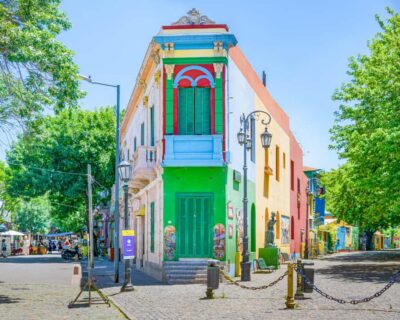 ★ 4.8La Boca Guided Walking Tour in EnglishFrom $131,587 reviews
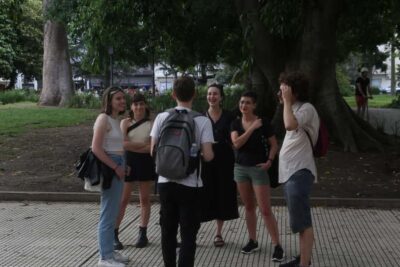 ★ 4.9Nazis in Buenos Aires: a historical walking tourFrom $25193 reviews
 ★ 4.7Personalized 2 to 8-Hour Private Walking TourFrom $37149 reviews
 ★ 4.8San Telmo and Market Guided Walking TourFrom $13102 reviews
 ★ 4.5Buenos Aires Walking Tour with Local Guide and Optional RooftopFrom $11187 reviews
 ★ 4.5Best of Buenos Aires Private Walking TourFrom $10973 reviews
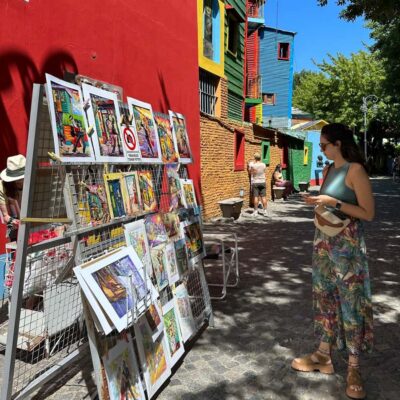 ★ 4.8La Boca Art and History Walking TourFrom $4655 reviews
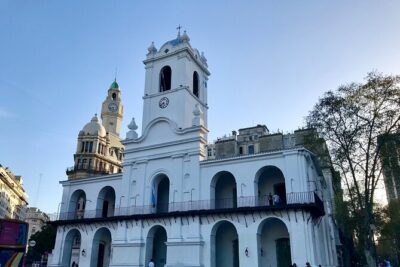 ★ 5.0Full Day Private Walking Tour of Buenos Aires NeighborhoodsFrom $13555 reviews
Browse the lists this tour appears in