
Reviewed · WALKING TOURS
Buenos Aires in One Day Private Walking Tour
Buenos Aires looks different when you walk it. This private, street-level route gives you architecture and politics in plain language, plus real neighborhood context that most people miss. I also like that the guides can tailor the pace—on past departures I’ve heard names like Carlos, Soledad, Clemencia, and Eilat praised for bringing the city to life. The main drawback is simple: you cover a lot of ground, and part of the day relies on a short taxi ride between areas, which isn’t included.
You’ll spend roughly six hours moving through downtown, Recoleta, Palermo, San Telmo, and over to Puerto Madero. The day is rain or shine, meals aren’t included (coffee/lunch break is on your dime), and there’s a cemetery ticket included for the visit that many people come for—Recoleta Cemetery.
In This Review
- Key Things That Make This Buenos Aires Walking Tour Worth It
- Starting at Florida Garden: Getting Oriented on Calle Florida
- Retiro and Avenida Alvear: Plaza San Martín to French-Italian Buenos Aires
- Recoleta Walks and La Recoleta Cemetery: Evita’s Final Neighborhood
- Palermo’s Monuments and Culture Spots: France’s Gift and the Giant Flower
- El Centro Downtown Core: Florida Street, Obelisco, Teatro Colón, and Anthem Roots
- San Telmo and Plaza Dorrego: Cabildo, Antique Market, and the Slave-Market Shadow
- Puerto Madero and Plaza de Mayo: From British Docks to Protest Monuments
- Casa Rosada Blocks to Defensa Street: The Power Walk and the Smallest House
- Price and Practical Logistics for a 6-Hour Private Walk
- Should You Book This Buenos Aires One-Day Private Walking Tour?
- FAQ
- How long is the Buenos Aires one-day private walking tour?
- Is the tour private?
- What does the tour include?
- What is not included?
- Where do we meet, and what time does it start?
- Where does the tour end?
- Do I need money for taxis during the tour?
- Is there a coffee or lunch break?
- Does the tour run in the rain?
- Is the tour suitable for kids?
- What if the route changes due to conditions?
Key Things That Make This Buenos Aires Walking Tour Worth It
- A one-day route that connects neighborhoods, not just landmarks
- Recoleta Cemetery included, with special focus on the famous tombs
- San Telmo and Plaza Dorrego tied to the darker side of Buenos Aires
- Retiro + Avenida Alvear: palaces, embassies, and big-street architectural clues
- English-speaking guides with a reputation for clear storytelling
- A planned endpoint at Plaza Dorrego area, so you can keep eating and exploring
More of Buenos Aires covered on foot.
- Buenos Aires Hop-On Hop-Off Bus, Free Walking Tours & Discounts★ 4.5 · 2,218 reviews
- Buenos Aires: La Boca Guided Walking Tour in English★ 4.8 · 1,587 reviews
- Nazis in Buenos Aires: a historical walking tour★ 4.9 · 193 reviews
Starting at Florida Garden: Getting Oriented on Calle Florida
You begin near Florida Garden (Florida 899) at 10:00 am, meeting the Buenos Aires Walking Tours team outside the café corner door on the Paraguay Street corner. It’s easy to spot your guide: look for the small BA Walking Tours sign in their hands or on their clothes. You’re not thrown into a random group meeting point and then left to fend for yourself—this start is built to help you line up for the day quickly.
From there, the tour opens with Calle Florida, one of the city’s most famous pedestrian streets. Your guide uses it like a living timeline. You’ll slow down enough to notice the kinds of buildings that tell you who had money here, what style caught on, and how Buenos Aires learned to show off—without needing a museum ticket. It also works as a warm-up: you get your walking rhythm and your bearings before the day gets serious with major plazas and institutions.
If you’re the type who hates “drive-by sightseeing,” this is your kind of start. The best value is early: you’re learning how to read the city while you still have energy. One practical note: this is a walk-heavy day, so comfortable shoes are not optional—your legs will do most of the sightseeing.
Retiro and Avenida Alvear: Plaza San Martín to French-Italian Buenos Aires
After Calle Florida, the route moves toward Retiro, then down Avenida Alvear. This section is where Buenos Aires stops feeling like a list of photos and starts feeling like a place with patterns.
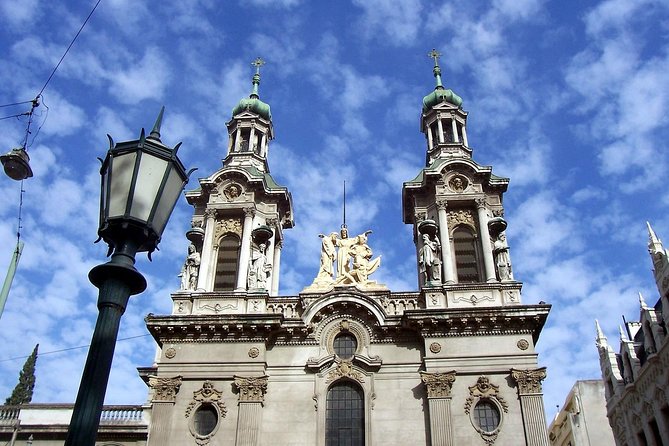
In Retiro, you’ll spend time at Plaza San Martín, where your guide connects the square to bullfight history, an earlier slave market, and the city’s older layers. From there, you’ll look at Paz Palace and the Kavanagh Building—your guide explains what makes the architecture distinct, and what it signals about Buenos Aires’ ambitions. One of the cooler moments here is the Santísimo Sacramento Church, described as unusual and explained on the street rather than treated like a quick glance.
Then comes the “how did England get so visible here?” part of the day: you’ll pass the British Clock Tower and see station buildings linked to railroad history. Your guide ties that British imprint to what Argentina built—and how foreign influence became part of the local identity. Finally, General San Martín’s Monument gives a clear way to talk about how Argentina became a nation, using a focal point you can’t miss.
On Avenida Alvear, the tour shifts into Barrio Norte territory: French and Italian influence, plus the way major communities shaped Buenos Aires. You’ll walk past embassy-like landmarks and palatial streetscapes, including the French Embassy site (noted as Palacio Ortiz-Basualdo), the 4 Seasons association (Alzaga-Unzue manor), and other big-name buildings your guide frames in context: Catholic, Jewish, and immigrant presence—each tied back to what you’re seeing on the façades.
This is also a good stretch for people who like photos, but want to understand them. The buildings are the photos. The guide helps you understand why they look that way, and what the city was trying to project.
Recoleta Walks and La Recoleta Cemetery: Evita’s Final Neighborhood
Recoleta is a favorite for a reason: the streets and the details change from block to block. Your tour passes through Recoleta, with stops that set the emotional tone before you enter La Recoleta Cemetery.
In this area, you’ll see Nuestra Señora del Pilar Church, plus sights tied to Recoleta’s more refined reputation. Your guide also mentions Palais de Glace and explains how it relates to the coming-of-age of tango. If tango is part of why you’re in Buenos Aires, this is one of the spots where it helps to hear the story instead of just watching dancers.
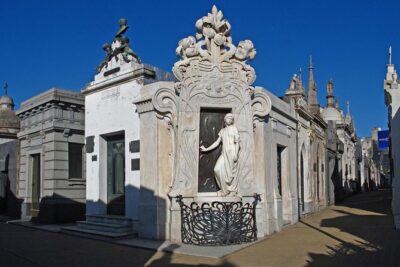
Then you reach the reason many people choose this tour: Recoleta Cemetery. Cemetery admission is included, and you’ll spend about 45 minutes inside with your guide focusing on monuments and stories—especially the tomb of Eva Perón. People often expect a single “Evita moment” and then a quick exit. This visit is more like a curated walk through changing eras of Buenos Aires society, using the monuments as your guide’s primary clues.
A small consideration: cemetery time can feel long if you’re expecting only the highlights. One of the most common reasons for lower star scores was spending too much time here, even though the commentary itself tends to be strong. If you’re sensitive to solemn settings, go in knowing it’s an intentional portion of the day.
Palermo’s Monuments and Culture Spots: France’s Gift and the Giant Flower
After Recoleta, the route reaches Palermo, which is the city’s largest and most populous neighborhood. On paper, that can sound like “too spread out.” On foot, it becomes a lesson in variety: art spaces, public monuments, and big institutional buildings.
Your guide points out the Buenos Aires Design Center and the National Gallery of Art, then moves to a cluster of memorable landmarks. One of the standout sights here is Floralis Monument, often described as a giant flower. Nearby, you’ll see Peynot’s Grand Monument, noted as France’s present to Argentina for a centennial celebration. It’s the kind of moment that gives you that Buenos Aires-surprise feeling: this city doesn’t just keep history behind plaques. It puts meaning in outdoor form.
You’ll also encounter an Evita Perón monument, described as the place where she died, plus the National Library building. Even if you’re not a museum person, this part helps you connect Argentina’s public memory to the physical city. The guide’s job is to connect why these places exist and what they were meant to communicate.
This segment is also a good checkpoint for your stamina. Palermo is big; you’ll appreciate the guide slowing down at the spots that actually matter.
El Centro Downtown Core: Florida Street, Obelisco, Teatro Colón, and Anthem Roots
If you want the classic Buenos Aires center—grand, noisy, and very photographable—this is your stretch. The tour brings you through El Centro and spends time on some of the city’s most identity-shaped locations.
You’ll walk Florida Street, described as one of the oldest streets and used to explain how Buenos Aires evolved. Then you’ll see the Harrods area and Galerías Pacífico—noted as the British Buenos Aires influence, with Galerías Pacífico tied to old railroad offices that became a high-profile shopping and mural setting.
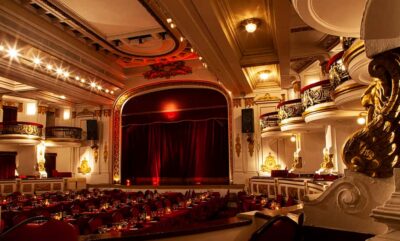
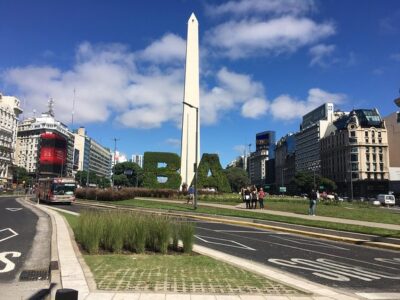
You’ll also pass sights like Teatro Colón, the opera house, and the Obelisco, where your guide explains what it stands for. It’s easy to treat the Obelisk as a photo stop. With the added context, it becomes a shortcut to understanding national ambition and public space.
Another interesting stop in the downtown theme is the Mariquita Sánchez house, connected by your guide to Argentina’s National Anthem. It’s a reminder that music history isn’t locked in concert halls; it lives in everyday streets if someone points you to the right door.
Your guide also addresses the bank and finance district and talks about the city’s recent economic story. That part matters because Buenos Aires isn’t only a romantic postcard. It has cycles of growth, stress, and political change—and the city’s buildings are one place those cycles show up.
San Telmo and Plaza Dorrego: Cabildo, Antique Market, and the Slave-Market Shadow
Now we hit the old layers. San Telmo is called the oldest neighborhood in Buenos Aires, and the tour treats it like a living classroom rather than a theme park.
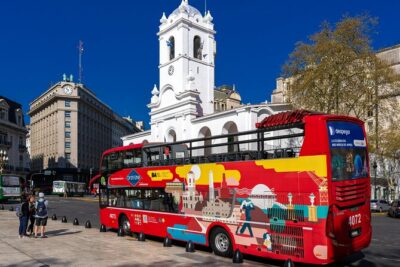
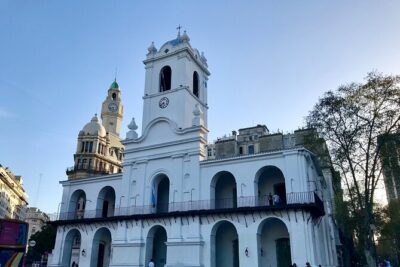
You’ll move through the area around Monserrat, plus the Cabildo and the Cathedral where your guide mentions Pope Francis preaching. You’ll also see the General San Martín mausoleum and additional government buildings where your guide points out the architectural meaning and even physical traces tied to coups—shrapnel mentioned as evidence your guide explains.
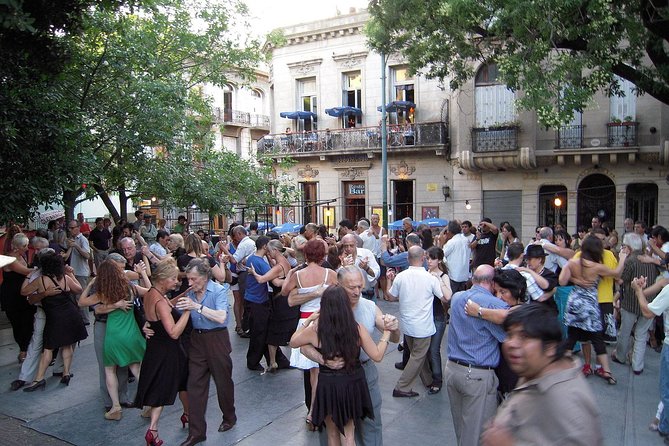
Then comes one of the most morally difficult stops: Plaza Dorrego. This is the heart of the San Telmo antiques fair, and it’s also where your guide explains the history of the open-air slave market. It’s not comfortable history, but it’s the kind of context that makes you understand why the neighborhood looks the way it does. You’ll also hear stories linked to older streets and churches, including the Belen Church and the guide’s mention of Martina Cespedes’ story.
San Telmo is also where your guide helps you spot how British influence showed up early (1806 and 1807 are noted), plus how the city’s architecture changed with immigration. You’ll pass by Carlos Calvo Market and other preserved-looking blocks your guide uses as proof that Buenos Aires didn’t erase its past. It modified it.
If you’re choosing one moment to remember from the whole day, Plaza Dorrego is often that moment: antiques on the surface, hard history underneath, explained on the sidewalk.
Puerto Madero and Plaza de Mayo: From British Docks to Protest Monuments
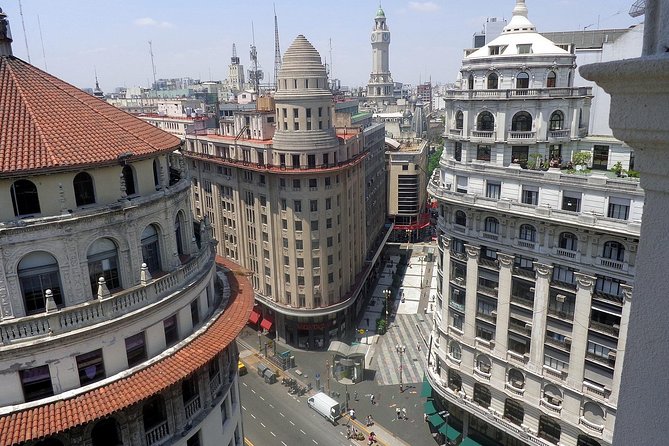
To balance San Telmo’s old-world mood, the tour moves toward Puerto Madero, a newer neighborhood built by extending the city out across old British dockyards into the water area beyond the coast. Walking here (with time for explanation) helps you see Buenos Aires as a city that reinvents itself—sometimes dramatically.
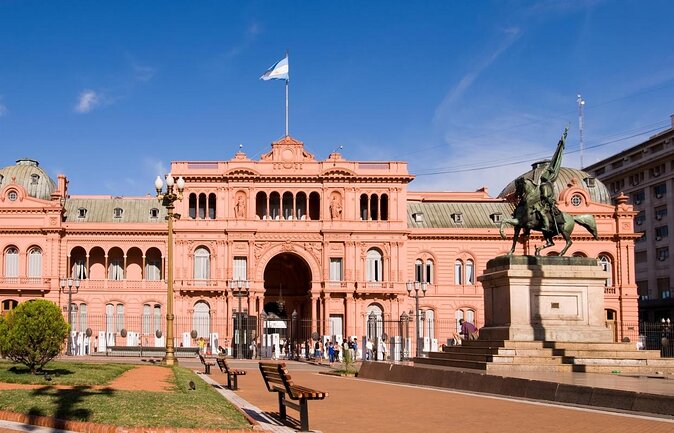
Then you shift into the political heart: Plaza de Mayo. This is one of those places where the meaning is bigger than the view. Your guide focuses on landmarks including Metropolitan Cathedral, Cabildo, Casa Rosada, and the Piramide de Mayo. You’ll also stop at the Mothers of the Disappeared area, where your guide ties the monument to Argentina’s experience under dictatorships and the long search for victims.
From there, you’ll see how the day keeps connecting: the same power stories show up again and again. Your guide also brings up Catedral Primada, including its connection to General San Martín’s tomb.
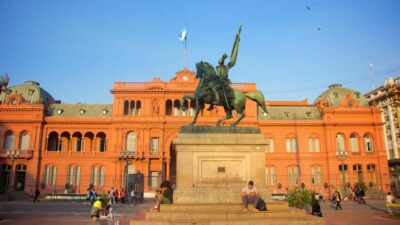
When you reach Casa Rosada (the presidential office, officially Casa de Gobierno), it’s presented as both symbol and building—your guide explains what you’re looking at beyond the obvious “that’s where the president works.” You’ll understand why this pink façade became a national icon.
Casa Rosada Blocks to Defensa Street: The Power Walk and the Smallest House
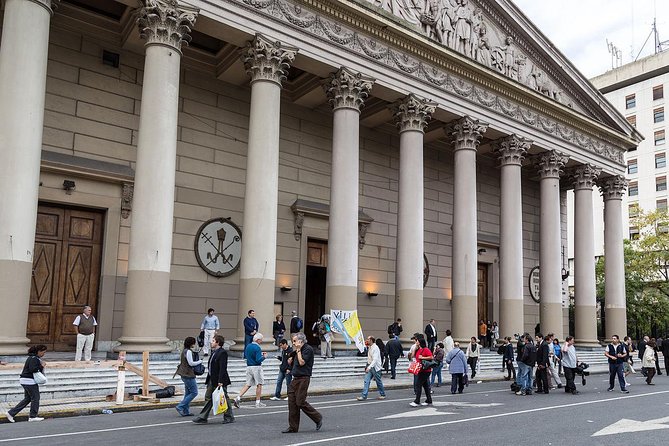
The day’s final downtown section leans into streets that explain influence and conflict. You’ll walk Calle Defensa, a street named for defense against British invader troops in 1806 and 1807. Your guide uses this to connect British presence to the city’s cultural development rather than treating it as a distant footnote.
You’ll also see a very unusual stop described as an extremely narrow house in a giant city, tied to a freed slave. The tour uses it to explain slavery in Buenos Aires in a very personal, human-scale way. Even if you’ve read about abolition and emancipation before, it’s the kind of stop that makes history feel specific—because you can stand in front of something built from that story.
This final segment ties together the earlier parts of the tour: British rail and clock towers earlier, British dockyards at Puerto Madero, British invasion history on Defensa Street, and then the civic and political monuments at Plaza de Mayo. It’s one of the reasons this tour feels smarter than a basic landmark loop. You end the day understanding how outside forces and internal power shaped the city you’re seeing now.
Price and Practical Logistics for a 6-Hour Private Walk
At $199 per person for about six hours, this is not a budget “see everything fast” tour. The value comes from three things you actually feel during the day.
First, you get a local English-speaking guide who explains architecture, culture, and politics while you’re walking—so you’re not paying just for admission signs. Second, Recoleta Cemetery tickets are included, which matters because that visit is a core part of the experience. Third, the route is private, meaning you’re only sharing your attention with your group, not trying to hear over strangers.
Now the trade-offs you should plan for:
- Meals aren’t included, and the coffee/lunch break is on your own expense.
- Transportation isn’t included, and the tour notes that a taxi ride is required between attractions, roughly USD $5–7.
- Lunch timing can shift with how the day runs, and weather or city dynamics can affect how the full route works.
- You’ll be walking a lot, and the tour calls for moderate physical fitness.
Your start is fixed at 10:00 am, but your best move is to build in flexibility. Buenos Aires street life can be slower than schedules, and you’ll have a better time if you treat the day as a guided walk with stops, not a race through checkboxes.
Should You Book This Buenos Aires One-Day Private Walking Tour?
Book this tour if you want a thorough Buenos Aires walking tour that connects neighborhoods with history and architecture while you’re still standing in front of the buildings. It’s especially strong if Recoleta Cemetery, Plaza de Mayo, and San Telmo are on your must-see list and you prefer guided context over self-guided guessing.
Skip it or rethink if you have limited stamina, hate slower museum-like pacing in quiet spaces like the cemetery, or you want meals and all transport included. Also, if you’re expecting every stop to be a deep dive into inside rooms, note that this is a street-focused walk with explanation at key points.
FAQ
How long is the Buenos Aires one-day private walking tour?
It runs for about 6 hours.
Is the tour private?
Yes. It’s a private tour/activity, and only your group will participate.
What does the tour include?
It includes a local English-speaking guide and cemetery admission tickets.
What is not included?
Hotel pickup and drop-off, meals, and transportation during the tour are not included.
Where do we meet, and what time does it start?
You meet at 10:00 am at Florida Garden (Florida 899). You start no later than 10:00 am, outside the café corner door on the Paraguay Street corner.
Where does the tour end?
It ends at Plaza Dorrego (Humberto 1º 400). It’s described as a great place to continue exploring with cafes and antique stores.
Do I need money for taxis during the tour?
Yes. The tour notes that a one-taxi ride is necessary to reach one attraction to another, and taxi cost is not included (about USD $5–7).
Is there a coffee or lunch break?
Yes. There is a coffee and lunch break, and it’s listed as own expense.
Does the tour run in the rain?
Yes. It operates rain or shine.
Is the tour suitable for kids?
Children 8 and under are free of charge when accompanied by a paying adult.
What if the route changes due to conditions?
The tour notes that coverage of the full route may depend on weather, city dynamics like strikes or repairs, and timing.
More Walks Through Buenos Aires

Just added to our Buenos Aires notebook
- Guided tour Boca Juniors Museum & Stadium + Caminito
★ 3.3 · 3 reviews - Bike Tour: Buenos Aires to the North
★ 4.0 · 3 reviews - From Colonialism to Eclecticism, Buenos Aires arquitectonica
★ 5.0 · 3 reviews - Enjoy a Rural Experience in a Vineyard near Buenos Aires
★ 4.7 · 3 reviews - Café de los Angelitos – Traditional Night in Buenos Aires
★ 4.8 · 3 reviews - Buenos Aires: Rojo Tango Show with Optional Dinner
★ 3.4 · 3 reviews
Walking Tours, compared.
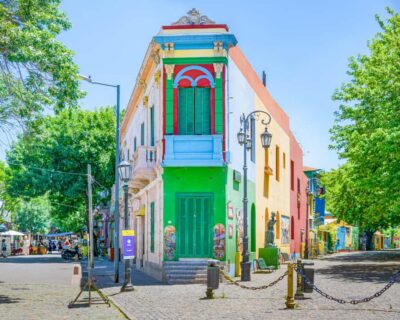 ★ 4.8La Boca Guided Walking Tour in EnglishFrom $131,587 reviews
 ★ 4.9Nazis in Buenos Aires: a historical walking tourFrom $25193 reviews
 ★ 4.7Personalized 2 to 8-Hour Private Walking TourFrom $37149 reviews
 ★ 4.8San Telmo and Market Guided Walking TourFrom $13102 reviews
 ★ 4.5Buenos Aires Walking Tour with Local Guide and Optional RooftopFrom $11187 reviews
 ★ 4.5Best of Buenos Aires Private Walking TourFrom $10973 reviews
 ★ 5.0Full Day Private Walking Tour of Buenos Aires NeighborhoodsFrom $13555 reviews
 ★ 4.8La Boca Art and History Walking TourFrom $4655 reviews
Browse the lists this tour appears in